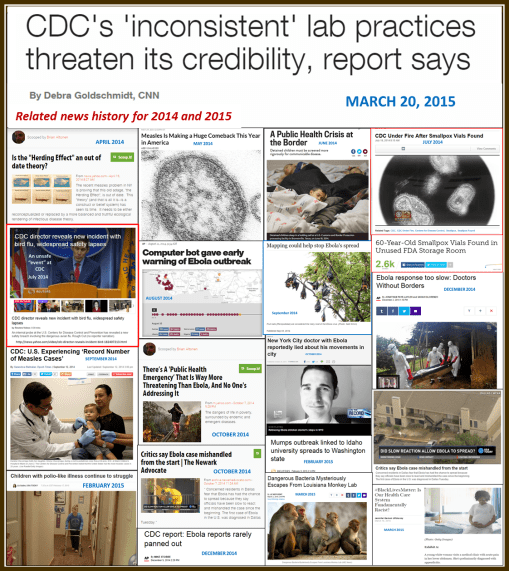
QUOTE:  “A report calls CDC’s commitment to lab safety “inconsistent and insufficient.” The report also says “laboratory safety training is inadequate.””  


A reminder that respect from the public is also very important.  These are the events from this past year which were preventable (even if just in an ideological sense).  They should be used to define the goals for the up-coming year.  Notice that two quality of care related needs have been included (limited coverage by SES, and ethnicity/race).  

Source: edition.cnn.com

A good reminder of how we got this way is to simply look back at the past year’s events.  Since March 2014, we have had several global disease outbreaks or concerns arise in the news, about 1/5th of which really could have been managed better–the rest are status quo for surprising outbreaks and such.  This 20% that weren’t well handled have "issues", we can call it, with poor management and preventive health practices.  Another 10-20% also have public health related medical practice problems, that are the consequence of mistakes made at the clinical level, by provider or management and administration.  But the bulk of medical emergencies do have a certain amount of unpredictably that make them hard to predict will emerge–hard to prepare for.


But once the signs of a problem are there, those 20% (or maybe 30%) of events we could have taken preparatory action for, should have been managed professionally and quickly in due time.


The problems arise when we don’t respond to an emergency in time.  The fact that this in the past years has involved several kinds of emergencies, tells us the system is in really deep trouble.  Now if we add to this our poor responses to natural disasters, there is much more to complain about, and god forbid, should another 9-11 event happen, odds are we will not respond any better to this disaster as we did to the prior.  


October 2013 (the cases of measles that struck the Palisades Mall in Hudson Valley NY) gave us the warning we needed to be prepared for the 2014 Measles outbreak via Disneyland.  My April 2014 posting noted our lack of preparedness in this matter (need I say, living in close proximity to the  2013 outbreak, I have the right to know and experience needed to realize the dilemma we are in.)


The medical field itself knew it was not ready in May 2014, before the famed 2014 outbreak, it was realized that "Measles is making a comeback." [The Disney outbreak initiated in December  2014.]


The border crisis with people coming into this country caused some hype, in June; that too became true and is the reason Disneyland could be so successfully infected.  


But these are not the main concern with this posting.  The main concern here boils down to one thing–poor management and leadership.   Safety procedures are not abided by at CDC.  Record keeping was historically poor, and so we are still finding those old 1950s vials of small pox we put away for the moment, perhaps to send later to some biosecurity/bioterrorism storage facility.  Imagine what might have happen had that rubbish made it to the landfills instead of the incinerator, by a third party company hired to clean out the building for renovation or leveling.


Technology wise, the public masses are better informed that the leaders.  I know that childhood diseases can spread because of what I saw in my neighborhood for twenty years in the Pacific Northwest, after talking openly with neighbors who weren’t on any health insurance (even MCD), and who refused to immunize their children.  The fact that Bot users knew about Ebola before other in WHO or healthcare is a scary finding–it’s like having to rely upon your ham radios more than your TV or regular battery-run AM/FM radio during the cold war era.  If I were a survivalist, I would interpret this as a sign to invest in a new multifaceted high tech shortwave communicator.


The medical world in general has been lazy about some technology.  GIS is one of the best examples of this.  It is heavily used by national programs, for internal reasons only.  Theoretically it has epidemiological, preventive care use, but is rarely employed by experts for meeting such needs.  We know this because neither the spatial diffusion prediction models nor ecological models for what Ebola was have rarely been mentioned or published with much determination.  Even more, as always, this technology is used mostly as a retrospective tool; not a preventive tool.  Could the flight of Ebola positive cases to Houston, to New York, where ever, been prevented?  It’s easy to say no, not having developed a system to base your decisions upon.  The Middle Eastern respiratory Infection and Chikunkunya could not have been predicted for their outbreaks.  The latter could have been ecologically assessed more thoroughly and successfully.  Makes you wonder which ones (zoonotics) are going to arrive in 2015, the some tick disease, or perhaps a south american encephalitis, or perhaps Bos Tb infecting our cattle?  Like the one article states: "Mapping could help stop ____ spread", if it were engaged by the right experts.


Our concerns about polio are too few.  We use the Herd Theory as the reason for this.  But disease regression is happening apparently; if the herd theory continues to fall apart as a useful paradigm, we’ll need to address once more the return of poliomyelitis (but there are still several more countries that have to be penetrated first by it). 


Because we have done little to deal with ethnicity differences in health, and poverty related differences, we do have even worse issues to contend with in upcoming years.  Cultural emergence in the US is going to make some diagnoses and diseases become more prominent, be they of an infectious or physical/ physiological nature (culturally-link cardiac abnormalities, genetics diagnoses, etc.) , or of a cultural philosophy and behavioral cause (infibulation, culturally-bound syndromes).


These are not so much directly CDC related–CDC cannot regulate the in-migration of people who believe is some of these controversial behaviors and practices.


But CDC can oversee and regulate its own workers and their fellow workers in the health care field more efficiently–like teaching MDs not to be so self-egotistical about the improbability that they could cause the next epidemic, by allowing a patient to not be treated, or refusing to place their own self into CDC-recommended quarantine.  Common sense is apparently not a physician’s (or nurse’s) primary skillset.


In the end, we must link these problems to managers and directors.  Of course, the president or CEO is often who we try to blame and expel.    But that individual alone is not the cause.


Rewriting the rules does not eliminate the problems.  Having a committee developed to oversee past behaviors and uncover the mistakes will not suffice.  Ultimately, leadership has to change for this program to get better.  Then the policies need to be rewritten.  Finally, the right skilled individuals need to be hired, so the agencies can catch up on their IT skills, especially the ones they cannot employ that well, for the moment.  

See on Scoop.itEpisurveillance

Low vaccination rates are likely responsible for the large measles outbreak that began at Disneyland in California last December, a new analysis suggests. The researchers estimated that the MMR (measles, mumps and rubella) vaccination rate among the people who were exposed to measles in that outbreak may be as low as 50 percent, and is likely no higher than 86 percent. Since the beginning of this year, 127 cases of measles in the United Stateshave been linked to the Disneyland outbreak, according to the Centers for Disease Control and Prevention (CDC). Because measles is such a highly contagious virus, vaccination rates of 96 percent to 99 percent are necessary to prevent outbreaks, Majumder said.

Source: news.yahoo.com

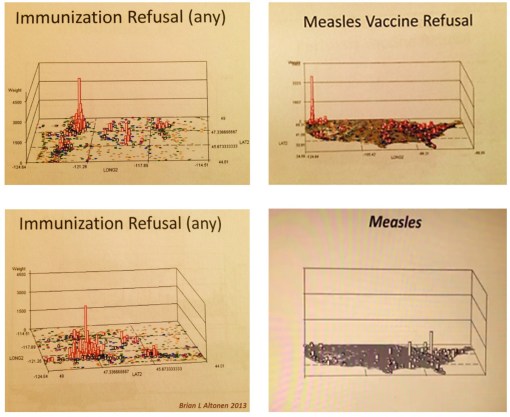
How much more proof did we need? (These are several year old V-code maps.)  ‘Tis a shame when programs that are initiated for prevention become the last to know.

See on Scoop.itGlobal∑os® (GlobalEOS)

Doubts about the effectiveness of traditional Chinese medicine remain.

Source: qz.com

One of the least known facts about traditional chinese medicine in western society is that it has several times been supported by the western medical traditions for the time.  


In fact, the first time we see evidence for this happening is during the 17th century, when French travelers and explorers were traveling through the orient, publishing books about their experiences in which they included the curious philosophies that Chinese doctors had, regarding pulse therapy, tongue diagnosis, moxibustion, their materia medica philosophy and their use of "accupuncture"–and how much it resembles their use of "fire", one of the four galenical elements, to define their four humours principle.  


Acupuncture and its various offshoots were practiced on and off as a variation on the increasingly popular form of electropathy methods of healing.  For much of the 17th and 18th century, it was the parallels that could be drawn between the ancient humoural theories, the discovery of the sympathetic nervous system, and the more recent "nervous energy" or excitement theory of the late 1700s that facilitated the addition of acupuncture into western practices by 1810-1820, in both western Europe and the U.S.  


During the late 1800s, early 1900s, Chinese medicine regained its popularity, due to the relatively large numbers of practitioners engaged in this healthcare tradition.  Not only were members of Asian cultures in the U.S. taking advantage of this form of health care, so too were some of the alternative healers of western allopathic medicine, ads for which appear in many US urban region newspapers.


The twentieth century has several periods when allopathy tries to first understand the philosophy underlying Chinese medicine, and then determine whether or not it fits into the western allopathic paradigms.  There are a number of interesting arguments posed by allopaths trying to explain the many who experienced acupuncture at work–the parasympathetic nervous system reasoning was following by the endocrine system paradigm at the turn of the century, which in turn has been followed by allopathic arguments trying to claim "natural opiates", enkephalins, neuroendocrine system, and most recently, psychoneuroimmunological reasons as to why this philosophy keeps finding new supporters.  Countering these were traditional claims regarding placebo effect, belief system related "cures", psychosomatics, and mindbody influences.  (Recall the popular point therapy faith now implemented for fibromyalgia treatment.)


This recent increase in interest in Chinese medicine is focused in part on the materia medica once again.  With Chinese herbal remedies, the world health belief system has transformed from its 18th century existence, relying heavily upon ginseng root and smilax root flour, to its late 20th, early 21st century period of curiosity about ginkgosides and their impacts on aging glial cells in the brain.


The most common feature to all of these periods of acceptance, withdrawal and change in traditional Chinese versus "traditional western" allopathic medicine is that a belief system is required and must be adhered to for the healing effect to take place.  In many cases, physicians have little to no control over what the body and its owner decide what to do, no matter what the cause might turn out to be–believe it, or not.


See on Scoop.itGlobal Health Care

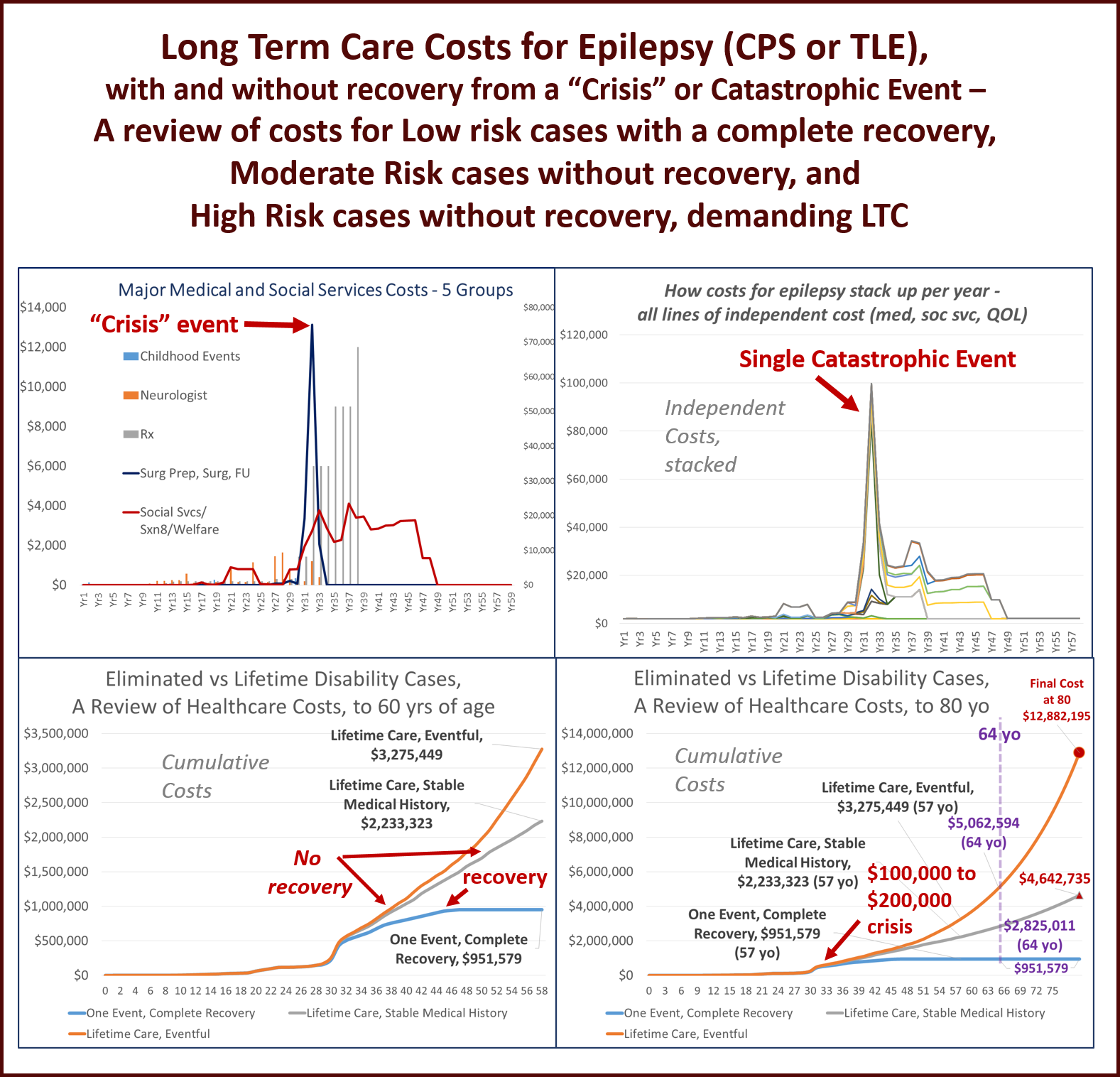
Epil_LTCCosts_4charts4

I recently completed a major portion of an ongoing research project I have been involved with over the years–the evaluation of the cost of long term care to epileptics in the past, and how we can use it to predict the cost for epilepsy care for upcoming decades.

My method of analysis was quite simple.  I took the historical data for specific case(s) and then used the consumer price indexing adjustment formula for inflation to adjust all past costs to the present.  I then took the real case data, which resulted in very low risk of need for future care once the “crisis” was complete soon after the age of 45, and expanded it by creating a slightly riskier pre-catastrophic event period (no high cost events) and an ongoing post-crisis/catastrophic event period, with similar activities as those of the previous years, leading up to high cost long term care accomodations.

This methodology is based in part upon methods used to perform a similar analysis back in the late 1990s.  I added to this technique, more data on the costs for health care visits, screenings, labs, prescription drugs, CNS testing, emergent care events, etc., etc.  than utilized in previously published studies.  I also engaged in a full cost analysis of living costs, assuming the patient had no other health condition that might impact results as a covariant.

The emergent care event(s), and subsequent crisis for these cases was a neurosurgical process (left anteromesial temporal lobectomy, applied to this diagnosis for child and adults with the implied CPS or TLE ICD noted in the graphs above.)

For the baseline case, the surgical process is assumed to be 100% effective, performed at the midlife of the patient’s life.    This lowest risk case is also assumed to recover completely from the crisis and return to education and/or work without further complications (essentially representing a “cure”).

The moderate risk case continues to experience post-surgical seizure events, although less at first, but over time requires new testing, new medications, further tests and screening, changes in therapies, etc.

The high risk case is assumed to have ongoing debilitating conditions develop even after the surgery is completed, as the seizures recur and reduce quality of life over the next 20 years.

The costs for each of these cases up until the age of 57/58 yo were then reviewed (again. starting with real time/life costs for care data for the baseline case).  The other two were then evaluated.

Based on changes in cost over time, and their linear versus polynomial form, a prediction modeling equation could defined for each of the moderate and high risk cases (formulas were different), to determine how much ongoing medical care for this health status would cost the system ,first by the age of 65 (retirement year, if any were still employed), and finally, by the age of 80.

The results of this study demonstrated that the long term cost for lifetime care for a patient with epilepsy, who reaches the age of 80, but requires special housing in the later years due to long term complications, could easily reach 10 MILLION DOLLARS (much of this due to long term care demands).

(All additional costs were not CPI adjusted for future inflation, but the prediction model equation takes much of the trend with inflation into account).

The moderate risk cases (presumably the majority of cases in this age range), cost the taxpayer-funded healthcare system (preretirement years=Medicaid; post-retirement=Medicare) a little less than five million dollars.

What makes this analysis different is the inclusion of costs for social services related services and intervention events, for all stages in the a patient’s  life, from childhood years through college and early employment years, into hospitalization and post-hospitalization/post-surgical years (counseling, neurosurgical counseling, neurosurgical testing,  WAIS, and post-surgical occupational and cognitive speech therapy reviews were included.)

Each of these two types of patients was also assumed to receive continued MCD/MCR assistance for the rest of his/her life, including Section 8 and Food Stamps coverage, to name a few of the additional costs not fully evaluated in the older forms of this study performed back in the late 1990s.

No early mortality was assumed for these cases.  Since people with active, ongoing epilepsy are normally assumed to demonstrate a reduced lifespan of about 10-20 years, this could be considered the one flaw in this analysis.  With such a reduction in longevity, a significant number of these two high cost groups would die off well before the age of 70.

Nevertheless, this provides a reason for engaging in more aggressive, early interventions into epilepsy care.  The recovered individual cost the system nearly a half-million dollars in real money, a little less than one-million dollars once these costs are CPI adjusted.  And such an outcome (“the cure”) is an infrequent event.

In sum, the moderate case can cost anywhere from 4 to 5 times more than the recovered epileptic.

The highest risk cases can cost the system as much as 12-fold, according to this analyses.  Even if we cut this amount in half, we are still talking about an additional 6 million dollars in cost of care over time.

These amounts per patient by the way represent costs per year that are higher than what most individuals earn in these same age groups, were they employed.

Each case therefore represents a reduction in taxpayer income for the country, with each dollar traded over for each dollar required of the medicaid or medicare systems.  This amount doubles for high risk patients.

More importantly, the cost for caring for a typical high risk patient between 70 and 80 years of age will cost the system about a quarter million dollars per year.

The total cost for the care of retired people with epilepsy in upcoming years has been estimated to be in the billions, with about one million people who are now eligible for this health care assistance, should they still be around about 20 to 25 years from now.

For more on this study, go to  https://altonenb.wordpress.com/  

See on Scoop.itGlobal∑os® (GlobalEOS)

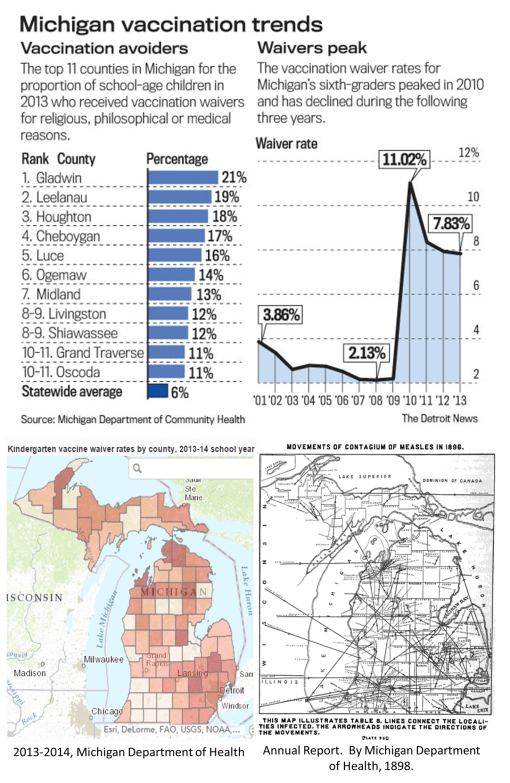
Measles in Michigan–Today and 120 years ago.  Anti-vaccination trend irks parents, especially in Traverse City where outbreaks occur.  Statistics on current antivaccine trends in Michigan (top figure and lower left).  Geography of the 1896 outbreak that struck Michigan (lower right), from the State of Michigan Department of Health Annual Report.

Source: www.detroitnews.com

A series of interesting spatial epidemiology questions can be generated from this news.


The first is ‘is this a continuation of the Disneyland’ outbreak or a new outbreak with different roots?’


The second, ‘could certain parts of the diffusion process in Michigan mimic their beahvioral patterns during the outbreak in 1896?’  We have the map to follow up on this question with.


Thirdly, ‘can we relate the Michigan introduction and diffusion process to human behaviors in the adjacent country of Canada?

See on Scoop.itMedical GIS Guide

This content is password-protected. To view it, please enter the password below.

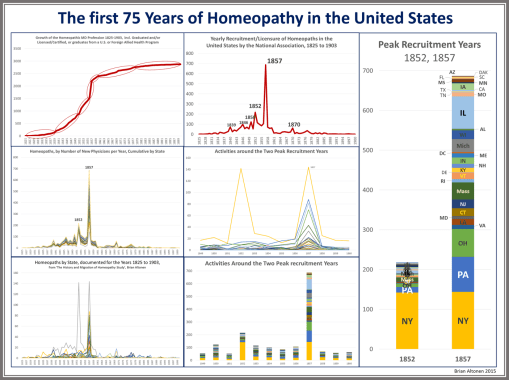
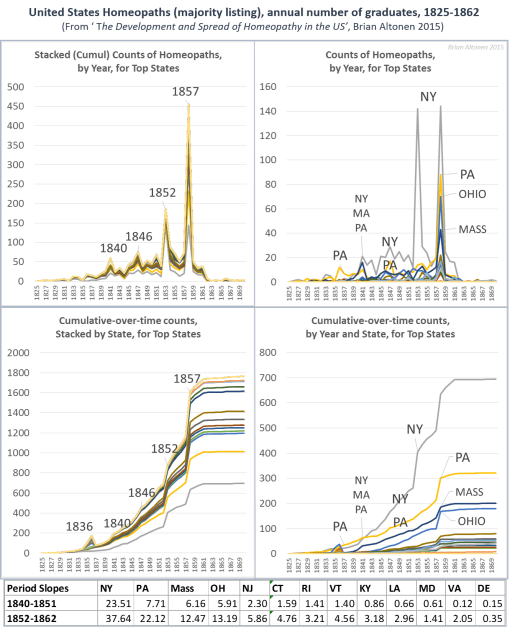
These data, obtained from a review of the profession by principal leaders in the early 20th century, demonstrate the phases of development homeopathy endured, as it was introduced (1825-1836), developed a substantial small following (1837-1845), went through an early growth period (1846-1852), then took off at an incredible rate  (1853-1857/8) [Plot 1].  This process is very much in agreement with the plots generated for studies of innovation.  If we consider the growth in popularity that ensued during the 20th century, we come up with something that closely resembles the Gartner plot (not displayed), referred to colloquially as "hype cycles".    


The peak years in annual growth in numbers of people becoming certified in this profession shows to major peaks at 1852 and 1857.  


The research question for this moment is "why are there these obvious peaks in acceptance?"


Since 1993, I have been teaching that cholera was the reason Americans began questioning the value of allopathy.  The failure of allopaths to explain, treat, or eliminate cholera from our nation’s history made many question their controversial practices, in particular the administration of mineral remedies and the continued use of the lancet.  Homeopathy was one of three major alternatives to allopathy during this time.  The homeopaths had successfully taken the teachings of the great epidemiology mathematicians in England, an duplicated their studies on various institutions, hospitals, clinical facilities, prisons and asylums, and when mortality rates for patients were compared between homeopathy and allopathy treated patients, every study demonstrate allopathy mortality rates were at least twice those of the homeopaths (more on this to be posted).  


To  this day, the methodology, validity and outcomes for these results remain undeniable and are the crux of why allopathy was about to fail.


The return of cholera in 1854/5/6 renewed people’s faith in the non-allopathic professions.  In addition, the recent history of the public health failure  that ensued in the military hospitals at the Crimean War solidified such claims for the borderline doubters still out there truing to decide (this is cited as a major reason in the homeopathy journals themselves).    


For whatever reason, there was an explosion in recruitment of individuals interested in learning and practicing homeopathy, about a quarter of whom were regular allopathic MDs.  The allopathic medical profession was now financially, politically, and at the government level, floundering.


In the U.S. , the advancements made by the military due to the Civil War help suppress these previous failures in the profession.  The role of the lancet was reduced, although not eliminated, as homeopaths continued to publish their supporting statistics on lower mortality rates linked to homeopathic treatment.   


The bar charts in this presentation demonstrate the large numbers of stated that engaged in the enrollment of new homeopaths.  


The homeopathy profession also become a popular culture craze a short while later.  Even with a lesser number of MDs interested, due to a number of steps the AMA took to disenroll or delicense MDs practicing this profession, the public was still interested and the homeopathic schools and hospitals developed by then flourishing in spite of the legal and gubernatorial promotion of allopathy.  


Beginning around 1882/3, State Medical Licensure boards were required to have an Eclectic, Allopathic and Homeopathic MD on board, to monitor and maintain their specialty’s credibility.  


For the next 50 years, what few officially trained homeopaths there were, continued to practice according to their faith.  Fortunately for the allopathic profession, the role of statistics in demonstrating success with regard to patient mortality rates became a less popular way to engage in this medical political argument.   


The ending of many major epidemic patterns helped solidify the support for allopathy.  Quarantine, not better practice or reduced death rates, was one major reason allopathy re-emerged around the turn of the century.  The other major reason allopathy began to prevail around 1900 was the development of a strong anti-fraud and "anti-quackery" program, with political and publishing power, more than support generated by way of clinical success.


 The strengthening of the bacterial theory for disease, accompanied by the refusal of homeopaths to accept the bacterial theory, were the reasons homeopathy ultimately lost much of its support by the public during the 1920s and 1930s.  Both World Wars continued to strengthen the basis of the bacterial theory, a concept the Civil War helped to initiate due to the sanitary/microbial theory it gave rise to.  

Homeopaths tried to counter this reduction in popularity during WW II by entering the war as a specially train medical group.   For the next 50 years, it was mostly the popular culture version of homeopathy and the naturopathic profession that kept this profession alive.

See on Scoop.itEpisurveillance

Counts of physicians in the state listings of licensed homeopaths, from 1825 to 1862 (1863-1870 data excluded from these graphs).  The upper left figure demonstrates four years that are important to the establishment of this profession.  The upper right depicts the four major contributors to this growth in numbers.  The lower left depicts stacked, cumulative over time counts from 1825 to 1862, and five peaks years defined by this illustration.  The lower right figure depicts cumulative over time counts, by individual states.

Also important to note is the fact that New York had two major peaks in licensure (1852 and 1857),  followed by Pennsylvania, Ohio and Massachusetts, which shared the growth in this profession with New York in 1857.  

From 1840 to 1850, New York had a number of smaller peaks depicting the growth of practitioners.  

The lower left figure depicts a fifth peak in growth that is historically important to the profession, 1836 +/- 1 year, when German speaking schools were opened in Allentown, PA.

The profession grew quite rapidly once the textbooks and related resources were translated into English, by various local physicians residing across the United States.

Due to the Civil War (1861, esp. 1862 on), the growth of this profession slowed briefly.  Following the Civil war, it took off and became one of the most popular non-allopathic professions, with its own schools, hospitals and teaching clinics or institutions established by the end of the 19th century.  The last official homeopathic teaching hospital closed its doors around 1935 (Portland OR).  Many of the older schools and teaching centers remain in use today as they were purchased by their allopathy competitors.  

Due to their popularity, and their management mostly by religious institutions,  homeopathic schools were at times more popular than the allopathic schools.  A typical hospital managed by a religious group had separate wards for allopaths, eclectics and homeopaths.  In 1852-3 in Ohio, the allopathic wards on occasion had to be shut down due to lack of patients when compared with the other facilities (Ref: Lancet, Western Lancet, and Eclectic Medical Journal articles for the time).  

Homeopathy is popular due to its "philosophy" and the lack of true chemical toxicity for its therapeutic agents.  Homeopaths typically utilized less aggressive methods of therapy than allopathy, and sometimes even eclectic medicine and chiropractics.  Homeopathy also avoided the use of "toxic" plants, chemicals and mineral remedies so common to allopathy.  Yet most people conferred, then as now, that this treatment philosophy is best applied to non-acute medical problems or conditions.

This is the first of several studies initiated to track the migration of homeopaths and homeopathy about the United States during its first decades of practice and growth in popularity.

See on Scoop.itGlobal∑os® (GlobalEOS)

Dutchess County Department of Public Health Responds to Isolated Measles Case.  This was also the case, nearly 100 years before . . . 

Source: hudsonvalleynewsnetwork.com

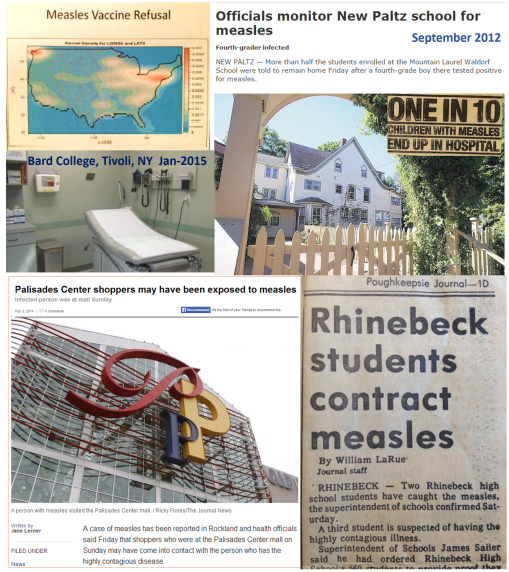
A review of the measles flow in the Hudson valley in 1917 depicts events that relate to those of today.  In 1917, a measles epidemic struck this county, producing most of its victims in the southernmost urban center of beacon, followed by the culturally unique population in Rhinebeck, N.Y.  What is interesting here is how much the probability for a measles outbreak back then coincide with what is happening today, both for very similar human behavior and cultural reasons, not because of population density reasons.     


When I returned to my local materials on the local epidemics, my initial expectation was that since Poughkeepsie was the primary commercial / industrial city for this region for much of the 19th century, that this epidemic would take a logical migration route into this county focused very much upon urban population density features.  However, I immediately learned that such behavior was not the case back in 1917, when measles struck this county and managed to infect a total of 245 people (26.9 / 10,000, not age adjusted), two thirds of which were all in the city of Beacon (where I reside).     


So why these differences?   


The city of Beacon is the most frequently traveled destination for early 20th C New York City folk searching for a healthy climate and taking advantage of the retreat facilities established for their use within the local Hudson Highlands.  (It was after all the mountain cure, sanitation period, anti-tuberculosis era.)     


But more important, the largest urban setting, Poughkeepsie, did not rank second to Beacon in terms of Measles.  In fact, it had 1/30th the number of cases. (Was this due to great preventon work going on?)   


The second region for the largest number of cases of measles in the county 98 years ago was Rhinebeck, a village at the northern end of the county and just south of the current quarantine case.     


What makes Rhinebeck area stand out as a potential site, today as in back then, is its cultural heritage.   


Just three years ago, a foreign case came into this region by way of international travels, infecting a childcare facility just across the river in New Paltz.  New Paltz and Rhinebeck are both very "post-modern" in their ways of conceptualizing and practicing personal health care.  The variety of mindbody movements have their major followers in this region (the Omega Institute is a couple of miles away).  The New Paltz State University setting is, need I say, very much "progressive" and "post-modern" in how the community its complementary-alternative medical beliefs and faiths.     


Thus population density alone is not the prime indicator for how a disease can impact a region.  Cultural attributes play a very important role in the local disease diffusion process.  In Disneyland California, as in the Hudson Valley, international travel is a primary concern of local public health officials. Disney’s case 0 is suspected to be from Mexico. The 2012 event was due to international travels.  The late 1980s cases of measles in Rhinebeck may also have this unique international feature to its history.  But one thing’s for sure–the combined rural settings around Rhinebeck and the popular CAM and cultural "explorers" residing in this region make it an interesting region to research, especially when it comes to studying the interactions of Darwinian and Neo-Darwinian features with infectious disease behavior and diffusion.

See on Scoop.itMedical GIS Guide

State Health Department: Measles Vaccination Remains Vital to Protecting Against Highly Contagious Disease ALBANY, N.Y. (September 21, 2012) – In light of confirmation of a measles case in a school…

Source: rhinebeck.wordpress.com

"Nidus" is a mid 19th century term used by medical geographers used to describe what we today might call potential hot spots for disease.  A nidus is the "nest", where the first cases develop and from there spread to other locations either radially or along specific kinds of routes such as along a waterway, through a valley, by following a particular assemblage of plants and animals.   Medical geographers in the mid-19th century had perfected this way of understanding disease development, to such an extent that they could use such unusual physiographic features as aspect of a hillside and the slope of that location to define where the disease might fester, due to the "animalcules" or microbes that lives there naturally.  (Unlike what common teachings like to profess, bacteria was the first small organism we related to diseases.)


Since the 1980s, there have been at least four outbreaks of measles in the valley, and they share certain common population, travel, and business or economics features.  And they represent a classic example of the hierarchical diffusion process (see my page on this –  http://wp.me/Puh6r-5TT ).


Three of the articles and discussions of these four cases have one town or village as a common source for the cases.  The case that emerged just a day or so ago is somewhat to the north, associated with the local railways system returning a student to his/her college setting.  The case from two or three years aback also involved schools in some way and local international travel–in that case it was the school that allowed 50% of its students to not be vaccinate, per their personal belief or faith.   The association of the Rhinebeck-Bard-Tivoli cases with those in New Paltz across the river also shared university-international travel or foreign students features.


The fourth location to the south is where the first recent mention of this problem returned to the local newspapers, down by the Palisade Mall in lower New York.


See also See also: http://www.skepticalraptor.com/skepticalraptorblog.php/measles-case-confirmed-york-state-school/  


Now, it is easy and at times too easy to draw these comparisons between regions and see similarities.  Culture itself for example is not the cause for this part of the valley showing a tendency to be a nidus.  Statistically, I might call it a covariate.  The main factor in this migration of measles into the eastern U.S. is the population health behavior features, and the fact that the Hudson valley has  a unique behavioral feature–programs that bring together many people who demonstrate a strong support of personal beliefs, personal rights to chose, and "alternative forms of medical beliefs or thinking."  


We all have the right to be "different".  If only we knew how our differences influence the right of others to live a secure life, without fear of that terrible Scarlet letter coming close to our kids, elders, or family members engaged in critical quality of life related health care.  In this case, cultural diversity works against the continued survival of these different communities.  There are some rules that must be followed by all cultures, no matter what sacrifice of personal rights may be required.


We map physical and human geography all of the time when we research spatial epidemiology.  Small scale area analyses may be used to define specific natural ecosystems or niduses required for west nile to develop in this region (I posted my example of successfully using this technique in 2002 and 2003, a while back).  We can also use small area analyses to identify niches of unhealthy communities or shared communal settings.


One has to wonder, how much of this type of cultural analysis of disease (if any) is engaged in locally? 


In the past few days, a comparable social behavioral pattern has emerged recently in Minnesota as well (http://www.startribune.com/lifestyle/health/290151131.html  ).


See on Scoop.itMedical GIS Guide