See on Scoop.itMedical GIS Guide

(View) Persons reviewed

Brian Altonen‘s insight:

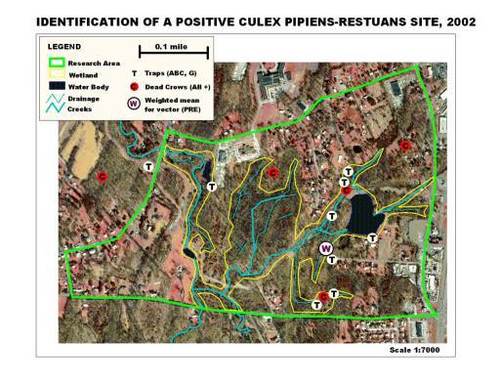
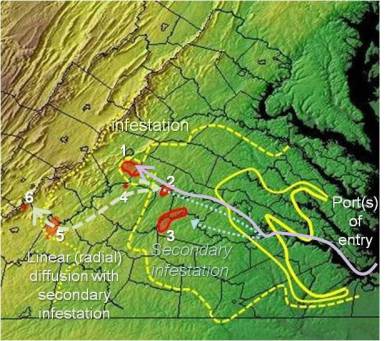
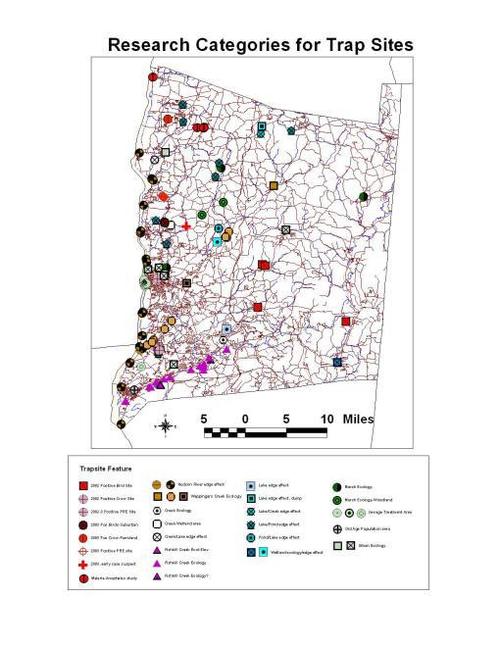
Ten years ago I produced the first effective series of maps documenting a probable nidus or nest for West Nile disease in New York.  A cluster of positive testing hosts (crows) was identified and surveillance traps set to determine where the disease had become a part of the local ecology.  This proved for the first time the ability of the local setting to support the vector for this disease, making it possible for a new series of cases to erupt the following spring.


These maps were produced using a combination of ArcView 3.2 and Idrisi32 software in order to intergrate DEMs, aerial photographs, Satellite Imagery, NDVI (AVHRR), and NLCDs into the typical land use GIS data sources that were available.


The above product of this work was demonstrated at a number of meetings and conferences during the next 4 years.


Recently I tested and evaluated the new zeemaps.com mapping program available as open source (free) on the web.  


I recently used this tool to document much of the surveillance work I carried out during the earliest years of west nile surveillance (http://www.zeemaps.com/view?group=751431&x=-73.464156&y=41.710832&z=8).  


This site is very easy to use and has the potential of being a valuable GIS for use by managed care programs trying to understand the potential applications of their Big Data.  


Due to PHI and HIPAA, I recommend its use for evaluate the use of services, clinics, lab offices, providers, special service agencies and such.  For surveillance/epidemiological purposes, it can be used to define culturally-specific high risk areas, or to monitor health around the region, to document and encode specific disease behaviors for use by peers, and for evaluating services and cost by region around particular primary care facilities.  


Aside from the availability of ZeeMaps as freeware, the ease of its use and the possibility for adding any data ranging from public health information leaflets to self-defined datasets is what makes this GIS attractive.  Individuals can use it to locate meeting places and schedules for self-help groups, or to chose their specialists by visualizing their office locations in relation to public transport.


As always, HIPAA and PHI have to be kept in mind when institutions are using this tool to advertise these qualities of their healthcare program.  


Agencies currently testing this freeware are applying it mostly as an information source for use by patient populations.  It is used to define the locations for meeting important personal health care needs and to locate allied healthcare service providers.   

See on www.zeemaps.com

See on Scoop.itNational Population Health Grid

Brian Altonen‘s insight:

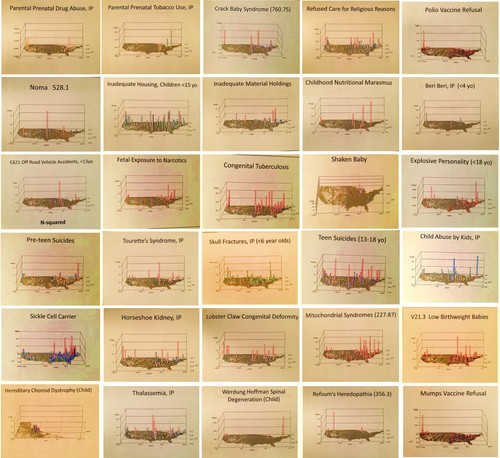
The most recent recommendations for improving childcare include a number of more aggressive prevention programs.  With big data (EMR, EHR, etc.) underway to becoming an essential part of managed care, the newest options available to us now make it possible to identify and monitor hundreds of E- and V-codes, ICDs, HICLs, and CPTs important to child care and prevention on a regular basis.


This method of managing a large population of children enables us to initiate reviews of the most underrepresented childhood conditions, rarely evaluated over the years.  Due to automated systems managing the frequent evaluation of data, the least researched, and infrequent to rarest of medical conditions can be monitored and mapped extensively for the first time.

See on www.clasp.org

See on Scoop.itNational Population Health Grid

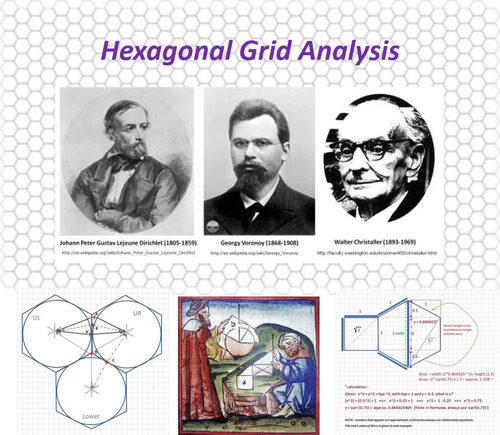
In terms of potential spatial errors, hexagonal grids are 26% less like to produce spatial error than the square grids we normally use to model disease and statistically analyze our rests.  The reasons we continue using this less accurate technique relate mostly to our lack of understanding of the underlying math, and a lack of incentives for change.   


When health and disease are being measured, accuracy is always one of the most important qualifiers or disqualifiers of our work.  This change in paradigms will produce more accurate outcomes, and in the long run, result in more effective healthcare services. 

Brian Altonen‘s insight:

The recommendations of grid mapping people and natural resources, and the use of Theissen polygons, extend back to the 1840s when they were promoted by German medical geographers.  Russian and they British geographers added to these method, perfecting them by the early to mid 1900s. 


Today, we are most familiar with square grid techniques.  But the use of hexagonal (beehive) grids reduces the potential spatial error (mathematical misrepresentation) from approximately 43% to just 17%. 


The NPHG methods I present utilize square grid mapping techniques.    My hexgrid method, produced in 2003 for the Oregon Statewide Chemical Exposure and Risk Mapping project, is reviewed on the page I linked to the above illustration.  It is my most frequently visited blog page, with the tools needed to understand this math downloaded by about 1/5th of the visitors. 

See on brianaltonenmph.com

See on Scoop.itEpisurveillance

Promotion of a New Disease Mapping Technique — Innovation at its Best.”

Brian Altonen‘s insight:

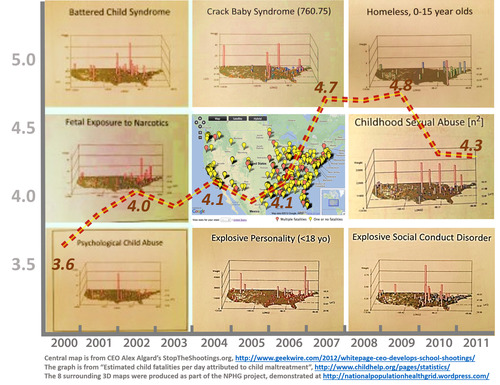
Central map is from CEO Alex Algard’s StopTheShootings.org, http://www.geekwire.com/2012/whitepage-ceo-develops-school-shootings/

The graph is from “Estimated child fatalities per day attributed to child maltreatment”, http://www.childhelp.org/pages/statistics/

The 8 surrounding 3D maps were produced as part of the NPHG project, demonstrated at http://nationalpopulationhealthgrid.wordpress.com/ 


Entrepreneurship, Innovation at its Best: the Young Entrepreneurship Workbook" by Kevin O’Logan, is at  http://www.amazon.com/Entrepreneurship-Innovation-its-Best-Workbook/dp/0984269800


See on nationalpopulationhealthgrid.wordpress.com

See on Scoop.itEpisurveillance

An impressive 3 year study of the ecology of West Nile Ecology using GIS for Spatial Disease Research and Surveillance

Brian Altonen‘s insight:

The various maps I produced for west nile research during its first 4 to 5 years of penetration into the U.S. are depicted by the following map’  The pins on this map serve as links to the images/maps provided about each of the points, areas or regions reviewed.


http://www.zeemaps.com/view?group=751431&x=-73.573955&y=41.991774&z=10;


Aside from standard ArcView basemaps and TIGER files, these maps utilized remote sensing, landsat imagery, NLCD, NDVI, DEMs, seamless government base maps, raster imagery, aerial photography, field mapping  activities and surveillance, GPS and numerous ArcView Avenue extensions. 


Field sampling techniques of point, grid and transect nature were used, including elevation base transect work.  Grid analyses, density analyses, spatial analyses add-ons were employed.  Ecological and population density reviews were developed.  Host-vector spatial distributions/density were evaluated.  Temporal trapping histories were reviewed.  Species-vector relationships and trap types were documented, dead host birds positive and negative testing were evaluated.  


A very large vector swarm late in the year (October) was evaluated.


A handheld photosensor was used to evaluate the relation of sunlight penetration through tree canopy cover to ground surface, in order to realte this to overall species types and densities captured at these traps.


late in 2002, aerial photos were used to predict/define positive testing site features and the likelihood for return of a positive testing vector the following Spring (it returned, which proved that local species carriers could exist and survive the overwinter). 


Field analyses and GPSing were used to develop the site ecology, water, canopy and trap information for a positive testing human case of unknown origins.   A DEM analysis of a creek floodplain and ravines was used to document species in relation to elevation.


The two major GIS options were used to produce both the vector and raster products. 


This work later resulted in my receiving an award for this presentation of several of its components in 2006.

See on www.zeemaps.com

See on Scoop.itMedical GIS Guide


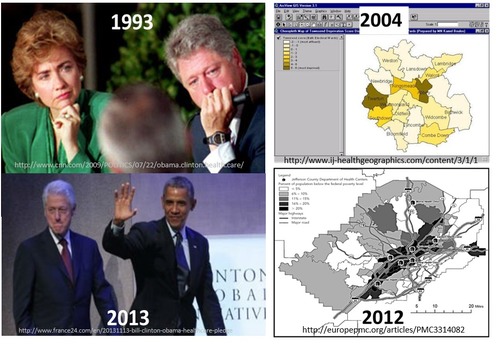
“Using GIS as a tool to determine where clinics can be placed to maximize access to care is particularly relevant for primary care services associated with ongoing changes to our health-care system, especially in light of the Patient Protection and Affordable Care Act of 2010. Therefore, GIS may serve as a tool to aid decision -makers in strategizing clinic placement and managing the forthcoming demand on health-care resources.”

 Devon Taylor, Valerie Yeager, Claude Ouimet,  and Nir Menachemi.


From article at http://europepmc.org/articles/PMC3314082/reload=0;jsessionid=Z4XdvuJoks8vnPUBUzlL.38)

Brian Altonen‘s insight:

GIS.  New technologies, new resources, new methods. 


How are Obamacare and GIS related to each other regarding the history of managed care?

See on europepmc.org

selfportrait_electromagnetics

.

I recently had an article published in International Journal of Epidemiology ! ! ! 

Brian Altonen.  Commentary: John Lea’s Cholera with Reference to Geological Theory, April 1850 .  International Journal of Epidemiology 2013 42: 58-61. 

Access at:

JohnLea-Cholera_IJE-Article

.

The Law of Pandemics

An unexpected development in the history of medicine came in the mid 1800s due to the discoveries of Alexander Humboldt, Karl Freidrich Gauss and Richard Faraday.  Robert Lawson invented the Law of Pandemics.

Robert Lawson (1815-1894) spent his life working in the military.  He began his career at the age of 20 when he was appointed Assistant Surgeon and served in the West Indies, the West Coast of Africa, Cape Colony, and the Scutari Hospital operating during the Crimean War.   During these years his position was advanced to Surgeon and then Surgeon Major, before being advanced to the highly respected position of Deputy Inspector-General in 1854.  Lawson continued to serve in this position until 1867 when he was appointed Inspector General of Hospitals in 1867, just five years before his retirement in 1872.

Lawson’s interest in epidemic disease patterns probably began with the cholera epidemic of 1829/1830.  He was then about 15 years of age, a year or two immediately prior to having his fate decided for him in terms of professions.    Lawson’s childhood upbringing would have involved traditional classes in the foreign languages, religion, politics and law, history, mathematics, and the various natural sciences, with math, engineering and the sciences merged into a single discipline called natural philosophy.  His schooling during his teen age years followed by medical training as a young adult would have exposed him to the nuances of he needed to know about anatomy, physiology, chemistry, climate and the earth’s natural settings, and how these all related to diseases and their treatment.
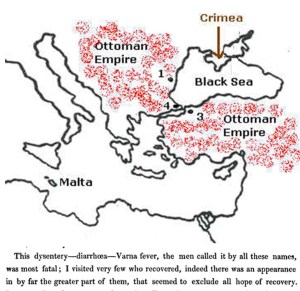
crimean-war-map-bw-quote

Quote from page 12, Scutari and Its Hospitals, by Lord Sidney Godolphin Osborne, 1855  

Lawson became a surgeon with his training, sometime in the early 1830s, probably due to a combined apprenticeship and lectures program common for the time.  His training commenced before, during or soon after the Asiatic cholera epidemic first made its way to western Europe in 1829.  His focus would ultimately be on the physical sciences since these were needed formed the heart of knowledge he relied upon as a surgeon.  The notion of animalcule disease (the precursor to bacterial theory) was just beginning to take form.  Also commonly cited at the time were theories about the relationship of “germs,” “viruses,” and “fungi” to diseases,  with the knowledge about the differences between them insufficient to matter much.  Lawson also learned that disease could be a product of your personal constitution, your family’s heritage, where you were born and raised, how nature impacted your during your lifespan and how well you adapted to these changes.  There was an early ecological form of disease philosophy that developed during this time, a result of Erasmus Darwin’s teachings just a decade or two prior.  Lawson would become quite familiar with this ideology and like others use it to explain those places where diseases tended to recur and how we become adapted to them or not and to the surrounding environment.  Many illnesses we suffered, therefore, would have been considered the result of failure to adapt as the means to recovery, making us a victim of natural events.

.
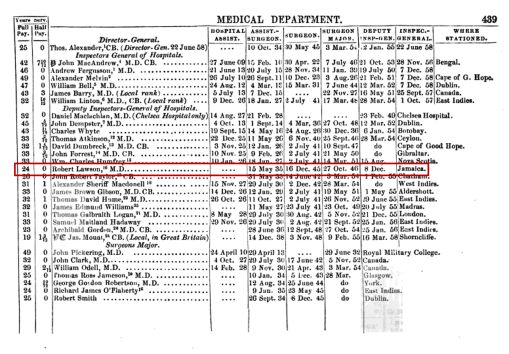
RobertLawson_NewArmyList_1857_Jamaica

Link to Source

.

Crimea Peninsula

When Lawson began his work as an Assistant Surgeon in 1835, all of this education went with him and followed him through his years of services up to the period of the Crimean War, which commenced in 1854.  It was at the Crimean War that Lawson and numerous other physicians would be tested for their knowledge, ability to adapt to major stresses, and ability to develop new treatment methods for engaging in better use of their skill sets.   In the end, Lawson and most other surgeons and physicians at the war lost out to nature and the limitations as surgeons when it came to dealing with infectious disease patterns.  Nature got the best of many soldiers, thousands of whom had to be buried due to common problems like excessive blood loss, deep lung penetrations due to the sword, post-traumatic gangrene, post-surgical infection, crushed appendages, penetrating head injuries, lengthy spells of diarrhea, dehydration, and long term malnutrition.  Most of these came as a result of unhealthy living quarters, vermin, and what many probably speculated to be some form of disease causing contagion passed on from one cot-bound patient to the next.

The Crimean War taught many of its medical staff the problems that poor planning and lack on adequate sanitation measures can have.    All of this was changed once Lawson removed to Jamaica around 1856/7 and began to serve as Inspectors-General, Lawson for the hospital established in Newcastle, a small hilltop retreat and military setting located just northeast of the  town of Kingston, Jamaica.  The study of diseases and disease patterns became more complex as physicians and surgeons added the role of the earth on disease and man to their study.  Up until this point, doctors had to contend with the issues of man versus nature (environmental cause) and man versus himself (sanitation and constitution).  Gravity was in control of everything that consisted of physical matter–a Newtonian concept.  With the introduction of “magneto-electric” forces based theory (versus electro-magnetism) to this paradigm, our natural history knowledge took on a new dimension as Faraday’s principle led people like Lawson to speculate about (latch onto) the theory that the very physical (Newtonian) man had to interact with this Oerstedian omnipresent electrophysical force that existed in the universe.  (Named for Hans Christian Ørsted, 1777-1851, Copenhagen, the discoverer of this terramagnetoelectrics effect; see wiki on this.)
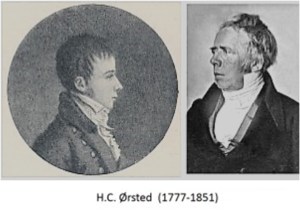
Portrait_HCOrsted

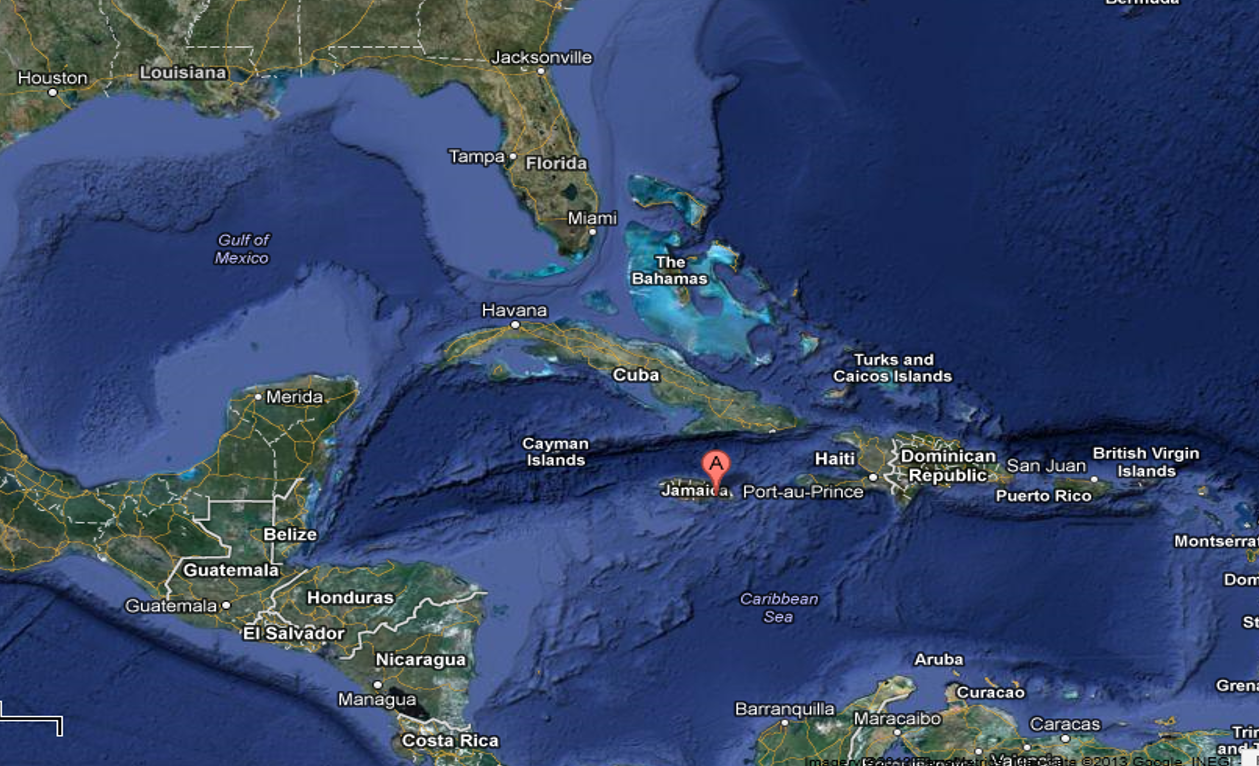
One of the more unusual things about Jamaica around this time was its unique role in the study of the earth’s magnetic behavior.  It was where the earth’s magnetism remained constant, never fluctuating over time like it did elsewhere on the globe.  This geographical feature of Newcastle led Lawson to engage in some fairly controversial studies of disease patterns.  Whereas his work during the Crimean War in 1854 resulted in some “collision with the authorities” (as his obituary put it), his new findings in magneto-electrics while residing in Jamaica would cause even more controversy.  [According to history, Lawson engaged in “questionable procedures” following a cholera outbreak, possibly bad hygienic upkeep and poor patient care at all levels–see the details of this in Scutari and Its Hospitals by Lord Sidney Godolphin Osborne, 1855, pp. 12-14; Lawson and most others employed at the hospital were severely chastised for crowded conditions and poor sanitation, a topic for review on another page.]
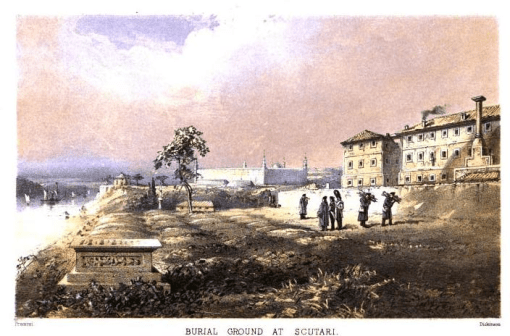
BurialGroundatScutari

Following his removal to Jamaica, Lawson took on some new duties that were very different from those of Crimea due to the altitude of where he was at and the island community setting.  If we take a close look at Alexander Keith Johnston’s map, published 2 years later, we find that the natural history and medical geography of Jamaica to be completely different from Crimea.   According to the disease philosophy for the time, Jamaica is torrid in nature, whereas Crimea is in a temperate region, just north of the boundary of the  tropical or torrid zone but well south of the arctic zone.
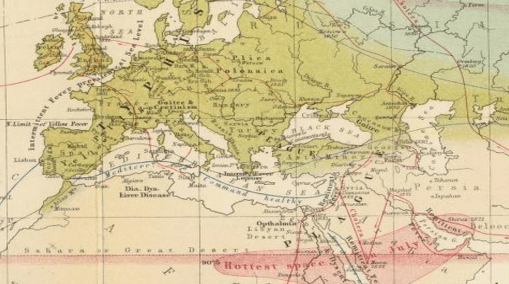
Crimea_AlexanderKJohnstonsMap_LgArea

Article related to above map by Johnston

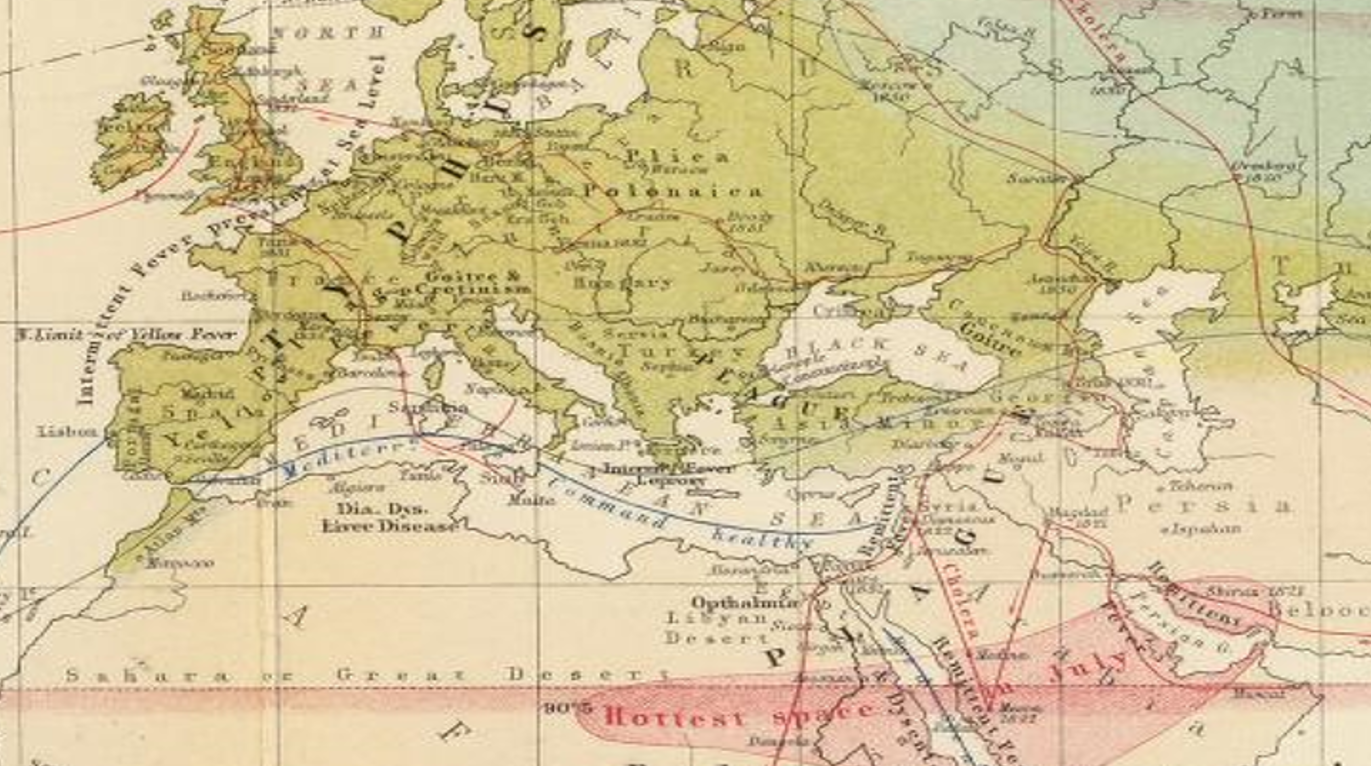
The major disease history of Crimea included Plica Polonica to the west over a fairly large area, plague to the south of the Black Sea, Goiter ridden regions east of Crimea (the peninsula along the northern edge of the Black Sea), and Fevers and Leprosy well to the south.  The topography tells us that this place is bordered by water on three sides, has a tendency to have to deal with wind patterns, especially those coming upward or laterally from the sea itself.   Inland routes of migration for disease have few routes to take, with that from the west bearing plica polonica and that from the east fairly disease free.  Given the right conditions, the Crimean Peninsula was perhaps considered a fairly health place to live, with opportunities for sanative effects on valetudinarians in need of  management of their chronic conditions.  Rheumatism, gout, and tuberculosis are more likely to develop into problems at this latitude due to its perilacustrian setting.  The reasons for illness during the war had to be related to the humidity, wind patterns, constitution of the people residing there.  For British soldiers, this could mean the local climate was too much for their temperament to withstand and their bodies to handle for much time.  Lawson’s observations of the soldiers in this setting, be they Turks or allies, showed these people became victims of the war first, the hospital second.  No matter what the injury, penetration wound, crushed joints and bones, or lost appendages, the conditions following their surgery in order to assist with their recovery were responsible for some of the worst deaths due to infections setting in than any war previously had to suffer.  This was due to population density, crowded in-hospital bedding settings, damp moist floors, mildew on the clothing and linens, and rotted wooden floor boards.  Add to this the unsanitary nature of the battlefield due to its decaying horse carcasses and we have the initial requirements for an area where patients would ultimately have to suffer from diarrhea, dysentery (opportunistic, not amoebic, i.e. see my thesis) and in the worst, cholera (not Asiatic cholera).
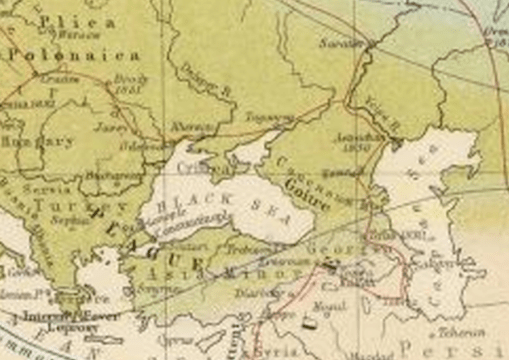
Crimea_AlexanderKJohnstonsMap

.

Jamaica

The setting and climate of Lawson’s new place in Jamaica was different from that of Crimea.  It was still conducive to diseases linked to high humidity, rapid decay or decomposition the various sources for effluvium and “miasm”, and the results of war were no longer a concern for him in this region for the time being.  Whereas his service in the Crimean War involved primarily the need for much surgery and chloroform due to the injured, and diarrhea stricken soldiers and prisoners, in Jamaica, the primary diseases he had to endure were the various fevers that struck this region.
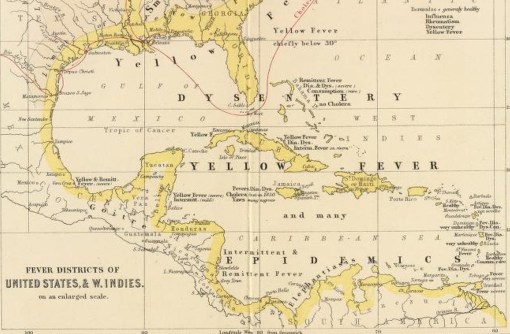
AlexanderKJohnston_JamaicaSetting

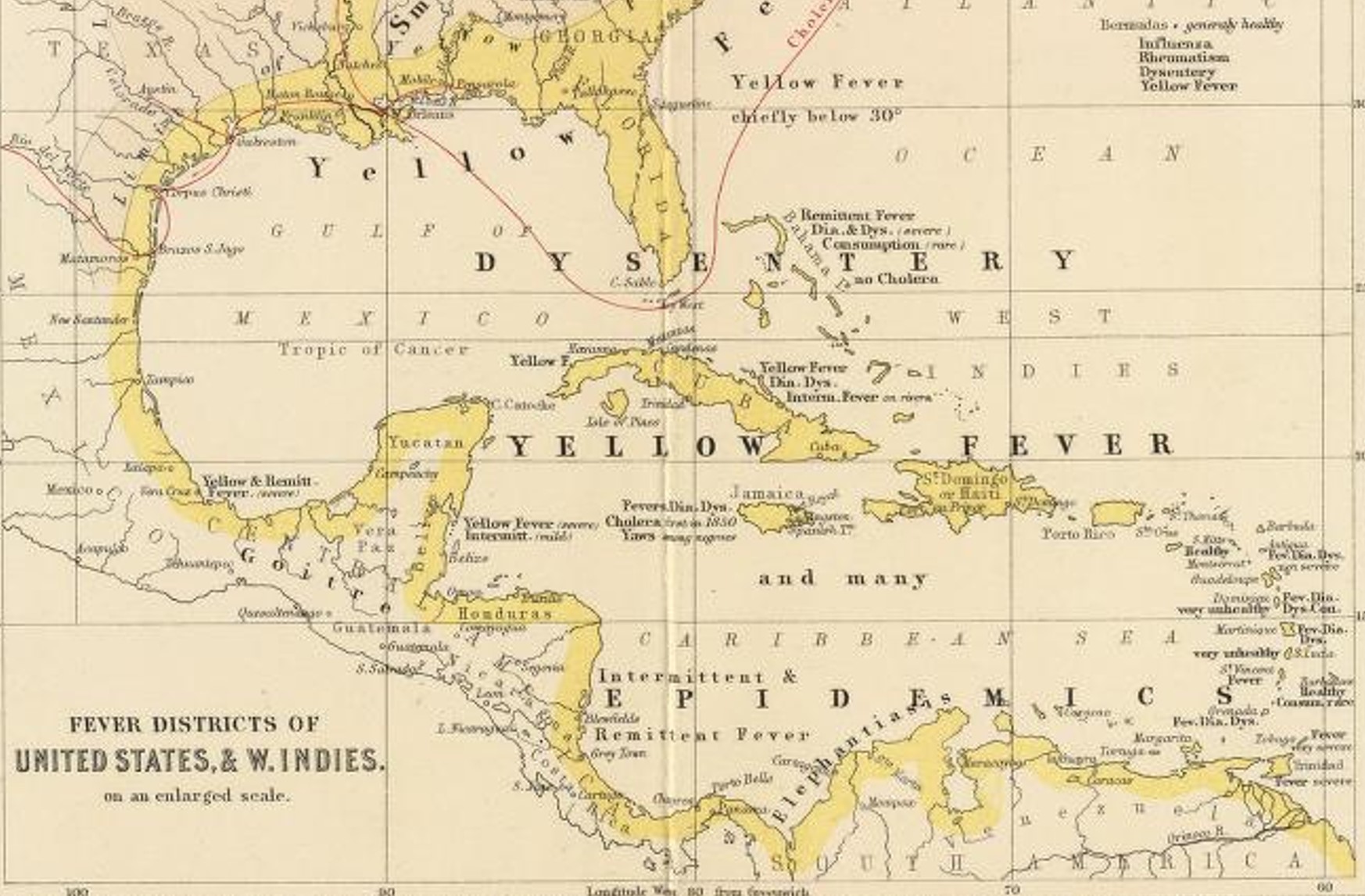
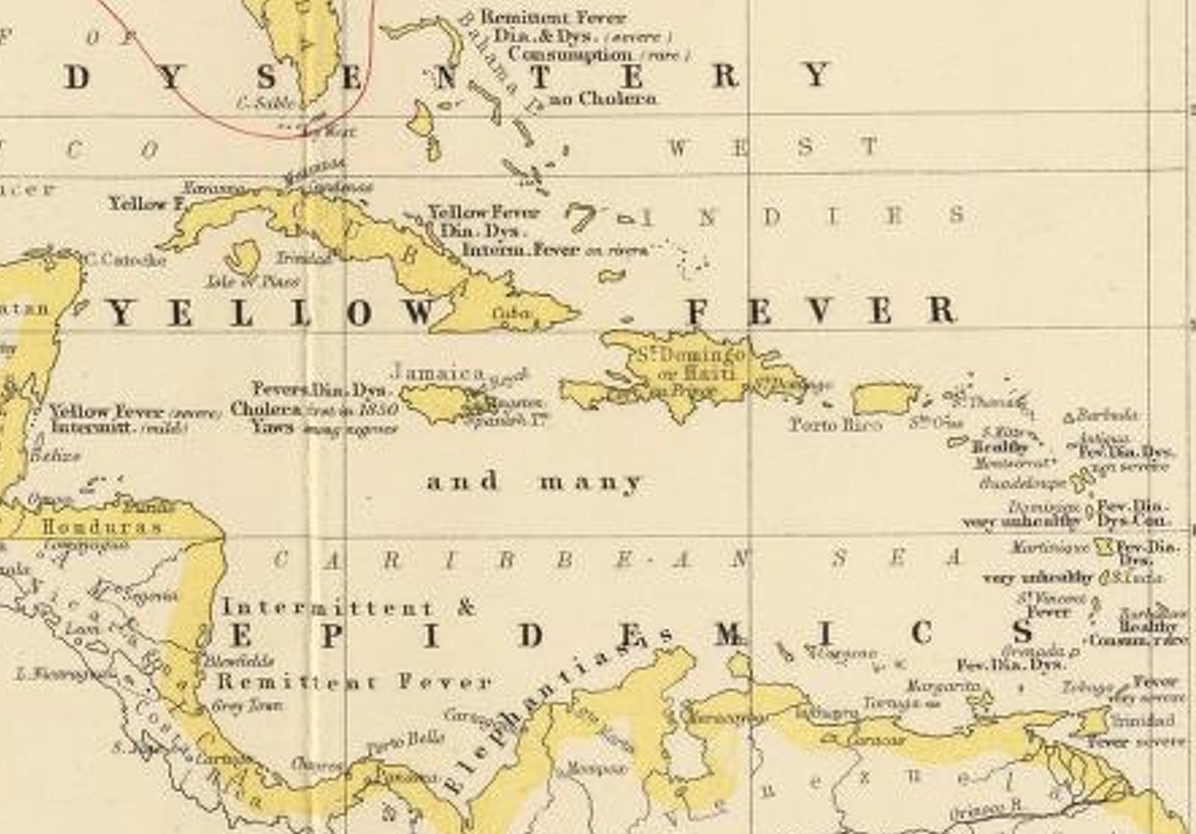
Note on these maps the following: the fevers, diarrhea and dysentery are common, and consumption is “rare”.  This related to the belief that residency here was very health for severe chronic, degenerative diseases like consumption, a belief popular since the late 1790s.  Also notice cholera failed to reach some of the islands around this time (1856).  Some islands are termed “healthy”, others “very unhealthy”.
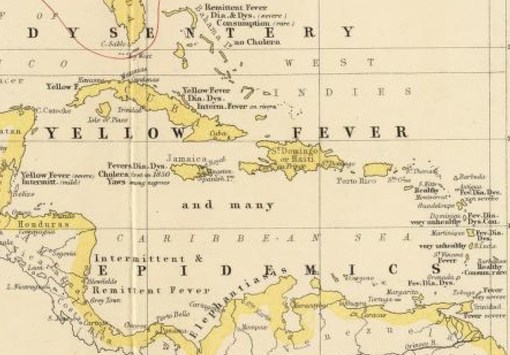
AlexanderKJohnston_JamaicaSetting_closer

The various small island settings east of Porto Rico note Dia[rrhea], Dys[entery] and Fev[er].  Two are “Healthy.”

.

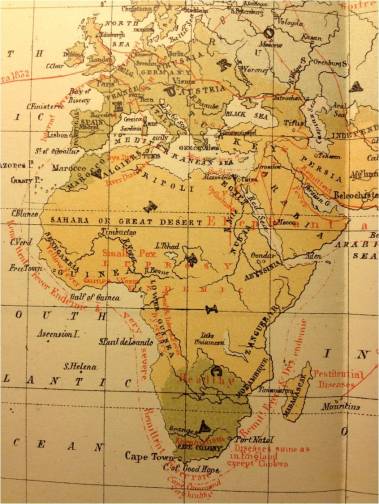
According to Johnston’s 1856 map of this setting, Lawson was again tending to patients with diarrhea and dysentery along with yellow and intermittent fever patients.   The most deadly of these diseases was yellow fever, which the Jamaica region was the heart of due to its tropical climate.   Goitre was still present.  But there were also a significant number of unique diseases for this region, mostly due to its black community (today we know this disease was primarily of Slave trade origins).  Yaws was the primary example of a disease brought to Jamaica from Africa.  Elephantiasis was prevalent on the mainland close to the isthmus.

Cholera also struck Jamaica, but not in 1832; the first year it went pandemic on the island appears to be 1850.  According to the story of how it Asiatic cholera to Kingston, Jamaica (published in Lancet(?)), cholera demonstrated to physicians that it favored regions stricken by  poverty, poor nutrition, and unhealthy, crowded living spaces.  This population based interpretation reduced the blame being placed upon nature for many of the epidemics.  In 1840, when yellow fever came to Jamaica and struck the military setting in Newcastle, the General in Newcastle deduced that high elevations reduced the risk of this disease and so moved his troops there–thus the establishment of this facility.   By the time Lawson had arrived in this region, 15 to 16 years later, the new theories for disease behavior were both conflicting and supporting these observations made by the General, and supported by the then recently published findings of the same by William Farr for cholera deaths.  Farr claimed that high elevations reduced the risk of cholera deaths in heavily populated settings.   But physicians also observed that proximity to seaports or city centers was a requirement for yellow fever, but not cholera.

The only observations countering this ideology were those which linked disease to the ports where ships lie in ocean bay waters.  In Jamaica, on at least one occasion, the yellow fever extended too far inland to be obeyant of this rule then firmly established.  Yellow fever struck in high elevation regions (in fact people already afflicted with cholera by mosquitoes in the portside probably migrated into this high elevation setting and then died).  But Lawson’s pursuit for knowledge of the cause of these deaths naturally led him to make use of any new experiences he encountered in Jamaica.  One such experience, with its background related to the Crimean War still recent, ultimately led him to become a major supporter of the sanitation movement.  The other very important experience Lawson had once he removed to Jamaica was its unique magnetic history.
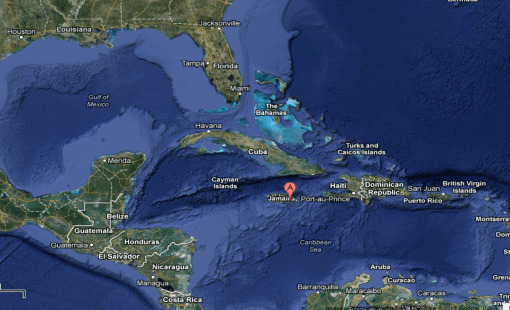
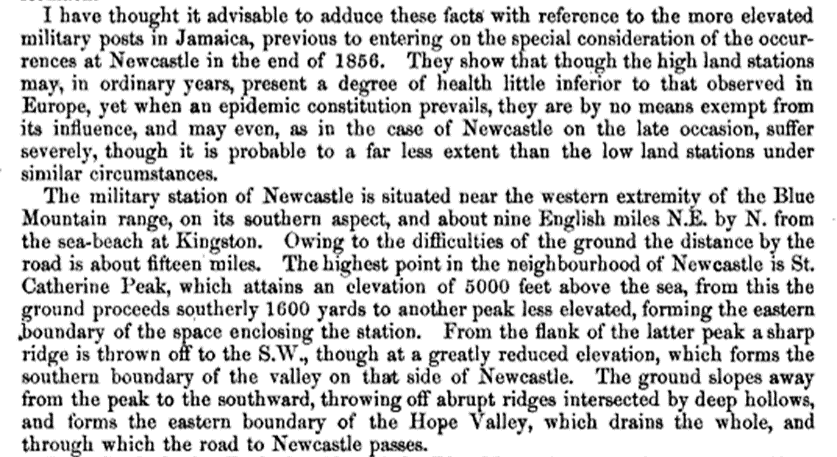
NewcastleJamaica

Jamaica–the theoretical zero point for the earths ever-changing magnetic field

Both became the motivating factors for Lawson’s development of the magnetic isocline theory for diseases like cholera and fever once he resided in Jamaica.  He worked and lived in Crimea from 1855-1856, the last of the peak years of the 1848 to 1856 world cholera epidemic.  His removal to Jamaica in late 1856 happened right after the epidemic ended.  His theme for the cause of the more fatal malignant cholera had yet to be fully developed.   The prime question for the time was what events transpired to convert a common. not so fatal disease like “cholera morbus” into the deadly “malignant cholera”.   Lawson next directed his attention for answering this question to the magnetic field behaviors in an around Jamaica.  Fluctuations in these fields occurred every few years.  After rigorous review of the dates and events that transpired during his first months there, in very short time he came to the conclusion that cholera in general had an underlying two-year cycle related to its malignancy.

Evidence for the events leading up to this supposition are summarized in a description of the discovery of compass variation for Jamaica as early as a century prior.  This was reported in an 1850 book entitled A descriptive atlas of astronomy and of physical and political geography (London, 1850, p 90) by Thomas Milner and August Heinrich Petermann:

[T]here are places [such] as Spitzbergen, Jamaica and the neighbouring islands where no change in the variation [of the compass over time] has been perceptible. The whole mass of West India property says Sir John Herschel has been saved from the bottomless pit of endless litigation by the invariability of the magnetic declination in Jamaica and the surrounding archipelago during the whole of the last century all surveys of property there having been conducted solely by the compass. 

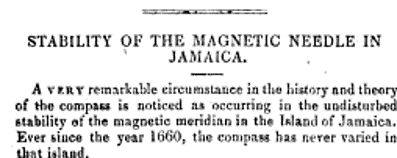
Since 1660, it was known that the compass may vary its readings taken in the same place over time.  This behavior of the earth’s magnetism was well known due to how it influenced the surveying of land claims, and began to appear in the common press between 1800 to 1825 when it was added to the natural philosophy books being use to teach children.  For example, in The Critical Review: Or, Annals of Literature edited by Tobias George Smollett, (Volume 10 (1807) p. 259), there is an article stating “since 1660 the compass has not varied at Jamaica; it is now what it was then and in Halley’s time, 6 ½ degrees east.”  Twenty-five years later, the same knowledge is bequeathed to the readers of The Guide to Knowledge (Volume 1, 1833, p. 453), edited by William Pinnock.
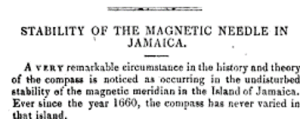
Aguidetoknowledge_TheMagneticNeedleinJamaica


It is also made reference to an article penned by William Robertson and critiqued in The British Clinic, volume 30 entitled “Observations on the Permanency of Variations at Jamaica” (pp. 622-3, in turn this is from Phil. Trans. 1806).  But is best summarized by the following taken from a book review published about a textbook published for schooling, with a female author:
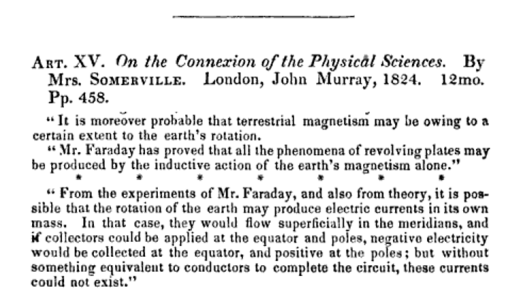
MrsSomervillonFaraday_1824

The American Quarterly Review, Volume 32, 1834, pp. 429-457, see p. 453.

Ultimately, Lawson would use Faraday’s findings to prove his theory for the epidemics.  But Faraday’s Law as it related to disease patterns also had an underlying philosophy already in place to help make this philosophy sensible, not just speculative and imaginative, as if Lawson were developing a new offshoot of a popular natural science.  A decade and a half prior, many claimed this is exactly what epidemic speculators like John Lea did (so claimed by a writer for the AMA in 1853), a reminder of the Abraham Gottlob Werner school, German physicians focused on the geology of nature, and who according to some doctors and scientists, could explain disease patterns using this philosophy.
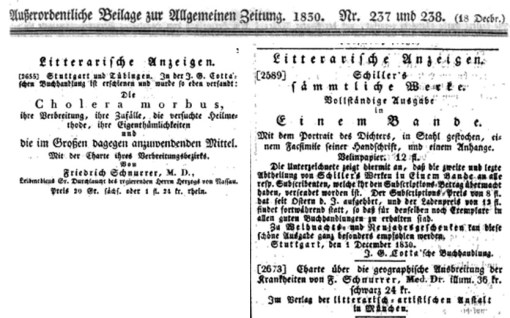
Schnurrer'sAnnoucement_1830

Announcement of Friedrich Schnurrer‘s maps of world diseases, and Asiatic cholera, pages 648 and 855, from Johann Friedrich von Cotta‘s Allgemeine Zeitung München, 1830. Description of this new periodical with mention of the map.

Schnurrer

From about 1797/1800 on, the concept of disease was significantly changed from any leftover 18th century traditions.  Solidism (William Cullenism) was produced as an attempt to counter and then substitute for the fluids or age-old humoural theory.  The notion of alkalinity and disease took routes in two directions.  One led medical philosophers along the route to believing chemicals and poisons defined certain disease patterns, a philosophy very common to medical journals beginning around 1805.  Merging this philosophy with a more global one was attempted by a German scientist and writer Friedrich Schnurrer (1784-1833).  His compositions ultimately led to the rise in popularity for the landschaft theory of nature, the belief that the world as a whole is more than just the sum of its parts.

Schnurrer (some pages on whom are still under construction) developed this philosophy due to his dissertation on metals and the earth in 1805, his study of what he called “oxydatarum”.   It was a progressive word for the time, and was rarely used elsewhere, and was highly suggestive of links being drawn between our understanding of the earth and its atmosphere, climate, and weather, and the role of oxygen in life and vital energy.  In part of his title, there is an inference made to important health-linked events in the body that relate to the external environment (rerumque externarum indole=events concerning/affairs regarding external/foreign character).

Schnurrer’s next two publications were on geographic nosology, or the classification of regions and their relation to epidemic and endemic patterns that prevailed.  In each he detailed both the macrocosmic view of the earth and its natural phenomena, its macrocosmos according to earlier Christian metaphysician and natural philosopher Jakob Boehme), and microcosmic view or minutia of nature that scientists were now focused on trying to explain all of the complex natural events.  Ten years later, Schnurrer’s work went into the nature of specific diseases in the world and their behaviors.

The following is a chronology of the publications Schnurrer produced:

  • 1810.  Materialien zu einer allgemeinen Naturlehre bei Epidemieen und Contagien.  [Material on the general theory of nature in epidemics and contagions.]
  • 1813.  Geographische Nosologie, oder die lehre von den Veranderungen der Krankheiten in den verschiedenen Gehenden der Erde, in Verbindung mit  physischer geographie und naturgeschichte des Menschen.  [Geographic nosology, or the doctrine of the changes of the disease in the various foregoing the earth, in conjunction with physical geography and natural history of man.]
  • 1823-4. Chronik der Seuchen, in Verbindung mit den gleichzeitigen Vorgangen in der physischen Welt und der Geschichte der Menschen.  [Chronicle of the plague, in conjunction with the simultaneous events of physical world and human history.]
  • 1828.  Die geographische Verbreitung und Ursachen des Wechselfiebers.  [The geographical distribution and causes of intermittent fever.]
  • 1831.  Charte uber die geographische Ausbreitung des Krankheiten;  Charte der Verbreitung der Cholera morbus.  [Map on the geographical spread of the diseases; Map on the spread of cholera morbus.]
  • 1831.  Die cholera morbus, ihre Verbreitung, ihre Zufalle, die verschiedenen Heilmethoden, ihre Eigenthumlichkeit und die im Grossen dagegen anzuwendende Mittel.  [The cholera morbus, its distribution, its coincidences, the various methods of healing, its properties or sensitivity to different agents applied globally.]
  • 1831.  Allgemeine Krankheitslehre gregrundet auf die Erfahrung und auf die Fortschritte des neunzehnten Jahrhunderts, [General pathology, summarized by the experiences and progress of the nineteenth century.]

Other renderings of these metaphysical concepts were prevalent as well in what would become Germany (See also WorldCat for Schnurrer’s writings, and notes on Karl Friedrich Kielmeyer (1765-1844), WorldCat connection].  Some medical philosophers promoted the natural philosophy of landschaft,  interpreting diseases as events related to the reaction of our body to the surrounding environment, an offshoot of the early adaptation-evolution theory promoted by Justus von Leibig, Erasmus Darwin (the infamous Charles Darwin’s grandfather), Louis Agassiz, Jean Baptiste-Lamarck, and others.  Others were heading in a direction that focused on the notion that we make ourselves sick, the primary argument for which had mostly to do with sanitation practices, personal and social, and our constitution and temperament.

.

Gauss and Faraday

By the time Lawson began learning medicine and surgery, landschaft was a common part of most medical philosophies related places to health, but not yet a part of British medical geography philosophy.   When Lawson learned medicine and surgery, the philosophy of electricity and medicine was once again in a state of revival.  The ruling philosophy for terrestrial magnetism were the ideas published by Gauss, Goldschmidt and Weber, Michael Faraday, and in terms its purpose and meaning, Alexander von Humboldt.

..
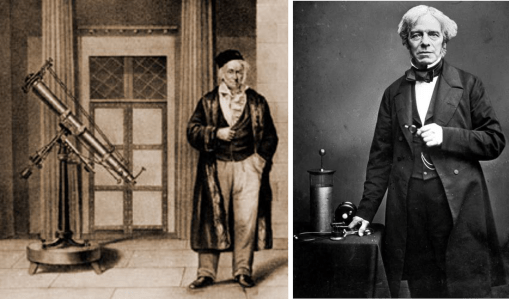
Gauss-Faraday

Karl Friedrich Gauss (1777-1855) and Michael Faraday (1791-1867)

.

The works of Gauss and Faraday on the earth’s electricity and magnetism are what  led Lawson to draw his conclusions about the disease patterns on this planet.  In his Natural Philosophy booklet Faraday stated that a relationship between electricity and magnetism that he could produce in the laboratory also existed with the world, known as terrestrial magnetism.  He explained it to be a result of the  inner makings of the earth and its crust, and the impacts of metals in the earth on these magnetic fields, resulting from  changes over time induced by an internal movement of the same (a precursor to the first of several versions of our continental shift theory).  This the change in true north over time in our common compass readings.

.
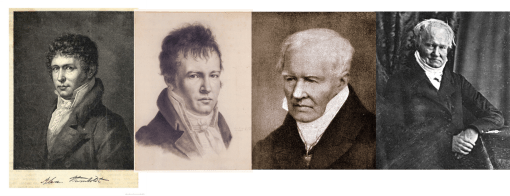
HumboldtPortraits

Alexander von Humboldt 

Humboldt

Relating such a philosophy to medicine and life partook a different line of reasoning.  Such a behavior came as a direct result of Alexander von Humboldt’s writings around the turn of the century.  Fascinated with the ability of nature to produce electricity in various ways, in particular that of the Electric Eel,  he tried to relate this energy from a living being to the formation of lightning by clouds, auroras in the sky, or the creation of St. Elmo’s Fire along a ship’s mast.  In the book he wrote on this topic, appropriately called Cosmos: A Survey of the General Physical History of the Universe (1845), Humboldt goes through the history of this philosophy extensively in his footnotes at the end of this book.  With these notes he attempts to assign meaning to these studies going back to about 1780, when the nature of earth’s magnetism was first recognized and documented in writing.  Humboldt also uses this reasoning to assign meaning to the same natural forces found in the biological world, linking the cosmos and earth to life in general and nature’s ability to give life or take it, a philosophy developed solely based on Schnurrer’s landschaft theory.  Followers of landschaft considered disease to be a result our harmony with the universe’ so to speak (the very notion proposed as well by Franz Anton Mesmer in the 1760s).  Any other attempts by science that failed to review the holism of nature, were in turn found to be compartmentalizing their knowledge of nature into specialties, a way of learning which was rapidly become very popular, and so harmonized with landschaft theory in Schurrer’s 1810 to 1815 works.
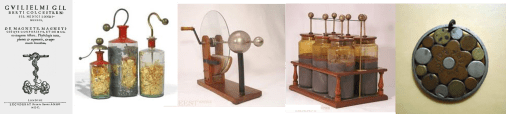
EarlyMagneticandElectricCure

Evidence for this merging of knowledge by physicians and scientists to form a new science of healing first appeared very early as a result of China’s exploration in the 1680s, when it was related to acupuncture and moxi (see following grey-notes).

SIDE NOTE

For an excellent series of original writings on this, use the following links:

Such uses for medical electricity were countered by similar philosophies and practices with a long history of use in Chinese medicine.  By 1810 it became well known that Egyptian, Chinese and Japanese physicians and others believed in acupuncture and moxi for revitalizing ailing parts of the body [see 1683 Philosophical Transactions, Joseph Acerbi’s 1798-9 Travels Narrative or summary of this study of Laplanders published in The Scots Magazine 1802, also the 1797 London Medical and Physical Journal-W. Coleys review,  Oeuvres de Vicq-dAzyr 1805, Robert John Thornton’s A New Family Herbal (1810), William Woodville’s Medical Botany (1810), Clark Abel’s critique on this in Narrative of a Journey to the Interior of China (1818), an anonymous letter published in The Asiatic Journal, 1820, and William Wallace’s Lancet article on Moxa, 1827].  This philosophy became popular in London by 1820 due to Dr. James Morss Churchill, who wrote a treatise on this subject [search 1 on the same, search 2].  In France (one of Churchill’s first translators), a similar revival took place in the 1830s when electricity related versions of the moxi-acupuncture treatment were tested for the treatment of certain chronic diseases and pain, but especially gout and rheumatism. [see also Google Advanced book search on Acupuncture, 1820-1835).

.

Patterns

But the first important discovery or invention in this field in terms of Western European philosophy and discipline came with the invention of the Leyden Jar about the same time (the Dutch and others have laid claim to this; see my page on this).  This is followed in the late 18th century by the popular static electric generator, with which a glass globe or disk was spun and a piece of leather or fabric laid against it resulting in the storage of a charge, released upon contact with the human body and so used to “revitalize” a paralyzed appendage for example in infantile paralysis (bacterial meningitis) or apoplexy (stroke) induced paralysis.  The early 19th century also gave us the galvanic device, a liquid-based version of the battery which was used to produce and store enough of a charge to create the shock needed to bring a weak and ailing body, a limb, organ or part, back to life.  Each was used to revive the life force or vital spark in an ailing patient.  Some of their most successful uses involved bringing a drowning victim back to life, or eliminating the pain someone experienced due to with rheumatism or a need for dental care.

The other history relevant to Lawson’s work was that of Jamaica, its natural history, culture and the relationship between each of these and Faraday’s principal of terrestrial magnetism.

In an 1825/6 essay presented by French geologist Msr. H. T. de la Beche, “Remarks on the Geology of Jamaica” (Trans. Geol. Soc. London, v. 2, pt. 2, 1827, pp. 143-194), the earliest version of the continental drift theory are used to define Jamaica’s geological differences in terms of lacking any iron rich substrata,  consisting in large part of just pieces in the form of sand and gravel alluvia formed by the diluvial and antediluvial structures.  (Also, an 1812 history of this magnetic theory was published in History of the Royal Society by Thomas Thomson; according to one writer this was proof  of the deluge or Noah’s flood–Literary Gazette, vol. 5, Nov. 3, 1821, p. 697-8; according to another writer, this made Jamaica a theoretically perfect place to harbor Africans during their move to slave plantations–Marly; or a Planter’s Life in Jamaica, 1828, p. 219; see also Sir Edward Sabine’s Work on terrestrial magnetism in the Atlantic, and the decision to monitor this in relation to weather, etc. by the Royal Society Committee of Physics, 1840 Report).

These observations about Jamaica only strengthened some of the opinions individuals had about Jamaica’s unique compass history.  As investigators continued to study the earth’s air and water flows and its magneto-electric flux, they came up with a number of very helpful conclusions about how objects planted on the earth’s surface behave.  In terms of the many events we witness, this pertained to the nature of the earth, water and air patterns–its meteorology and climate–but it also pertained to the behaviors of people, animals, plants and other living things on the planet.  For some objects on the earth, like the causes for disease, it even related to such things as germs, viruses, fungi, animalcules, worms, copepods, shellfish and crustacea.

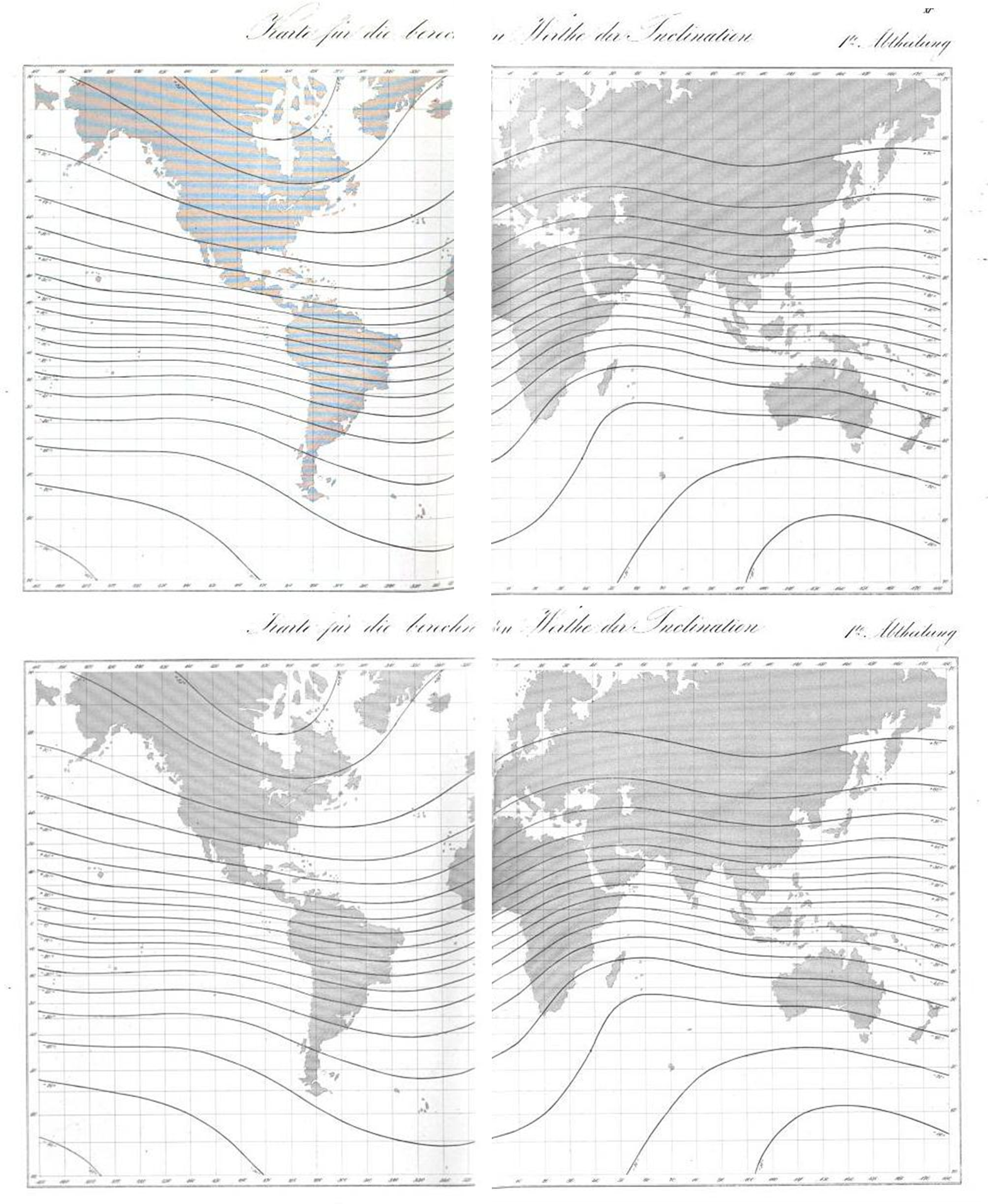
In 1840, Carl Wolfgang Benjamin Goldschmidt, Wilhelm Eduard Weber, Carl Friedrich Gauss produced Atlas Des Erdmagnetismus: Nach Den Elementen Der Theorie Entworfen.  It included the following maps (which by the way are nearly identical to Lawson’s map).
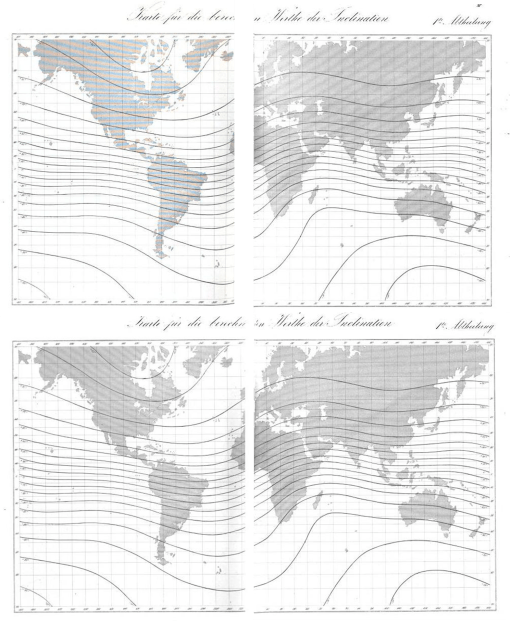
GoldschmidtWeberGauss_1840-2MapsofInclination

.

A number of natural phenomena were now being linked to this very different interpretation of the earth and surrounding environments or media.  The atmosphere had its own domain of energy to learn about as did the earth’s solid masses, as well as the masses of other objects in space.  These unique discoveries were used to explain events previous inexplicable such as the influence of solar flares, the behavior of meteor events, the behavior of auroras.  Cyclicity often played a role in these descriptions, almost as much as the frequent changes observed in natural cycles and patterns.

.
Aurora-augustusAtlas

An 1850 illustration of the Aurora, from Milner and Petermann’s Descriptive Atlas

.

Canstatt

By the time Lawson was a surgeon in the late 1830s, he was familiar with these teachings of natural science, medical topography and climatology, and the other philosophies dominating the professions of science, engineering and medicine by the time he began his practice.  Slowly but surely the miasma theory once prevalent to to the field was being considerably modified.  A philosophy had developed that incorporated numerous other observations of the natural sciences into how the causes for illness can be defined.  These explanation included such things as natural events related rain, heat, dew, seasonal cold, dampness, and “ice meteor” events (sleet and hail), along with the formation of mist, swamp gases, effervescing minerals from springs and anything that could be related to the alkaline chemistry of  the soil or substrata.  An especially new set of theories came about relating these natural meteorological phenomena to the earth itself,  its theoretical mass or form that he referred to as telluric material.  Such a model was already well defined and developed into a unique landschaft nosology, again developed by German scientist, this time Carl Friedrich Canstatt.

.

KarlFriedrichCanstatt_B04186_Portraits_NIH-Gov

Dr. Carl Friedrich Canstatt

One of the most influential German writings of the mid-19th century was Dr. Carl Friedrich Canstatt, and yet surprisingly we never learn about him and the important classification system he developed for diseases in relation to medical geography.  Most of his concepts were derived from the much earlier idio-miasm/koino-miasm theory published as part of a book at the turn of the century by a British writer, with the climate theory description added by a United States author [REFERENCE].  Canstatt subdivided this basic view of diseases into smaller categories by relating this philosophy to the new observations published for how diseases behaved with people in relation to specific classes of natural history features and events.

.

Canstatt’s Nosology of Diseases [link to full review]

Orders

  1. Exanthematous, specific disease processesVariola, Variolis, Varicella (measles, small pox)
  2. Malaria (disease processes by specific telluric atmospheric miasma generated): Intermittent fever, Yellow fever, Cholera, Pest, Dysentery.
  3. Typhus (disease processes from specific animal-generated miasma):  Spotted Fever, Typhus): Ileotyphus (Enteric Fever), Dysentery.
  4. Atmospheric (disease processes created by atmospheric agents that become miasma):

A.  Colds:

a. Rheumatoid,
b. Catarrh, Influenza, Whooping Cough.
B. Heat Illnesses:  Cholosen

5.  Poison animal diseases (disease processes, generated by specific disease poisons of animals): Glanders, Anthrax, Hydrophobia, Vaccinia, Mange (foot-and-mouth disease).

6.  Chronic Diseases . . .  (Chronic diseases, generated by specific contagions or distinct endemic causes): Syphilis, Lepra, Trichoma or plica polonica.

. . .

Remaining conditions with peculiar, unchangeable causes resulting in major conditions:

a) Toxicosis (from poisons from the inorganic and organic kingdoms produced diseases)
b) Trauma  (diseases generated by or from external injury)
c) Evolutionskrankheiten  (Evolution diseases)  (diseases that generated by certain developing states of the organism or modified growth, etc. by dentition, menstruation, childbirth)  (bone formation error)
.

.
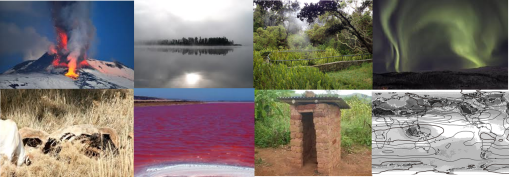
Miasmas2

Local and Distant “Miasms”

According to 1800 miasma philosophy, miasmas are either naturally produced (koino-miasma) or human/animal-produced (idio-miasma).    Which two of the above are idio-miasma?

According to Canstatt, 1847, by considering the process of pathogenesis and the onset of a disease induced by the above, which of these theoretical causes are  “telluric”?  “malaria”?  “typhus”?  “atmospheric”?  “poisonous”?

.

Canstatt successfully pulled most of the philosophies out there together into one nosology.  The disease groups explained here pertained mostly to nature’s influences, not those that were exclusively produced by man such as those due to filth or poor sanitation.  Still, the sanitation related misbehaviors of people could be closely related to those related to either Poisons, Chronic Disease or Toxicosis theories.    Man was not to blame for telluric, atmospheric and most animal-based miasmatic causes.  Constitution remained a causative factor on its own, but notice how neatly it does fit in as well with Evolutionskrankheiten, even nature makes us responsible at times for these very personal, internally somatic ailments we may be forced to live with.

.
RalphWalter_Electricity2.jpg

Lawson

Robert Lawson (1815-1894) was probably quite familiar with all the theories out there about disease just mentioned.  He was well read in the philosophy about how and why epidemic disease patterns developed and how and why they migrated to various new locations.  Like most others, he understood much of these teachings but could not use it to explain each and every epidemic pattern he would later lay witness to.

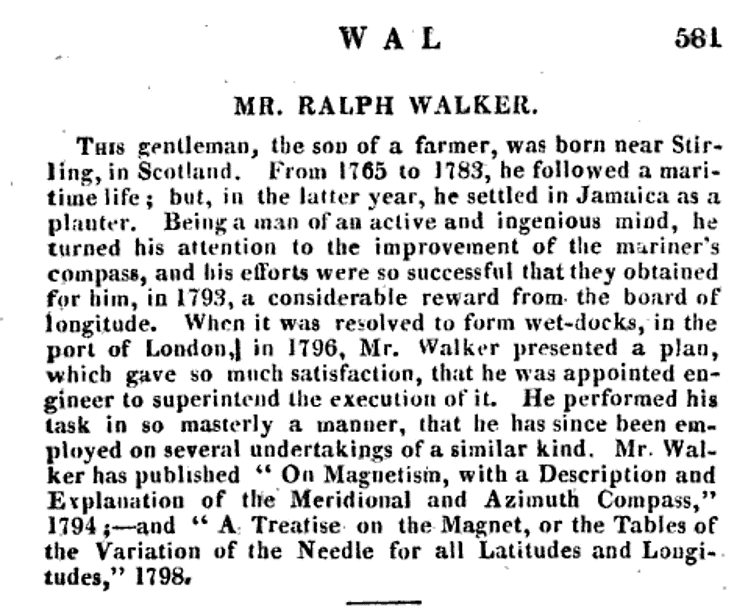
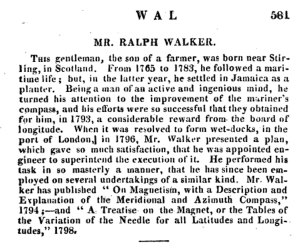
When he became Inspectors-General of the Hospital in Jamaica, his residency naturally exposed him to some new philosophies in the region (for a complete review of the writing on Electricity for the 18th C history see this bibliography).  In particular there were a number of researchers focused on the unique magnetic traits of this region, two of whom, John Churchman (Author of The Magnetic Atlas, Or Variation Charts of the Whole Terraqueous Globe: Comprising a System of the Variation and Dip of the Needle, by Which, the Observations Being Truly Made, the Longitude May be Ascertained.  1794, 1804, Link to ref.) and Ralph Walker (link), published their theories on this behavior of the earth’s magnetism between 1794 and 1804.  Their activities in the region and the subsequent publication of their work gave him further insights in the region, enough to develop his own theory on disease patterns with.

Lawson probably realized that by living in a place where the magnetism of the earth remained constant, he had the unique ability to study disease patterns temporally without need to compensate for changes in the earth’s magnetic fields over time.  He thus developed a way to study fevers in relation to the earth’s form and shape where he lived, noting how  these disease patterns behaved in relation to an unchanging surface with rising elevation over time, in relation to the local weather, winds and climate.  One of the first theories he attacked with these results was that of the most famous William Farr, the founder and major promoter of the elevation theory of cholera behavior and the by now widely recognized zymotic theory.

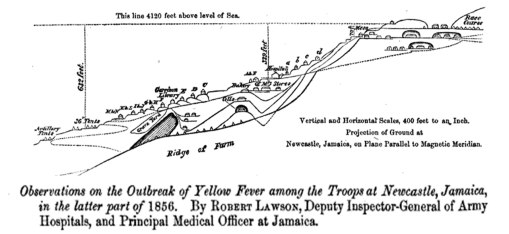
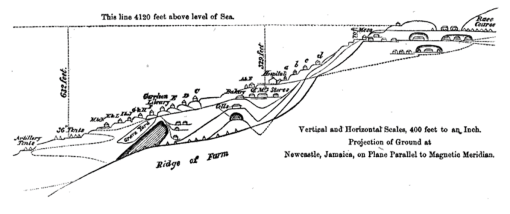
The following transect was produced by Lawson produced as a result of his studies to help delineate the different parts of his theory.
RobertLawson_Landscape_MagneticLines

Source of Above


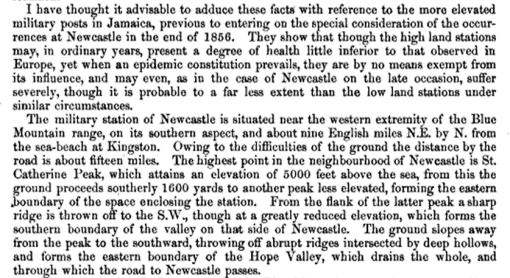
Helping Lawson along with his theory was the added abberance in local epidemic behaviors that resulted in it striking regions above the 4000 feet above sea level elevation.  This was against the teachings William Farr posed 10 years earlier for cholera, and seemed remarkably different from the yellow fever patterns witnessed and documented in shipping communities.  As a result, Lawson’s work made some readers ponder even more any remaining questions they had about his theory.  (Historical epidemiologists might also recall the high elevation fever noted in Mexico, during the Spanish Exploration period, also suggested to be yellow fever.)

.JamaicanHighElevationNote
From p. 326 in Lawson’s article

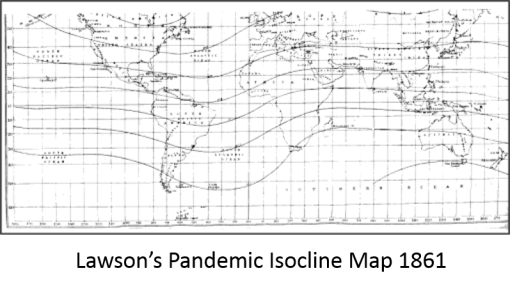
At the time of Lawson’s research and service, this was the “center” of everything when it came to the accuracy of the compass.  So along the remaining isoclines on the maps above (Lawson’s or Felkin’s), there is deviation from the norm or expectation with regard to disease patterns.  At the global level, Lawson probably tried to imagine these areal differences with his theory in mind.  That section of this isocline from just west of India, through the known ecological nidus of cholera, across to China and finally Japan, are places where the cholera not only prevailed, but also initiated its global spread patterns to new places where people resided.

.

As noted on Lawson’s transect, it  is placed along an area with unchanging magnetic fields (“Newcastle, Jamaica, on Plane Parallel to Magnetic Meridian”).  In Farr’s theory of cholera, Farr noted high elevation to prevent this disease from becoming epidemic in nature.  Lawson’s map of the yellow fever behavior, a very different disease, failed to abide by Farr’s conclusion.  Lawson’s map in fact even mentioned the increased likelihood for this disease at higher elevations, in areas well above the water edge and shipping ports.  Each of these factors seemed to break the rules suggested by previous other disease patterns.  This obviously made Lawson’s theory at times seem very speculative in the least, problematic for the profession at most.

By 1860, Lawson was ready to share his results with the world, producing a world map defining the disease prone regions.  He thus published the following:

.
Lawson_PandemicIsoclineMap

.

Lawson developed a following for his theory, although by very few in number when it came to acknowledging this theory for disease by the other British writers for his time.  One of these followers was Robert Felkin, whose maps depicting migrating epidemic disease patterns included a rendering of Lawson’s as his final figure (this writing is reviewed extensively on two other pages at this site’ i.e. the map itself, and for book content).    Twenty years later, in 1888, Felkin was promoting Lawson’s 1861 theory.  This occured right at the dawn of the bacterial theory for disease (Robert Koch, 1884).

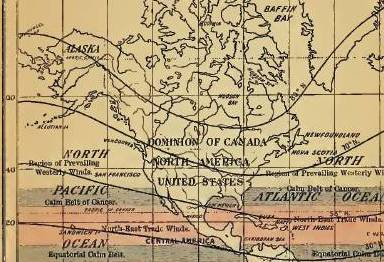
The following map of his depicts Lawson’s isoclines and the prevailing wind patterns.  The isoclines fail to follow the latitude lines, unlike the theoretical wind patterns, at least in theory.
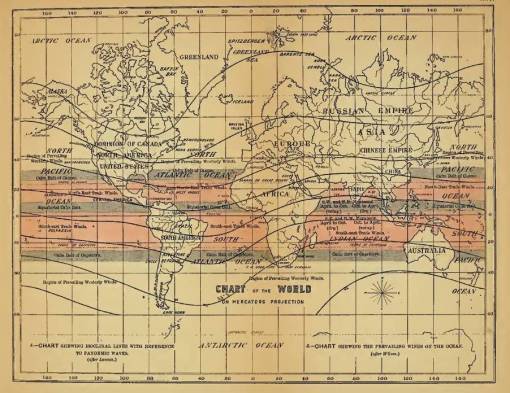
Felkin’s map of the same.  

Notice the “troughs” [ U ] and “ridges”  [ formed by the isoclines; these relate to the degree of deviation, plus or minus, from the expected; they shift position laterally (longitudinally for the most part), cycling back and forth over time.
LawsonsMapofJamaica_MagneticMeridian

.

Competing with Lawson’s theory was the zymotic theory developing in medicine, which replaced the miasma theory and its allies rather slowly between 1850 and 1860.  When the zymotic theory became popular, the preceding miasma theory lost its ground in terms of producing an effective disease categorization schematic or nosology.  During the mid-1840s, between the two malignant cholera epidemics, a German physician had defined a unique nosology for disease that included the earth’s forces as a form of miasmatic cause–which he called telluric.  Lawson’s philosophy was pretty much a continuation of this logic, even if he never heard or read about Canstatt’s new nosology.

.

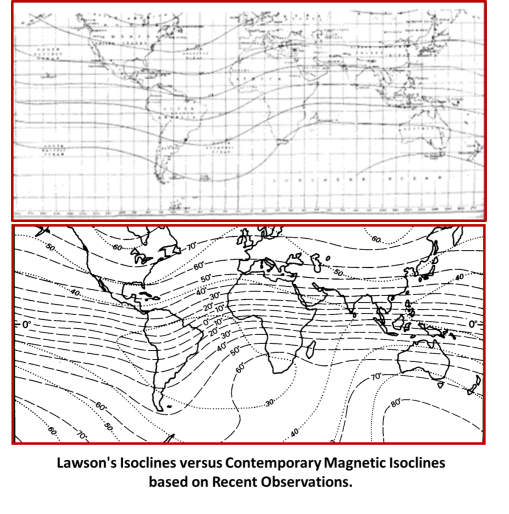
When we look at Lawson’s map adjacent to a more recent map of the magnetic isoclines for the earth, we cannot help but notice the similarities between the two.

.
Lawsons-vs-ContemporaryFaraday-MagneticIsoclines

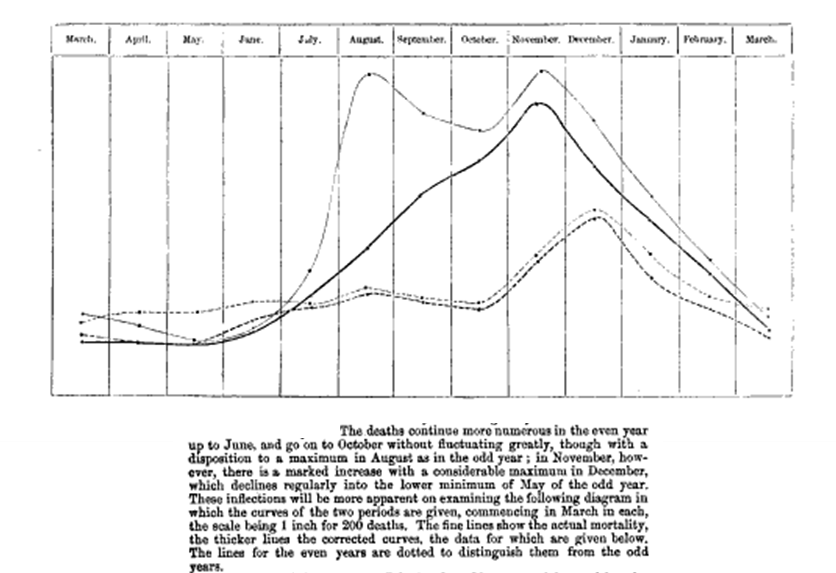
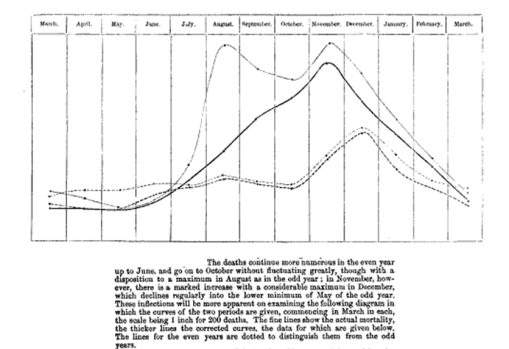
The final part of Lawson’s theory that resulted in its loss of credibility was his theory that the epidemic disease patterns influenced by these magnetic waves demonstrate a two year cycle.  to some it seemed that the ancient philosophy of disease numerology so to speak had just become a part of the picture–one’s ability to predict natural events based on a basic math equation.   The following graph attempts to illustrate his argument made for this hypothesis, published a few years later as part of an article defending the claims of his 1861 publication.
Lawson_ThePeriodoftheWaves_Chart

In the Statistical, Sanitary and Medical Reports, of the Accounts and Papers for Army Medical Department published in 1864, Lawson gave a stronger argument for his claims.   In this review he drew the following conclusion:

Lawson_1864_p441_periodsofwaves

.

Results and Lessons

Once arithmancy or numerology became a part of Lawson’s logic, his obsession the discovery took over.  Predictability was now an important part of his argument.   In such cases, the Occam’s Razor effect becomes inevitable.

A similar error was made with numerics involving the yellow fever and numbers of years between cycles notice by practitioners in Philadelphia and New York’s Hudson Valley in 1793 and 1797.  These epidemics became common topics of discussion due to Benjamin Rush’s involvement and the initial mistake he made in attempting to define its cause (rotting coffee beans and other stench-causing decay was one of his theories), versus the theories proposed by New York’s Samuel Mitchell (congressman, editor of The Medical Repository, and physician at the NY Regents medical school).   During this same time, religious leaders were considering yellow fever to be a new “plague”, interpreting it as a sign of God’s vengeance (see my page on this).   Believers in such a claim cited its three year pattern (the trinity) as a sign of this unique  pattern.  As result of the return of this epidemic as predicted, people left by Philadelphia by the tens of thousands in just a few days after it struck their city,  noted in the following newspaper article from the Poughkeepsie Journal (photographed from the microfilm):

PokJlAnncmtofYellowFeverstrikingPhiladelphia

Poughkeepsie Journal article, Poughkeepsie, NY, following the eruption of yellow fever in Philadelphia

Religious leaders wondered if this vengeance was due to the rapid economic growth of the local economy, coupled with rapid urbanization and a subsequent increase in social inequality.  (As one Hudson Valley writer once noted: the massive Greek Revival Homes on large farming property owned by the rich contrasted greatly with the numerous smaller cottages, shacks and cabins standing out there in the wilderness owned by the poor.)  Still, one major benefit of all of this came several new inquiries into disease– leading to the establishment of quarantine procedures within shipping ports.  These quarantines persisted, even though a cause for the disease could never be determined.

Beginning in 1853, evidence for this arithmancy or what I call trinophilia re-emerged with the return of the Asiatic cholera in New Orleans, during the years of 1853, 1854, and 1855, a three year fever period.   This resulted in the “triennium” “or triune” theory for epidemics published in several medical journals [Louisiana State Med. Soc. Report on 1855 event; see also NEJM noteBarton’s Report of the Epidemic Fever in New Orleans, and Orr’s Statistical review of typhoid, EMSJ].

Both yellow fever and cholera now had the numbers theory to rely upon to predict their return.

Now it was Lawson’s turn to do the same for Jamaica just to the south.  This time, the cycle Lawson decided upon was a two year pattern of natural events which he linked to epidemics spatially (based on his observations of latitude and longitude features).  Lawson claimed that that terrestrial magnetism and its oscillations were to blame.  Lawson argued this theory from 1861 to his retirement in 1872 at the age of 57.  Following his retirement, he lived another 22 years, dying in 1894 at the age of 80.  Midway through his retirement years, the following note was published in Quain’s Dictionary of Medicine.
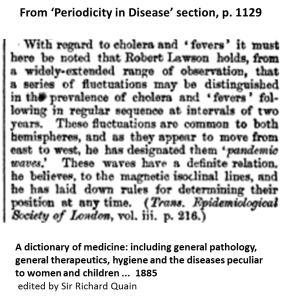
PeriodicityinDisease_LawsonsTheory

People have always fascinated with the idea of making successful predictions.  Even to this day we see these kinds of behaviors, with everything we do.

People also tend to behave a certain way whenever a new discovery is made and begins to develop a following.  The “Garner’s hype curve” effect is often referred to when such events take place.

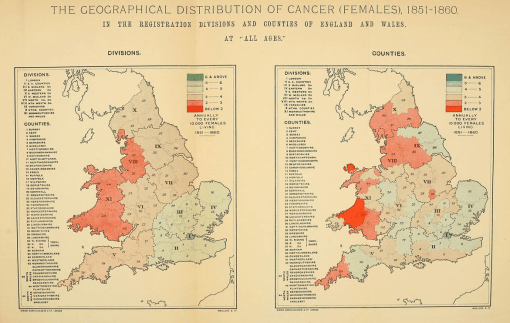
A similar series of events took place with a spatial geological theory for cancer  posted elsewhere on this site–Alfred Haviland’s cartographic argument for cancer and its relation to relation to the chemistry of the substrata.  Haviland’s idea was partially or perhaps even more correct than we might suspect–a review of Haviland’s map shows the high risk area very close to coal-mining territory, and since coal does have anthracenic polycyclics, which environmental chemists argue are very much carcinogenic esp. for breast cancer due to their steroid-like structures, Haviland could in fact be correct in his spatial analyses, incorrect due to ecological fallacy–a fallacy incurred due to  the data of one set of results being related to another set or results as if the two are directly correlated or “ecologically” related.

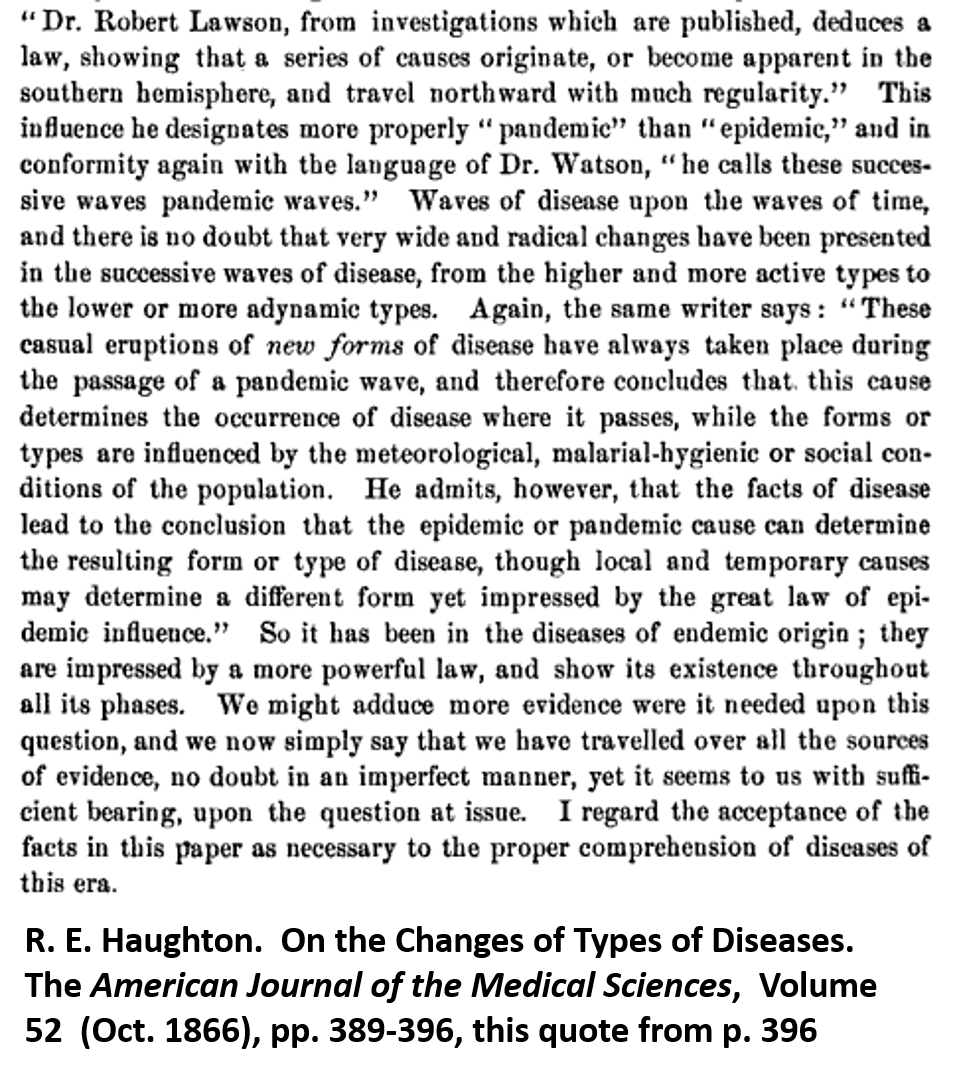
As for Lawson’s work, Lawson received considerable but short-lasting support for his theory.  This is eluded to in the following commentary on his work by R. E. Haughton in his article “On the Changes of Types of Diseases” published in the American Journal of Medical Sciences in 1866.
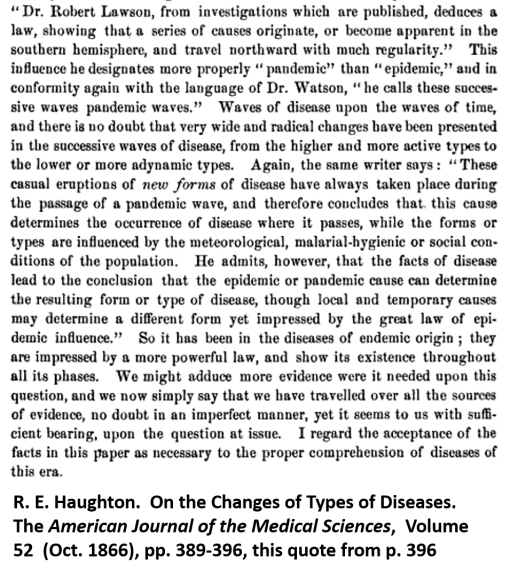
REHaughton-OnLawson'sTheory_AMJlMedSci-vol52_pp389-96,see-p396

[Note: The above comments about Lawson resemble John Snow’s comments about John Lea published at about the same time; see my article recently published by International Journal of Epidemiology for more.  To better understand Haughton’s term “malarial-hygienic”, see the above section — Canstatt’s Nosology of Disease, Order 2,  Malaria.]

Very few writings refer to Lawson’s theory in the medical journals for this time.

By the mid-1880s, were it not for Robert Felkin’s work and mapping of foreign disease patterns (described above), Lawson’s pandemic isocline theory would have been pretty much obliterated from the bibliographies and references for any newly published medical books or articles.  But so too was William Farr’s zymotic theory reduced in popularity by this time.  This was due to none other than Koch’s work on the development of proof for the bacterial theory of disease.

.

After Words
Alfred Haviland

The maps reviewed recently and posted are:

.

In addition, for additional background material I posted/am posting pages on:

One of the most important parts of Lawson’s history in medicine is related to some major mistakes he and his comrades in surgery made in 1855/6 at the Crimean War, on the north shore of the Black Sea.  Turkey and Russia fought a bitter battle for superiority in this part of the world, which resulted in many deaths.  These deaths were not due to the war so much as they were due to the poor treatment soldiers received following their injuries in battle.  Inadequate transportation to some of the grandest military hospitals ever established removed any fame these hospitals had for their size and glamour.    Once they arrived at the facilities, thousands of soldiers ultimately died there due to poor sanitation.  A lack of sufficient medicines, in particular opium became the most decisive aspect of this poor planning.  Soldiers taken ill by diarrhea and ultimately severe diarrhea or dysentery, often referred to then as cholera morbus, lacked the opium needed to stay their bowels, and so resided in small quarantine facilities immersed in their own sweat, stench, vomit, pus, and excreta.  This was the deciding factor for Lord Osborne following his expectation of the site leading him to write such a detailed narrative of his inspection of this site.  No mention of Lawson is ever made in this review, but the expectations are that Lawson like most other doctors was also unable to handle to lack of adequate supplies needed by his surgical patients.  He took some serious actions to stopping these problems in his cholera wards, but was heavily criticized for this according to some much later writers about his life, following his death.
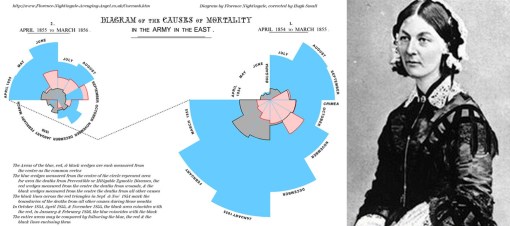
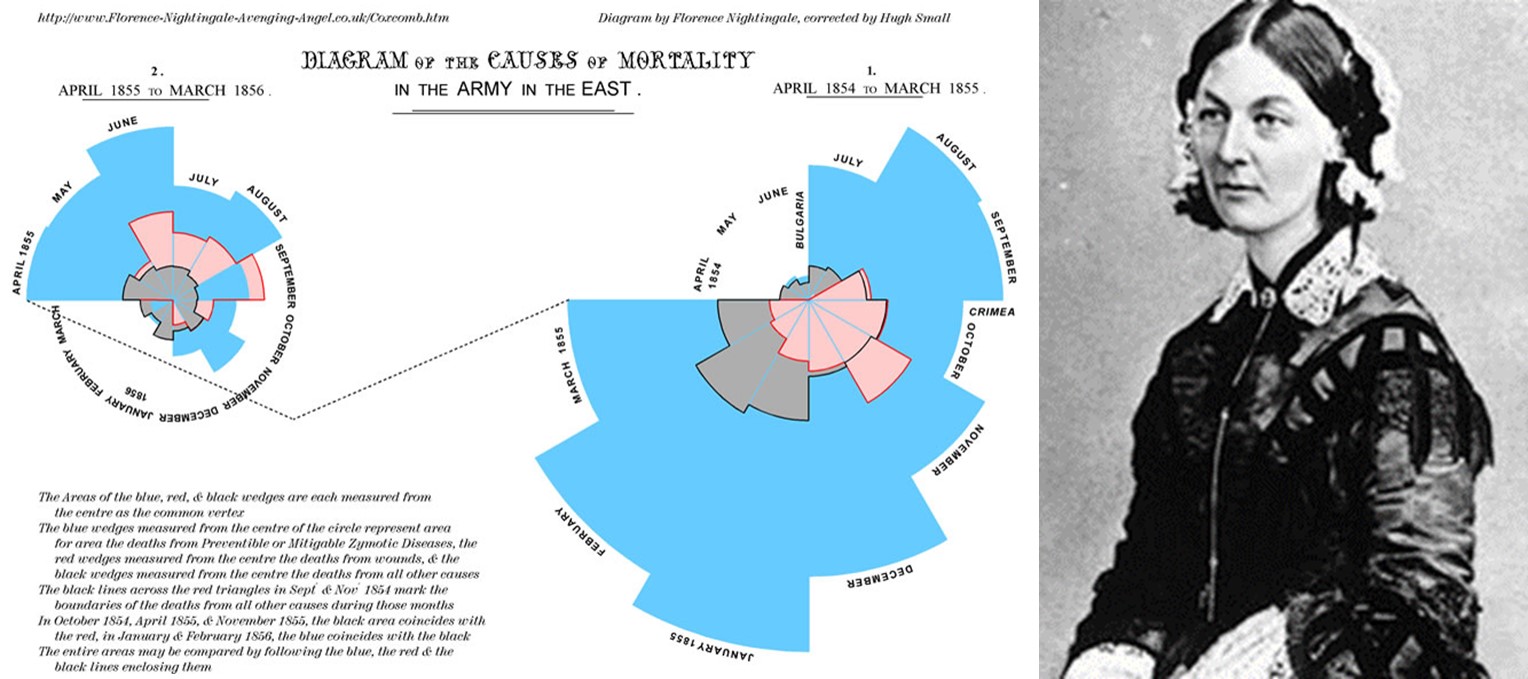
FlorenceNightingalePortraitChart

However, the one major positive outcome of all of this came due to the appointment of Florence Nightingale to serve as a director of the nursing program for this military setting quite early on [to be covered on another page].  Some of the recounts of her facilities at this place avoid much description of its grossness and crowded settings, and many paintings depicting the same setting also failed to demonstrate the atrociousness of the cholera wards.  Nevertheless, she and her approximately 44 nurses worked effectively to deal with an institution they were responsible for that house 7000 patients, within a building that was built to manage 3000, and could only house 6000 once the additional supplies of cots and bedding were obtained.  Following this war, Florence Nightingale established the first school devoted to teaching the nursing profession to female students, which she opened in 1860.  She is also accredited with producing the first calender of diseases to help provide insights into their causes, be they seasonal or simply due to crowding of hospital facilities, and creating a number of administrative measures designed to maintain better records of supplies and make better use of space.  For the first time, under her watch, patients for the first time received 24 hours a day service in the wards, due to her nighttime personal inspections and pass-throughs of the wards, holding a candle in her hand (an image made famous).

Crimean War history is also related to another page at this site, namely the work of William Aitken.  Aitken served as an inspector and epidemiological investigator of the hospital sites once the war was over, in 1857.  He produced a report on the war epidemics (which I own a copy of and plan to cover on a later date).  His mapping of disease based on the earlier German maps, and Johnston’s map, was published in his massive two-tome set on world health.  Aitken’s philosophy on disease patterns was a continuation of the nosology of disease defined by William Farr, Western Europe’s counter to the great landschaft medical geographers like Schnurrer and the great miasma specialist Canstatt.
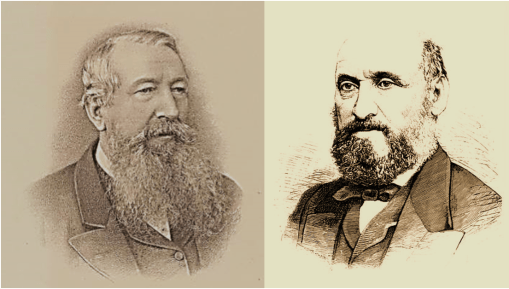
Aitken_Farr_portraits

William Aitken and William Farr

.
Torrid-Zone-Medical-Satire-Blessings-of-Jamaica-Yellow-Fever

What lurks beneath the surface of health care?

The Flame-emitting Skeleton beneath the surface on the above map symbolized Yellow Fever during the 1800s.  Elements above the surface symbolized the problems of health and health care that then existed.  

GIS could effectively change the current health care system in terms of cost and health improvements, but it doesn’t.  So why is the health care industry so far behind . . . ?
.

A Modern Torrid Zone

As we are all hearing on the news these days, the health care industry and programs are about to undergo several changes needed for a new health care program to begin.

The newest trend in health care is medical tourism, which is when we decide to go to another country for a high cost procedure rather than pay the amount that is due in the U.S..  The goal is to obtain equivalent health care services, usually an expensive operation or form of special treatment, for much lower costs.  Once upon a time we weren’t sure if we could trust the quality of services being provided by foreign countries.  Now that is much less the case.

Some are going to contest the claim I just made about “equivalent skillset”.  But, a recent classmate of mine from the medical school years (early 1980s) told me he had just opened one such clinic in the Caribbean.  After detailing the cost differences to me and how the lower costs benefited him (office and renting a surgical unit combined) and how the greatly lower costs impacted his patients, he and several other classmates from our years were already fully engaged in this part of the medical tourist industry.  It eliminated the problems he was having with approvals and payments received for his services from the American health insurance companies, and he could perform the same procedure normally engaged in at his facility in NYC, for just 1/5th the cost to the patient.  The doctor and provider of the surgical unit reduced the cost to the patient, and the patient’s payment went to more efficient use due to bypassing the administrative costs that result in very high surgical costs within a United States setting.

MedicalCostsbasedonFourCountriesCompared

http://www.medicaltourism-guide.com/2008/04/03/cost-comparison/

Medical tourism is one of two ways the torrid zone of our region is currently impacting the cost for health care.  The other way it impacts the quality of care pertains to the  “corporate greed” that is out there interfering with progress and reducing the efficacy and quality of care being administered to all patients within a U.S. health care system.  And as is the purpose of this site, the purpose here is to point out what GIS has to do with all of these claims I am making about a stubborn, unchanging health care insurance industry.

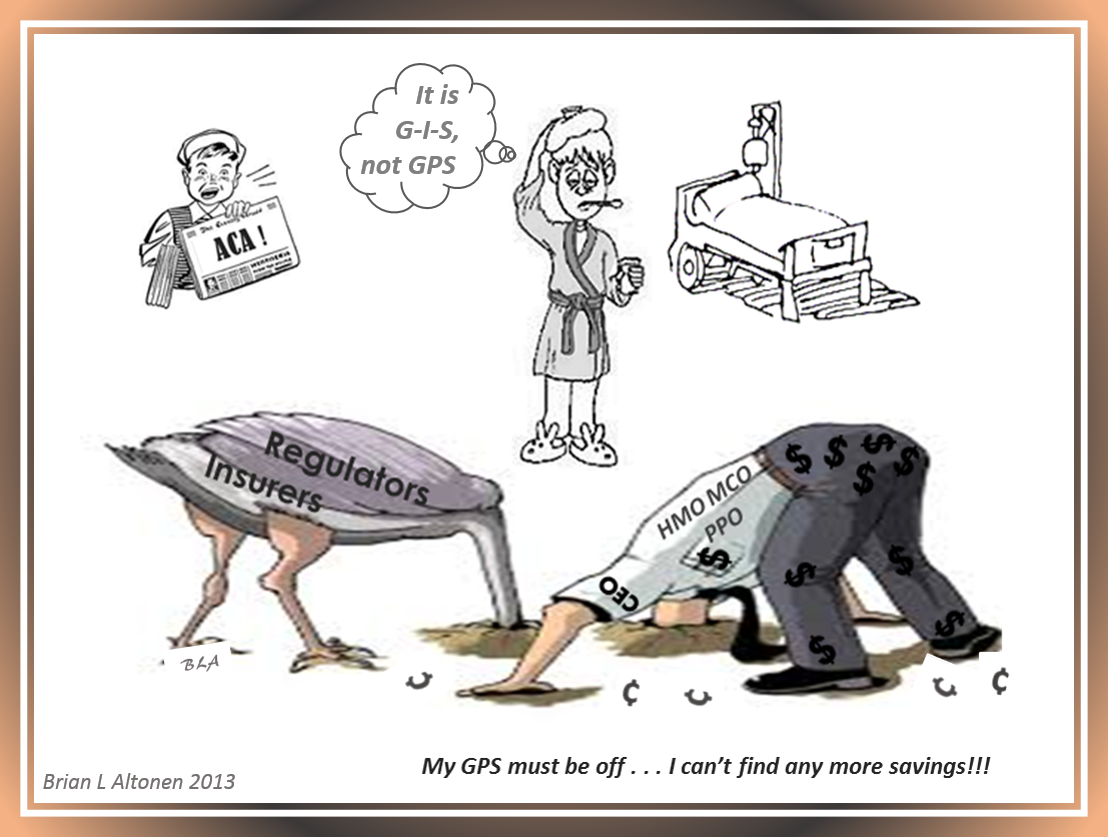
This failure to grow in the health care industry is due mostly to the failure of CEOs to effectively implement the recent advances in technology into their programs.  They make it appear as though the Big Data field suddenly appeared to them out of nowhere, when in fact they had more than a decade to design, develop and build an infrastructure to make better use of the electronic health care data once it became widely available.   Now, because they failed to update their infrastructure and knowledgebase about this particular technology and the need to apply GIS to it, they are behind in advancements, achievements and ultimately in their competitiveness.

In recent business classes I took for the PhD program I am enrolled in, it is mentioned that the current trend is to turnover CEOs who are not kept up with the technology.  The year of this writing is 6 years ago.  The problem with poorly educated CEOs is now, going on six years after this textbook was published.  The recommendation back then about what to do about these CEOs and other C*Os, VPs, Directors and Higher Level Managers is just as good for now:  give them a decent severance package and see them off if you want your company to grow.

Like slowly rising salaries, technology changes and the related skills needed increase faster than the salaries do for an individual employed by the same company for a long period of time.  Similarly, CEOs’ knowledgebase and  skills grow slower than the technology around them, making it impossible for many of the more showy examples of CEOs to actually keep up with these changes at the right intellectual level. In other words, they can “BS” their way through this lack of sufficient knowledge and education the first years through, but once skills needed to Master the technology are required, they need to either be retrained or replace . . . .  put out to pasture.  The assumption that “More Sh*t = M.S.” just won’t do for this newer high technology level.   We need real knowledge and experience for GIS to be made adequate use of in this field.  CEOs who cannot do, see or mathematically define GIS results of their data, who still rely upon graphs and those 50 to 100 page printouts to understand their points, are just not fast thinkers.   GIS can tell you on one page what it takes 50 or more pages to demonstrate using the much older analytic techniques.
Most of these changes now being made in health care by companies reinvesting in themselves have little to do with medical GIS directly.  Yet for the most part they should have everything to do with the role of GIS if they wish to get the best results for these efforts.  Spatial thinking is a new form of innovation that companies the health care industry must pay better attention to for a better, more financially successful future.   Big business is against the need for these changes, or the need to make health care better and the recipients of this care much healthier; they are primarily focused on their investors, the final dollar in savings, net earnings and future investors.

Now, a traditional corporate conspiracy theorist would say this is due to “corporate greed”, which is not exactly what I am trying to state here.   That interpretation of the corporate attitude is not completely true as well.   Most businesses engaged in this behavior don’t have as much to gain financially as the biggest ones do.  So when smaller business are acting and behaving lazy in much the same way, there has to be something other that just potential financial loss that they are dealing with–knowledgebase and skillset are what get in the way in such cases, as well as poor leadership and interpersonal jealously or insecurity on behalf of the decision makers.

In sum, the incentive for smaller companies to avoid change has much to do with the following reasons:  high cost, need for technological updates, need for smarter workers, managers and CEOs, and a complete change in internal mindsets and habitual practices engaged in for the past decade of two in the U.S. industry setting.  For bigger companies, it is more like maintaining control of a particular line of business until it complete fails, then see what new step can be taken.

Health care has been for the most part big business.  For the smaller companies like the private local ones, IT improvements are needed.  For nearly all of the remaining health insurance companies with national names and managing a quarter million patients on up to 50 million or more patients, it is simply laziness and lack of investment power at the intellectual level, not the IT/affordability level.  Very few leaders in the field on up know and can do what they think can be done using GIS.  This is because they neither invested in the software, and if they did, haven’t acquired the right talent.   If they did, I wouldn’t be making these statements.

When you work in health care as a statistician, there are two major career routes you can follow.  There is the traditional route in which you map out the health of people.  Then there is the business intelligence or BI route, in which you focus primarily on costs and the Return on Investment for your employer, often at the expense of providing less costly, less effective health care.

As a spatial technician searching for a job in the health care industry, I found there to be those traditional mortality-morbidity statistics positions, followed by the research and “Quality Improvement,” “quality assurance,” and/or intervention positions.  The research positions are generally how we all wish to go with medical GIS.  But for some, like myself, Big Data is overly tempting and so we look for other ways to get our “fix” on the numbers (some of this pun intended).

The problem with such a goal is that Big Business is so far behind in GIS that we have to go back 5 or 10 years in our know-how as GIS’ers we can contribute.  This is because businesses are so focused on BI stats that they lost touch with the other avenues out there to be explored.

Pyramid_climbtothetop

Now, almost a decade behind in their technological skills, for each year that passes they need to spend what’s equal to two to three years of training to catch up with each year of loss.  For businesses not willing to engage in true spatial analyses in the future (not rewrites of those older non-spatial techniques they continue to use), failure, change or merger is the only way to go.

The reason for this dilemma that now exists is simple–there are hundreds to thousands of big and small businesses out there devoted mostly to money.   For every dollar we spend as patients, we have to realize that little to none of it goes into improving our health care or improving our longevity.  If such a route did exist, then we wouldn’t see the need to change to the new health care plan being presented.

So, although there is tremendous resistance to this up and coming AOA plan for health care, there is some logic to the rules they set for these changes to happen.  The most important of these rules pertain to the development of an electronic medical records (EMR) system and the improvement of the Health Information Technology (HIT) that currently exists.  Companies not savvy in HIT at the GIS level, without the ability to immediately convert their non-spatial system into a spatial system, are going to fall behind.

Until now, health insurers have been so focused on staying on track with their previous methods that they blinded themselves to the changes now underway.  Fifteen to twenty years ago is when the Managed Care idea came to be.  It consists of including active intervention activities as a part of your health care program.  The problem is insurance industries don’t want to spend money or make their product better.  They want to produce more and obtain more revenue at the cost of minimal change.  For the most part, a makeover was all that was needed to show you were trying to make change as an insurance company–for example a special hotline for those with a particular health or behavioral problem.  In the least both sides got to have their say.

It also didn’t matter if that makeover was so out of date or non-stylish that it was an ultimate failure in two or three years; all that mattered was that it kept the overseers at bay for the next few years.  The earlier ways of administering quality of care reviews took this approach to getting companies to be more engaged in targeting their health care practices.

It used to be you kept a tally of how many diabetics you were treating and how they progressed.  Then the need for intervention activities was added, with the goal of improving health and thereby reducing the cost of the more expensive health care provisions that might be needed  later in that person’s life.  The point was to try, not necessarily to succeed.  A good company would perform a number of these studies and demonstrate success or improvements in health, reduced costs, etc., in two or three of them.

Next, intent had to be proven.  A company had to devise a plan for intervening in poor health and increased costs, design a plan to carry out that process, and be evaluated for these accomplishments.  This is how the quality and performance improvement programs came to be, with their outside overseers making sure the actions taken and results reported are accurate.

.

ItisGISnotGPS

.

As an employee for example, you have to wonder if the money going into the health care industry is coming back to you when you need it.  Or is that fact concealed even further by complicating things by requiring co-pay.

For a fairly healthy person with just one condition, the need for one medicine that is common, the unit cost for the monthly supply of that medication in 3 or 4 dollars.  When insured, you are required to provide a co-pay for that medication, and as a result your monthly cost for staying healthy has jumped to the $10 co-pay, or as much as 250%.  For a very common condition like hyperlipidemia, hypertension, and the like, that means we are talking into the hundreds of millions of dollars per condition across the country that is overpaid by those who have health insurance requiring a co-pay.  With health insurance, the lowest existing price rule doesn’t exist, and those who co-pay unknowingly are actually providing recipients of that money with empty profits, nothing to show for what has just been rewarded.

So the system itself right now has a cost related problem.

The companies receiving those funds however have a greater problem to deal with.  They are more than a decade behind in the technology.

Quite recently, a big insurer on the east coast started up an online GIS that allows people to visit its site and look at disease distributions in the state.  The problem is, that although the programming used to present this information on the web is fairly new, and interesting, this process does little if anything to improve the health of people.  A purist might refer to it as a waste of government money.

On the inside, this company feels it accomplished something by producing the online GIS for anyone to visit, and like the yellow pages of a business directly plow through a few topics to see how health is distributed, but in general this method for presenting data offers little to no additional insight, and is a sign of no intellectual progress, only improved software skills by its provider, focused on decade or more old software no less.

Another big data company decided it wanted to show its health data at the national level, by regionalizing this country into less just a handful of areas, one for each finger–the thumb was excluded.  At first one could be impressed by this, until you look into the literature and see that this method is decades old and useless in terms of improving health in general.  One cannot possibly take a condition in the Dakotas such as a childhood learning problem, ADHD, anorexia, autism, or agoraphobia and believe it is of the same or exact form, ideology, social impact and the like in the Pacific Northwest.

We cannot possibly use this kind of mapped data for anything other than bragging rights of the company that produced it; to those in the field of Medical GIS, this only further proves that a problem  exists in the Big Data community with health care, population health and GIS.  These businesses are so focused on BI and internal money flow that basic health knowledge, overall population health analytic skills, and base-level GIS capabilities are equivalent in value as they were when the ArcView products first came out about 20 years ago.  That is how far behind in skills and knowledge of space, time and health that the corporate part of population health analysis is.

At the government sponsored public health level, GIS is much more fixed in its value and purpose in population health work.  Even though businesses like to call their work innovative, it is still behind in really presenting us with any proof of being ahead or being novel in terms of what was invented.  The government or semi-government Medical GIS are much more ahead, but are focused mostly on the standard statistical information they have been reporting on for decades.  For nearly all of these agencies, there are special research topics under constant review.

But could we turn to the local health department and request a report on the top three hundred to five hundred diagnoses or diseases of our region, including some only of local incidence, and expect that such a report could be generated?

In this case, the answer is primarily “no.”  The manpower and time needed to produce such a report is simply not there, and the cost of paying an outsider to do it simply makes it unaffordable.

ExponentialRiseinHealthCareCosts

Productivity & Financial Stability vs. Longevity & the Cost for Care in Modern Times.

Averages based on a series of Reviews of Age-Cost Curves generated for 40M to 80M Americans, based on acute care and chronic disease events and normal preventive care practices

Another type of Medical GIS out there is that working at the university, teaching institutional level.  This Medical GIS is for the most part comprised of thousands to tens of thousands or more projects on spatial health that are as short-lived as the students, academicians and grants supporting these efforts, meaning that more than 90% of the time the purpose of these projects is to make an innovation, present it, and then get on with life by entering the job world and dropping your level of knowledge use and application down by 10% to 30%.   The business world doesn’t hire the Einsteins that are out there, only those that management can understand the language of.

The final type of Medical GIS individual or institution out there is the specialized experts in the field, whose data is somewhat limited by the npo providing them with their work position, whom due to the size of their agency may be more productive than business and even the governmental workers, but whose work remains unrecognized for the most part due to less learned business leaders.

The following is a Medical GIS innovation.

It is an example of mapping the Northwestern corner of the US in order to localize where refusals to immunize children are happening. The extremely high resolution of this method enables one to pinpoint where to begin an intervention program. The algorithm used to produce this map works at incredible speed, and has no limits as to size. Large or small areas can be produced and mapped with it. There is a second algorithm I use to hybridize the data into a true grid pattern, in which grid coarseness is corrected for by combined the data with true point data (Much like remote sensing data is normalized and “corrected” for lat-long misalignments.)

Right now, GIS is an technology that the business world lacks much knowledge in.  We know this because if these businesses had such knowledge, this method of mapping I developed would be so unique, with few if any examples out there in the business world.  For the businesses that do have some internal GIS activities testing and demonstrating such use, all is fine and good perhaps.  But is that GIS producing monthly or weekly reports on client data, population health, whatever, for hundreds to  thousands of measurements or metrics per report?  I ask this because at the current level of technology and big data potential and speed that exists, I can accomplish this.  My methods produce 100 reports a week at full speed, 12 hrs/day productivity, each report consisting of 370 to 1200 maps, or 37,000 to 120,000 maps per week.  [This is based on a teradata or cognito run.]

Now, granted, these maps produce a video, which I have termed a “report”.  If this were a report on 100-200 infectious disease rates instead, divide everything by 4, which means 9,000 to 30,000 maps generated per week as 100 reports.

Where big businesses in health care are faltering right now is their lack understanding of population health and the related misguided focus they are having on expenses.  One of the truth about health care expenses is that the better you help someone, keep him/her alive, the more likely you will also be paying for the more expensive health needs he/she has in the later years of life.  We can improve our abilitites to prevent one long term disease concern from becoming costly, such as midlife diabetes, hypertension and obesity problems, but later on still have to contend with other issues such as cancer, COPD, osteoporosis, needs for joint replacement, needs for rheumatoid arthritis and rheumatoid disease care, Parkinsonism, Alzheimers, severe MS, prostate cancer, need for mental health care, chronic renal failure and dialysis care, etc. etc. etc.

One company in the midwest contested the value of this 3D mapping routine.  During the discussion with this company it was apparent the company was very interested in the innovative nature of this way of modeling health data, but for whatever reason had a lawyer on board in this discussion who decided to contest the intellectual property right of my formula and its value.  Another midwestern company in the southern parts, devoted to IT data-mapping software production, failed to have a similar program in place in its software, and after several direct discussions realized the lack of the same values and skills in its programming tool, currently one of the most popular in health care.  Along the mid-Atlantic coast, a PBM took issue to my discovery, and took a unique turn in discussing this new technology; obviously something was amiss because the VP scheduled to participate in that discussion decided to not attend, perhaps considering it an exaggeration or bluff.  Another company close to the Mason-Dixon line realized it was innovative, but too innovative to invest in, not meaningful for the public health and epidemiological professions..

[]

.

One of the most unique things about my work is how I like to bring the historical and the modern day interpretations of medicine together.  GIS has shown me that there are some very good reasons for going back to the history of Medical GIS.  The physicians of the mid-19th Century are far more efficient in understanding and explaining the natural history and spatial patterns for many diseases than most physicians are today.  The reason is that the older paradigm better defined the human ecological aspect of disease and the human life experience, the phenomenology of disease and its interpretations, not that plain of dry, scientific philosophy that people in the medical claim is the only way to interpret disease.  The allopathic or western interpretation of a disease is after all a paradigm.  MDs cannot describe why acupuncture works, if it really does.  But they try to, using their paradigm.  And when they see it work, to avoid being removed from their comfort zone, they provide some simplistic, overly naive excuse like endorphins, or a half century earlier–endocrine, or another half century earlier–autonomics and the “sympathetic” nerve (thus its name, from a 17th C teaching).

The main reasons we need to review medical history are several.  The most important reason is to develop a better understanding of how people behave based on whatever belief system or set of theories they are abiding for at the time.

The second most important reason is to realize how subjective medical interpretation (diagnosis) is, and how much of that is tied to western culture and tradition, and is anti-alternative often times.

A cultural bound syndrome is yet one other example of this practice. Today we consider a disease to be culturally bound when its cases are pretty much restricted to a certain ethnological, sociological setting defined by how the people live, work and philosophize about their life, health and disease. In modern medicine, a disease that a person believes is due to problems with their second chakra, and are manifesting it as such, could be considered culturally bound. A follower of a pentecostal church whose seizures are brought on by the Devil and healed by a laying of hands is another example. A believer in voodooism whose spirit is in turmoil, a Native American child invaded by a ghost spirit, a Vietnamese elder who suffers a heart attack due to insomnia and vivid dreaming (SUNDS) are all examples of diagnosable conditions that fit into some paradigm western medicine has about how and why people from other cultures become so uniquely malafflicted.

The politics of these modern day cultural settings is the next place where western medicine, cultural health and traditions, and medical anthropological and social services have to merge some of their efforts together to make for better medicine in the unique cultural environments that have evolved in this country. The politics and culture of disease is just as varied in the underlying philosophies of two or more sides today, as it was back when Western European trained MDs were considered less fitting of the needs of sick and ailing early United States citizens, not yet fully adapted to this country’s settings in some traditional Lamarckian sense.

Several sections are now evolving that detail the ways in which western medicine and in particular US allopathy, prepares for the treatment of other culture related disease patterns. The subcultures of the United States set the stage for better documentation and research into ethnic and race related medical programs, like improved hispanic, African/African-American, Native American, and Asian ( or better stated, multiple Asian) protocols and modalities allowing tradition to play an important role in improving the recovery from certain diseases (culturally-related chronic disease patterns and infectious/non-infectious individual diseases), preventing severe onset of others (culturally-linked), and at times, totally curing the individual of yet other disease patterns (culturally-bound syndromes).

Likewise, the modern day 2-dimensional interpretation of disease, in the form of maps, is an old established flat approach to viewing the world of disease and health.  My 3-dimensional is method is 50% better numerically (the conversion from 2 to 3 dimensions), but its application change the meaning of the map from a large area perspective on human health to a small area focused maturation of this way of interpreting health.  We can see the small picture with 3D, and yet code it to present in 2D as well by color patterns or by producing that supplemental 2D map for final comparison.

However, in the real world, if I were to hold two maps in front of someone, my 3D model and the traditional 2D model, and then ask where would you begin your intervention program, or your need for savings analysis and activities, or your desire to look at culture-related disease patterns linked to a specific ethnic group–in what town of city would you start?–you could only make this final decision based upon my 3D mapping algorithm.  The 2D just doesn’t cut it when it comes to time and cost saving ventures.

Contemporary businesses think they have the money to spend, and only talk about the theory of saving money and lowering expenses.  But the tools they use to accomplish this are a result of 20th Century technology and philosophy.  The 3D mapping algorithm is a result of a 21st Century philosophy and tradition.

Like the Ostrich and CEO in the cartoon up above illustrate, you can only search for so long in the darkness of the old archival way of thinking and analyzing that we make use of daily in the Health Care Insurance and Cost for Services world.  We can only focus on trying to save more, even at the expense of limiting care elsewhere, for only so long before the industry topples due to its complacency about the real world out there–the patients, not the investors in our stocks.

The following political cartoon, from another of my pages, infers these series of judgmental statements I just made fairly well:

One behavior that has not changed is that the youngest generation of health care statisticians see how and why these new methods of interpretations work.  Old timers just don’t get it.  They still believe in the use of Occam’s Razor to dissect their profession down into its smallest parts, on paper, in the form of words, graphs, charts, etc., but then only present these results using a 300 page report rather of a one to five page map with summary text, after all you’re being paid for all of your “work”.

The WordPress.com stats helper monkeys prepared a 2012 annual report for this blog.

Here’s an excerpt:

19,000 people fit into the new Barclays Center to see Jay-Z perform. This blog was viewed about 62,000 times in 2012. If it were a concert at the Barclays Center, it would take about 3 sold-out performances for that many people to see it.

Click here to see the complete report.


The theme for these past few months has been cultural medicine and medical geography.

The history of the Russian impact on medical geography, in particular zoonotic and combined zoonotic-anthroponotic diseases is a topic that really doesn’t get much attention from contemporary animal epidemiologists.  I believe I reached a good stopping point for this topic for a while.

A very unique historical medical geography topic that came to my attention was an epidemic that took place on Nantucket Island in 1763.  For more than two centuries the cause for this epidemic has returned to the journals.  In a recent write up on this piece of New England medical history it was speculated that this disease could be fungal in origin, a proposal that fit in very well with the sequent occupancy way of modeling past diseases. But most people felt it was yellow fever, which due to the times of the year it happened I suspected had to be wrong, so I had to apply my predictive, or in this case retrospective modeling technique to this disease.

About the same time, another epidemic erupted in the James River area in Virginia.  It was of a skin disease known as ringworm and had infected people residing considerably inland along the river.  I first came upon mention of this disease in 1982 after purchasing a copy of Benjamin Smith Barton’s 1798 to 1804 treatise of the first herbal medicines documented in United States history.  A single line in passing mentioned the possible use of Eupatorium perfoliatum, commonly known as ague weed or boneset to treat the James River Ringworm epidemic.  

The one thing peculiar about this epidemic was where it took place and the fact that it was so isolated from much of the rest of the country, which is how it earned its name.  That geographic feature of this disease is what made me decide to explore its history in detail to determine exactly what its cause could be and why it took place in such a remote place.

After a fairly thorough review of the populations of this part of the country and in particular of African and African-American (including Caribbean and Sudanese) slave culture,  I found ample amounts of medical geography evidence, in particular that of my sequent occupancy method of reviewing diseases, indicating it was a primarily a case of tinea cruris (today we term this ‘jock itch’), which apparently was very severe back then.  The following are some of the details of this discovery, which is covered and illustrated in more detail in the African and Caribbean Slaves section of my historical public health studies posted at this site.

 
.

In medical history, James River is best known for its famous epidemic that struck the settlers when they ran out of food supplies.  Desperate for nutrition sources, many of the settlers ate a local plant, Datura stramonium, which made them very ill and gave a number of them hallucinations. For some it even resulted in death.  

From this point on, this plant had a common name–Jamestown Weed–a name later modified or adulterated into its common name Jimsonweed.

James River however has another important historical tale that to date doesn’t appear in too many books or historical writings about Virginia’s history.  Around 1766, there was this disease that ran rampant through certain parts of the state, in particular in communities situated well upstream along James River, quite a distance from most of civilization.  The lands located in mid-western Virginia, just east of the mountain ranges, were considered primary growing fields for the most important crop at this time–tobacco.  This disease had a very unique spatial distribution for the time and so was given the name “James River Ring Worm”, most likely by Thomas Jefferson [page link].

The majority of people residing in this part of the colony were local residents engaged in the traditional American pioneer lifestyle, some were merchants and farmers, and still others farmers with a large goal in mind, developing your own plantation.  But to run a farm like it was some sort of factory we need the right sorts of help, and that is where the history of slavery comes into this piece of Virginia’s history.  By the 1760s, several fairly large plantations were established, with some families owning large amounts of crop land on which to grown their tobacco.  The Jeffersons was one such family engaged in such an enterprise, with Peter Jefferson, the father of the famous president-to-be Thomas Jefferson, in possession of a large amount of this perfect tobacco growing country.  He died in 1764 leaving his plantations to Thomas, by which time the Jeffersons were legal owners of one of the largest number of slaves in this state.

Remember, this is a story of slaves, health and disease, not one about the many other stories that have surfaced about the Jeffersonian part of slavery history we often hear about, such as the fact that Thomas fathered a child with one of these slaves or that a number of slave families have now linked themselves to this famous piece of American history.  According to a story told by Thomas, probably to Philadelphia botanist Benjamin Smith Barton (but also likely to have been shared with the French writer and explorer of the United States, Louis Valentin), there were a number people living in the backwoods part of Virginia suffering from an unusual skin disease as early as 1766.

To some onlookers this disease probably reminded them of the common disease associated with people around the world–ringworm–an important disease to understand when you are a slave buyer.  But this ringworm was peculiar because it aggregated about the waist and stomach area on down to the thighs.  It was a fairly consistent reddish color, as if a dye were applied to the surface of the skin, and most importantly, it affected mostly males.

The philosophy for the time was that disease could be due to miasm wandering about in the air, some form of infectious material that once it entered the body began to create havoc with our physiology and make way for other problems to develop such as fevers, asthma, rheumatism, dropsy, or consumption (tuberculosis).  Also according to the philosophy for the time, since different regions had different climates, weather patterns, topography, etc., these different regions also manifested diseases in different ways.  Such was the philosophy for those who believed in medical geography during this time and is how and why James River Ringworm earned its name.

A possible migration route  trichophyton rubrum or mentagrophytes into the United States as the cause for tinea cruris or James River Ringworm.  A hierarchical diffusion route is presented on this map (non-hierarchical is more likely the case and is illustrated on the main page for this topic).  Yellow lines are borders of population density regions, grey lines with arrows represent the diffusion-migration route to the continent’s interior.  Red polygons define clusters regions for the various plantations. The numbers represent the case clusters identified, the method for which is also detailed on the main page for this disease. (#1 is Thomas Jefferson’s estate, Monticello.).

Unfortunately, Thomas Jefferson never provides us with the exact details as to where this epidemic existed or even whether or not it infected only or mostly his slaves.  What we do know is that he is apparently the first one to ever document this epidemic and its unique location(s), suggesting that more than likely its existence and his knowledge about its presence had much to do with the family’s plantations.  With this in mind, I developed a way to analyze and map this disease using a series of spatial epidemiological techniques I have been applying to other diseases of the past.  I first utilized this method to show how Asiatic cholera that struck the Great Plains along the Oregon trail was different from the western cholera or dysentery that struck the western half of this route in Oregon in 1852.  I have since used it to review other diseases of the past, adding another step to each of these analyses engaged in over the past two years.

Figure from my Thesis (Cholera on the Oregon Trail)  

With this analyses, I was able to conclude that the ringworm infection that impacted more than likely the slaves was tinea cruris.  This tinea was much worse back then due to the period it had to develop and the lack of any effective way of treating or knowledge of how to prevent it during the late 18th century.  In addition, this tinea in a modern sense has potentially four fungal causes capable of infecting humans in this fashion, two of which I removed from the list for geographic reasons.  This leaves us to only consider two potential causes for the James River Ringworm epidemic of 1766 to approximately 1806–the first is the most common form of fungus responsible for this disease Trichophyton rubrum, the second a species linked mostly to domestic animals like dogs, cats and horses, Trichophyton mentagrophytes.

My personal bet is on the former, although Jefferson like most others from this time did favor horseback riding, and due to their value, may have had horses present on each and every one of his plantations.

.

Left:  Tinea imbricata, common to Africa, perhaps not common or persistent in North America if brought in by slaves.  Center and Right:  The most common bacterium responsible for tinea cruris, Trichophyton rubrum is growing in the petri dish to the right. (By the way, doesn’t the ringworm mark resemble someone like a young George Washington or John Singleton Copley?)

.

The mapping of this disease is what enabled me to determine where it most likely took place amongst Jefferson’s and Jefferson’s friends’ plantations throughout middle Virginia, along the James River and its southern Fork.

James River Ringworm is one very basic example of the African Slavery history and how it relates to public health history during the late 1700s and early 1800s.   Other cultural medical geography topics I have started to add pages on pertain to African/African-American demographic medical and disease history, foreign born disease pattens and their behaviors in this country, the classic field of study for historical epidemiologists–Native American medical history, and travel and migration related disease patterns such as the flow of disease along the Pacific Rim routes.

Felkin’s map of Pandemic Isoclines (the lines) and wind patterns over the United States

The following historically important disease maps have been posted.

Both Aitken’s and Felkin’s work have another page providing additional information about their personal histories and/or books.  Charles Denison’s work is historically important to American medical history.  He was the first physician to develop an entire medical facility devoted mostly to tuberculosis treatment based upon the documented impacts of the high elevation,  mountain air environment setting upon the cause for this disease, which at the time was yet to be discovered.  (Denison has a second set of maps on the healthiness of the mountain environment for treating phthisis (tuberculosis), to be reviewed next time around.)

.

A section of Denison’s map

.

                      .

A section of William Aitken’s map

Since African/African-American health is the focus for many of the projects I engaged in during recent months, I am putting together my history of medicine resources pertaining to slavery and health, including coverage on culturally-bound syndromes [part1, part2], culturally-linked diseases and syndromes, and culturally-related disease states and medical conditions [link to the main African Diseases page].  Examples of culturally-bound syndromes include Clay Pica (see Malacia Africanorum page below) and certain psychological syndrome related to the practice of voodoo (to be referred to as “Opi” or “Opa” here, its 18th century name).  Culturally-linked African diseases include such conditions as African Cardiomyopathy and Sickle Cell.  Culturally-related but not culturally-caused medical conditions include the more basic problems we often hear about, such as the late diagnosis of breast cancer in older African women or the impact of diabetes on the African elder’s quality of life, and a number of microorganism related diseases such as yaws, bejel, nomi, and kuru.

There are a number of controversial topics I have reviewed so far regarding African culture (West African, Sudan-African, and Caribbean by the way), but none not as controversial as those related to slavery.  The following African-, Carribean- and African-American related health or medical practices or conditions are detailed in my section on this subject, and represent some of the first articles ever published by United States medical journals on these topics (more to come):

The most controversial of the above articles is on infibulation. a Sudanese-African (and typically Muslim-Middle East) tradition indicative of slave in-migration from places other than the Gold Coast of the African continent (for more, see http://www.accmuk.com or http://www.quora.com/What-is-infibulation).  This is possibly the first medical journal article published in the U.S. on this topic.  The article on Malacia Africanorum (‘calm of Africans’) is documentation of clay pica, a behavior still documented in contemporary medical journals and practiced a lot in the Caribbean.  The review of Jestis Weed is an example of that old controversy in ethnobotany and plant medicines–who owns the rights or claims to the rights involving the intellectual property attached to cultural medicines? the one who practices it, or the one to first publish this method of treatment? The owner of the slave who gave his “master” this knowledge no doubt favored the former, but of course fell victim to the latter.  The last article is an example of a unique occupational disease related to African and African-American “servants” living in the New York-New England region, manumission or not.

I have also started posting the theories of different doctors about the first disease to be mapped repeatedly in U.S. medical history–yellow fever.  These are usually kept close to each other on this blog.  For examples see:

.

Sequent Occupancy in Nantucket, ca. 1600 – 1850

Aside from topics related to African medical history, there was one malingering epidemic I had to work through these past several months involving a Native American group residing just south of Massachusetts on Nantucket Island.  In 1763, there was an unusual epidemic that took place in this setting which many have considered to be yellow fever.  For the most part this is right.  But there was that malingering problem with the late November re-eruption of this disease that gave it its name “Extraordinary Disease” by its reporter Reverend Thomas Oliver.  Mosquitoes are required for yellow fever and the likelihood of a mosquito still thriving at that latitude in mid to late November, in high enough quantities to cause so many deaths, is, for lack of a better word, extraordinary.  My hypothesis is that these deaths had to be due to something that was a fever epidemic, but not yellow fever, but one more likely to happen in late fall and early winter.   For this reason, I again applied my various spatio-temporal modeling techniques to this disease and determined the November and December cases were probably due to typhus, a result expected by epidemiologists trained in historical epidemiology mapping and research and familiar with this period in medical history.

The points here are several.  First, the ability to map and analyze a disease in order to explain or predict its behaviors is an important GIS skill.  Second, these diseases and the education we get by reviewing this past is always helpful to the field of epidemiology as a whole. This way of interpreting diseases is very applicable to work in other aspects of this field such as homeland security, bioterrorism, livestock epidemiology, and those concerned about epidemic disease resurgence patterns brought on by population growth, antibiotic resistance, changes in land use patterns, and global warming.

Two of Alfred Haviland’s several maps on Cancer and Geology/Soil Chemistry, 1875 – to be covered next time around