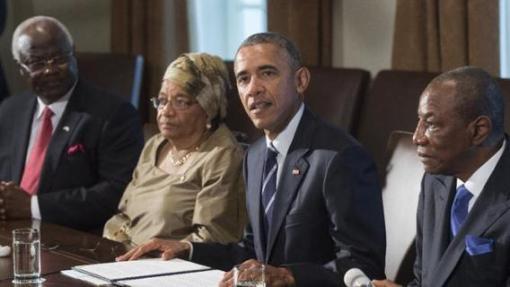
President Barack Obama met on Wednesday with the leaders of three Ebola-stricken West African nations, vowing US help in wiping out the last vestiges of the often deadly disease. “We begin by noting the incredible losses that took place in all three countries,” Obama said during his meeting with Liberian President Ellen Johnson Sirleaf, Guinean President Alpha Conde, and Sierra Leonean President Ernest Bai Koroma. Obama hailed the “great courage and resolve” of the three nations where the current Ebola outbreak has claimed more than 10,000 lives, and promised continued US support to help prevent future outbreaks, even as the numbers of infected people subsides. Obama said in addition to the lives lost, Ebola has exacted a tremendous toll on the economies of the three West African countries.

Source: news.yahoo.com

Ecological diseases just don’t go away.  They cannot be easily eliminated.  


If this were the case, yellow fever would have been eradicated, or perhaps even Asiatic cholera and a host of other well studied vectored diseases.


Also working against this possibility is our lack of knowledge of the full history of ebola.  We only started documenting several decades ago, but my review of the historical epidemiology literature and translation of the documents, including an 1827 map which notes an ebola like disease, suggests this epidemic was first documented during late 17th, early 18th century colonial exploration periods, a hypothesis that is strengthened by two other events I uncovered for the 19th century colonization period, dealing specifically with the Ebola zones in Africa.   


This implies that we do not know the full extent of ebola history or capability of its diffusion processes.


Finally, all spatially (globally) spreading diseases progress as they continue to infect new parts of the globe.  Cholera’s spread increased in size and regional type (and biodiversity) as a result of this diffusion process.  So too will the ebolavirus species.  Once this epidemic is over, the next one could demonstrate an even greater impact–infecting new countries . . . or worse.  


Like cholera and yellow fever, the pests behind malaria, typhus, the plague, and others that seemed travel internationally in the past, I expect the ebolavirus to progress naturally, and reach its natural peak, establish some new ecological domain(s), and then reduce its number of chief events, stabilizing within these new domains.   Like Vibrio cholera variants accomplished for various deltaic settings over the past two centuries.


See on Scoop.itEpisurveillance

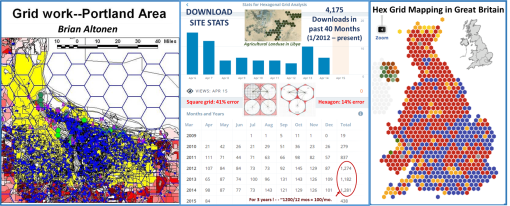
The best way to reduce error in mapping is to convert from the use of square grids to hexagonal grids.  This reduced the 40%+ error generated by apices in the grid to 14%, a more than 25% reduction in total grid mapping and analytics error (this is allowing for the natural +/-3-5% error we often rely upon).


The popularity of this technique is demonstrated by the numbers of downloads my site is getting for the excel sheet I produced in winter of 2003/4.  There are also SQL formulas for this for limitless cells, but the traditional method uses a hexagon overlay for your analyses, calculated using the lat longs for your area, as defined by this page.  


To state bluntly what this method corrects for, if we are using grid analysis for intervention or surveillance (determining causality), there is error in our point-area relationships.  41% of the area mapped and assigned a point value for a findings may be assigned to the wrong centroid due to edge-centroid areal trigonomic or geometric features.  This math rule applies to all mapping techniques on a surface (flat or curved) with square grid monitoring techniques.  


Hex grid approaches to flat surfaces and sphere more accurately represent the area below, and produce results at least 25% more accurate than traditional grid mapping techniques.


We haven’t used hex grids in the past due to ease of producing square grids in GIS.  Manually or even pseudo-automatically calculating grids, before excel and the PC days, was a time (in not labor and thought) intensive process.  These limits no longer exist today.  So why do we keep using this method capable of generating so many errors?


Another question to ask is do you wish to produce contour or isoline related risk analyses products?  If you do, then hexagonal grids produce more accurate and understandable contour images (the lines are smoother and more real).


In general, I have asked – which cultures or countries excel in Medical GIS and especially the use of innovative ways to produce your results?


The stats for my site indicate US visitors are the most frequent, but based on feedback from emails, comments, etc., Great Britain and Canada are most engaged in the use of this new GIS technique.  


Moreover, based upon my years of researching geographic medicine in general, the support of geographic approaches to health and disease, in a statistical spatial sense, is mostly a skillset adhered to and frequently used by geographers in Great Britain.  I blame this on the lull in interest in "Geography" that this country had through the mid to late 20th century.  


The largest support of this method at the professional level, from Canada, is perhaps the result of an offshoot of British culture and traditions into Canadian academic patterns and behaviors.  Fortunately, Canadians make excellent use of this more accurate technique, the respondents tell me.  


There have been very few outcomes of hex grid work in general in the refereed, academic publications on GIS.  I have also found it hard to convince the companies to accept my help in making this a standard tool available to GIS technicians. (But I admit I am also very brazen about this result of professional jealousy, now 20 years into this profession.)


It is important to note–that two changes related to GIS need to happen in medical GIS to make it more accurate, and useful at the professional level.


1.  Agencies, organizations, insurance companies, PBMs have to become fully engaged in GIS and spatial analyses–not just for that occasional research project (which is now the case), but at the 1000s of analytics per year, for each program they attend to.  Managed Care insurance agents and facilities have to catch up with this technology.  The current outbreaks are happening due to the failure of these programs to evolve over the past decade, change with the time, initiate new thoughts, recruit new thinkers (us GIS pros are under-employed and not at all respected).


2.  These companies etc. also have to slow down, hire and make better use of the skills of better trained GIS individuals, check their data and work for errors, change to spatial analyses, and go beyond just "the experimental stage" (a status now 10-15 years old).  

It doesn’t help that some major GIS businesses or industries are non-supporting of the new ideas, methods, skillsets, and technology.  

It’s been well over a decade since I began promoting this use of GIS at the statistical and administrative-clinical level.

Think of this as getting the wrong address for an emergency call–We don’t want to send our services, products and staff to the wrong address.  We need to reduce that 41% error the traditional form of spatial grid analysis has, as much as possible.

RESOURCES:


My information sheets on Grid Analysis in general, and the hex grid technique I developed more than ten years ago, are as follows:


1.

Grid mapping health and disease in the United States –   

 https://brianaltonenmph.com/gis/population-health-surveillance/grid-mapping-disease-in-the-united-states/


2. Grid Cell Analysis (and Ecology) –

https://brianaltonenmph.com/6-gis-ecology-and-natural-history/grid-cell-analysis/


3.  Sequential Series analyses using Hexagonal Grid Cell techniques – 

https://brianaltonenmph.com/6-gis-ecology-and-natural-history/hexagonal-grid-analysis/gridcells/ 


4.  Applying Grids to Managed Care programs Medical GIS –

  https://brianaltonenmph.com/gis/populations-and-managed-care/applying-gis-to-managed-care/ 


6.  Downloads Page for Hex Grid formulas/calculation sheets (the stats for which are cited above) –  

https://brianaltonenmph.com/6-gis-ecology-and-natural-history/hexagonal-grid-analysis/hexagonal-cells-excel-spreadsheet/

See on Scoop.itMedical GIS Guide

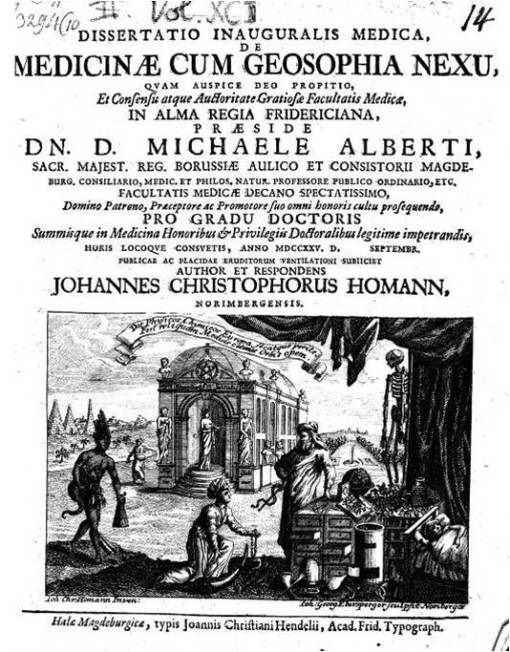
Johannes Christophorus Homann.  The inventor of modern mapping, who defined the need for mapping cultures, living styles, health, and disease.  I translated a portion of this thesis, reviewable at http://wp.me/Puh6r-7MS ;

Source: brianaltonenmph.com

The page this ScoopIt! links you with is several years old, but still one of the best and longest demonstrations of the national population health grid project.    


I produced it with the goal of marketing NPHG to several of the top Healthcare Quality/Patient Safety companies in the U.S.  The goal is to merge NPHG with a standard GIS module already in place.  NPHG does mapping exceptionally fast; GIS can be used to follow up on the discoveries made utilizing NPHG.    


NPHG is valuable at the small area and national health level .   In theory, a company could produce a page for internal staff to access that is updated on a regular basis.  This process can be used to a standard reporting module, such as a report focused on : African/African American Health, Asian American Crosscultural Physical and Mental Health, Latino/a Healthcare Programs, High Risk/High Cost Patient Care, SES, CDM Risk-Cost and National Mental Health Cost modeling.   PW :  Homann   

See on Scoop.itNational Population Health Grid

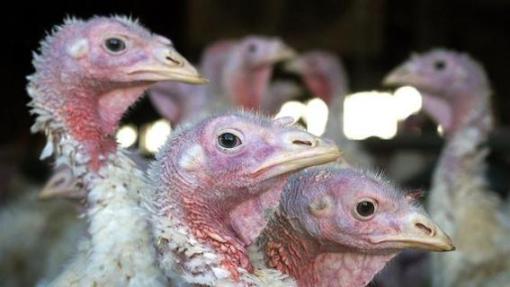
MINNEAPOLIS (AP) — A ninth Minnesota turkey farm has been hit by a form of bird flu that’s deadly to poultry, this time in a large Jennie-O-Turkey Store operation that has 310,000 turkeys, federal authorities and company officials said Wednesday.

Source: news.yahoo.com

Lets take a look at the issue of fowl and livestock and diseases.    


Not that we can change the industrial farming methods that much (although modern high tech and upcoming high tech robotic methods seem atrocious to some).    


But farming has given us Hog Cholera, Texas Fever, Bovine Tuberculosis and Avian Flu.  The Hogs in their usual way helped make the typhoid outbreak more efficient in Cumberland in the late 1800s.  Cattle spread their Tb across numerous states by train between 1850 and 1855.  Texas Longhorns gave us Texas Fever out of Mexico by way of ticks.  


Over the years, I posted extensively about the history of these diseases that were developed because of industrial farming and the late 20th C livestock industry.


Examples:


Turkey Farms — https://brianaltonenmph.com/historical-buildings-and-sites/the-james-way-for-hens-and-turkeys/ 


Texas Fever — https://brianaltonenmph.com/gis/historical-disease-maps/zoonoses/1866-1885-the-texas-cattle-drives-and-texas-fever/ 


Bovine Tb — https://brianaltonenmph.com/gis/historical-disease-maps/zoonoses/contagious-lung-plague-of-cattle-1843-to-1892/ 


Zoonotic Diseases in general — https://brianaltonenmph.com/gis/historical-disease-maps/zoonoses/ 


Atlantic Veterinary College hour long class on this:  https://www.youtube.com/watch?v=JcxR5kgS8zs 


My Youtube video on the distribution of zoonotic diseases brought in from other continents/regions, at https://www.youtube.com/watch?v=NWYslHBLzeI  


Results of my study of traditional Anthrax in the U.S. –  https://www.youtube.com/watch?v=YpdAZjH2m60&list=PLWrApErk5byYGS5oG0u575xDIEwmANtyD 


These continents/regions are also reviewed separately in the Youtube.  Many zoonotic diseases can be found on my Youtube page.

See on Scoop.itGlobal∑os® (GlobalEOS)

Ethiopia now has a national plan for eliminating neglected tropical diseases, but success depends on disease mapping, monitoring, and making data accessible for policymakers

Source: www.theguardian.com

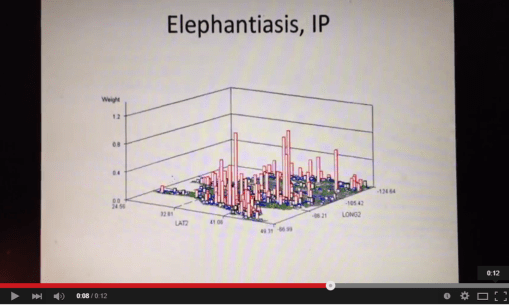
I have a couple of projects I posted the results for on mapping history for elephantiasis.  The figure provided ("Elephantiasis, IP") pertains to my study of the recent or modern history of importation of this disease into the United States.


By the mid-19th century, elephantiasis was considered a "latitudinal disease" by famous disease cartographers like Heinrich Berghaus (1847), Adolph Muhry (1856), Alexander Keith Johnston (1856),  William Aitken (1872), and Robert William Felkin (1889) (the links to the pages I developed on these scientists are below).  Its method and pattern of spread globally changed little over the next 75 years.


The history of mapping elephantiasis can be reviewed, starting with the links and maps below.


My spatial review of EMR claims noting Elephantiasis history, in video form, is at https://www.youtube.com/watch?v=Uc6zvqutU3g


FRIEDRICH SCHNURRER (1784-1833)


1827 ‘Charte Uber die geographische Ausbreitung der Krankheiten’ (1827) — TRANSLATION & REVIEW IN PROCESS 


R. Brömer.  The first global map of the distribution of human diseases: Friedrich Schnurrer’s ‘Charte über die geographische Ausbreitung der Krankheiten’ (1827).  Med Hist Suppl. 2000; (20): 176–185.  At http://www.ncbi.nlm.nih.gov/pmc/articles/PMC2530995/?page=1


HEINRICH BERGHAUS (1797-1884) 


(1848 Map, translated, with review) –  

https://brianaltonenmph.com/gis/historical-disease-maps/heinrich-berghauss-physikalischer-atlas-1848/


ADOLPH MUHRY (1810-1888)


(1856 Map, partially translated, with discussion) – https://brianaltonenmph.com/gis/historical-disease-maps/adolph-muhrys-global-disease-map/ 


ALEXANDER KEITH JOHNSTON (1844-1879)


(his 1856 world map) – https://brianaltonenmph.com/gis/historical-disease-maps/alexander-keith-johnstons-famous-map-a-detailed-review-1856/ 


(the North America portion, reviewed in detail) – https://brianaltonenmph.com/gis/historical-disease-maps/alexander-keith-johnston-health-disease/ 


(his philosophy and such) –  https://brianaltonenmph.com/gis/historical-medical-geography/1856-alexkeithjohnstonsmay5thpresentation/ 

WILLIAM AITKEN (1825-1892)


(his 1872 map, compared with others) – https://brianaltonenmph.com/gis/historical-disease-maps/aitkenglobaldiseasenosogeography/


(more) – https://brianaltonenmph.com/gis/more-historical-disease-maps/1872-william-aitken-book/

ROBERT WILLIAM FELKINS (1853-1926)


(full 1889 map) –  https://brianaltonenmph.com/gis/historical-disease-maps/robert-william-felkin-1889-tropical-diseases/ 


and (parts of his writings) –

https://brianaltonenmph.com/gis/more-historical-disease-maps/1889-robert-william-felkins-on-the-geographical-distribution-of-some-tropical-diseases/


(His work as a Google Book) –  https://books.google.com/books?id=0t1TAAAAQAAJ&pg=PA43 


See on Scoop.itGlobal Health Care

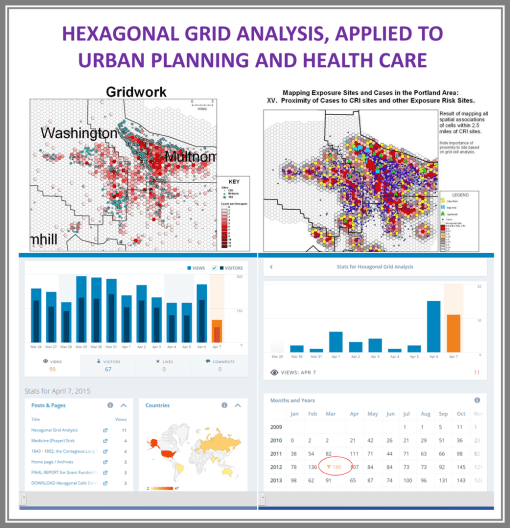
This sites received 91,000 hits per year.  My page on hexagonal grid analysis receives a consistent percentage of these hits.

The reason is the description on how to use and manipulate the hex grid method of mapping, my arguments as to how it reduces error production in spatial analysis by 25% +/-, and the value of downloading the hexagonal grid modeling tool that I posted 5 years ago, for students in search of a unique final project.

I developed this method of analyzing health in the winter of 2002/3, twelve years ago.

It was successfully applied at the state level to demonstrate the spatial relationship between exposure to chemicals and leukemia/lymphoma case reporting.

Source: brianaltonenmph.com

The isolines that are developed from hexagonal grids are more accurate and visually appealing than those generated using a traditional square cell grid technique.

A fairly detailed statistical analysis I performed comparing square cell grids to hex cell grids demonstrated there to be a 42% of error with square grid cells due to corner-centroid spatial relationships.  With hex grids, this relationship is reduced to 16%-17% potential for error in spatial assignments.

The hex cell method is by far more reliable and useful than the traditional square cell method, yet 90% or more of GIS analysts rely upon the more error prone older methods.

The number of visitors at my site on medical GIS for hex grid training is unique, and consists mostly of students, who are engaged in some sort of GIS lab project or producing a project in GIS to hand in as a term project or paper.

One way to understand the ingenuity of a GIS user is to determine how exposed and familiar he/she is to the applications of grid modeling, and the benefits of hex grid methods over square grid methods.

For grid mapping spatial analysts, until hex grid cell methods are employed, esp. for medical GIS, we will always be dealing with the >40% spatial error problem for our work.

The major advantage of grid mapping is that it does not require base mapping, or even the use of a background GIS to produce your results.  With the hex grid method, we could avoid the need for a regular GIS to produce our results (a popular early 1990s philosophy amongst us grid analysts), but hex grid mapping techniques provide a greater benefit and more useful graphic output when developing using a standard vector GIS tool for the spatial analysis.

See on Scoop.itEpisurveillance

The bacteria causes a condition called shigellosis, which is marked by bloody diarrhea and abdominal pain.

Source: www.yahoo.com

There are some very unique regional differences in the distribution of cases linked to the four major Shigella species in the USA over the past decade . . . . .  


It is one of a number of important epidemiology topics proposed in my dissertation that are in need of extensive development at the GIS-spatial analysis level in the next few years.  


In order to surveill more than 2500 diagnostic metrics per day, an effective tool has to be implemented which can manage that task.  


The NPHG algorithms I developed are designed for spatial analyses without the need for standard GIS implementation.  


The results of this surveillance technique can be used to define whatever special topics, case report clusters, and population health indicator metrics are in need of a more extensive implemetation of GIS for detailed, routine analysis.  


This method was specifically designed for use in rapid surveillance and small area analysis, to be performed on a daily or weekly basis.  It can perform a de novo surveillance request in just a few minutes.


With the following four videos, I demonstrate the important spatial differences of Shigella case distribution for the U.S., via the following 3D videos of cases:


Shigella A  (Shigella dysenterica) —  

https://www.youtube.com/watch?v=uoswDjnOT40 


Shigella B  (S. flexneri) — 

https://www.youtube.com/watch?v=nma43unktsw


Shigella C  (S. boydii) — 

https://www.youtube.com/watch?v=_Yy0vqDYEY4


Shigella D  (S. sonnei) — 

https://www.youtube.com/watch?v=qITvXrXeUsY

See on Scoop.itMedical GIS Guide

LINK —>   https://www.youtube.com/v/LOp-KGd4hV0?fs=1&hl=fr_FR

Produced 1-29-15.

Source: www.youtube.com

This is a video, minus the audio, produced from a powerpoint that I developed on the history of vaccinated diseases.

The focus of this presentation is kids or young adults who come down with an immunizable disease.

In the figure provided above, the two pictures present views down the pharynx of a child with diphtheria.  The white covering on the mucous membranes is due to dead organisms, respiratory passage tissue, and debris left behind by a bacterial colony residing on the air passage.  This debris essentially forms a perfect casting of the lung, and can extending more than a foot into the lung in some sections.  For the worst cases, it may extend as far down as the upper to middle bronchioles, stopping just before the alveoli are reached.  In the alveoli, oxygen – carbon dioxide exchange takes place.

In severe cases of airway blockage, the best treatment is typically a tracheotomy and/or intubation.

See on Scoop.itGlobal∑os® (GlobalEOS)

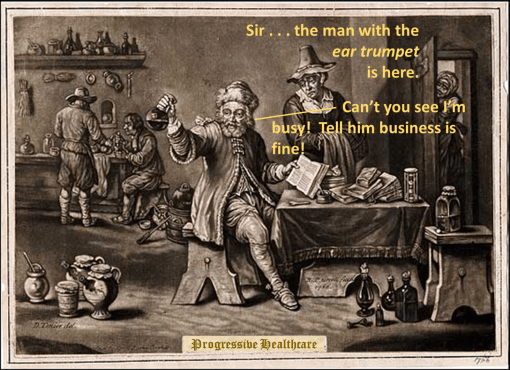
EarTrumpetandGIS7

The ways in which important discoveries come into medicine are sometimes unbelievable.  Medicine is sometimes too slow at changing its standards and protocols once important discoveries are made.

For the past twenty years, this has been the case with GIS.  The current science of spatial epidemiology is a study that has the potential to completely reform managed care and better address the rising cost concerns we are now facing.  Yet, we are still not ready for these changes, or taking on GIS at full force.

Like twenty years ago, the use of GIS remains an experimental process with most managed care and insurance agencies, and is not at all required for any annual QI or Meaningful Use reviews.  With the mining and use of Big Data now common to HIT, the industry is unprepared for this more rigorous, thorough, cost saving method of monitoring healthcare.

The following articles are examples of the application of GIS to managed care and quality assurance processes in healthcare.

*******************************************

READINGS

Agency for Healthcare Research and Quality (AHRQ).   Using Geographic Methods to Understand Health Issues .  (2014/5)  Access at http://archive.ahrq.gov/research/geomap/geomap1.htm 

Panth, M., & Acharya, A. S. (2015). The unprecedented role of computers in improvement and transformation of public health: An emerging priority. Indian Journal of Community Medicine, 40(1), 8.  DOI: 10.4103/0970-0218.149262.  Accessed at http://www.ijcm.org.in/article.asp?issn=0970-0218;year=2015;volume=40;issue=1;spage=8;epage=13;aulast=Panth 

Dalton, C. M., & Thatcher, J. (2015). Inflated Granularity: Spatial ‘Big Data’and Geodemographics. Available at SSRN 2544638.  Accessed at: http://papers.ssrn.com/sol3/papers.cfm?abstract_id=2544638

Lee, D. C., Carr, B. G., Smith, T. E., Tran, V. C., Polsky, D., & Branas, C. C. (2015). The Impact of Hospital Closures and Hospital and Population Characteristics on Increasing Emergency Department Volume: A Geographic Analysis. Population health management.   Accessible via http://online.liebertpub.com/doi/abs/10.1089/pop.2014.0123 

Adams, A. M., Islam, R., & Ahmed, T. (2015). Who serves the urban poor? A geospatial and descriptive analysis of health services in slum settlements in Dhaka, Bangladesh. Health policy and planning, 30(suppl 1), i32-i45.  doi: 10.1093/heapol/czu094.   Accessible via  http://heapol.oxfordjournals.org/content/30/suppl_1/i32.short 

Lee R Mobley, Tzy-Mey Kuo, Jeffrey Traczynski, Victoria Udalova and HE Frech. (2014).   Macro-level factors impacting geographic disparities in cancer screening.   Health Economics Review 2014, 4:13  doi:10.1186/s13561-014-0013-7.  Accessed at  http://www.healtheconomicsreview.com/content/4/1/13 

Simms, I., Gibin, M., & Petersen, J. (2014). Location, location, location: what can geographic information science (GIS) offer sexual health research?. Sexually transmitted infections, 90(6), 442-443. doi:10.1136/sextrans-2014-051695    http://sti.bmj.com/content/90/6/442.short 

Angier, H., Likumahuwa, S., Finnegan, S., Vakarcs, T., Nelson, C., Bazemore, A., … & DeVoe, J. E. (2014). Using Geographic Information Systems (GIS) to Identify Communities in Need of Health Insurance Outreach: An OCHIN Practice-based Research Network (PBRN) Report. The Journal of the American Board of Family Medicine, 27(6), 804-810.   dos:10.3122/jabfm.2014.06.140029.  Accessed at  http://www.jabfm.org/content/27/6/804.short . 

Ana Lopez de Fede, Kathy Mayfield Smith, John Stewart.  The Role of Geography in Health Care Spending and Monitoring Services Use.  A Getis-OrdGi* Statistical Hot Spot Analysis of SC Medicaid Paid Claims per Capital by ZCTA.  Policy and Research Institute on Medicaid and Medicare, Institute for Families in Society, University of South Carolina.  Accessed at http://ifs.sc.edu/NewPRMM/Products/HotSpotAnalysisMethods.pdf 

David Moskowitz, Bruce Guthrie, Andrew B. Bindman.  (2012). The Role of Data in Health Care Disparities in Medicaid
Managed Care.  Medicare & Medicaid Research Review, 2(4), E1-E15.  Accessed at  http://www.cms.gov/mmrr/Downloads/MMRR2012_002_04_A02.pdf 

Peter W Gething, Fiifi Amoako Johnson, Faustina Frempong-Ainguah, Philomena Nyarko, Angela Baschieri, Patrick Aboagye, Jane Falkingham, Zoe Matthews and Peter M Atkinson.  (2012).  Geographical access to care at birth in Ghana: a barrier to safe motherhood.   BMC Public Health 2012, 12:991  doi:10.1186/1471-2458-12-991  Accessed at http://www.biomedcentral.com/1471-2458/12/991 

Michael Sparer (2012). Medicaid managed care:
Costs, access, and quality of care. RESEARCH SYNTHESIS REPORT NO. 23. SEPTEMBER 2012. Robert Wood Johnson Foundation. Accessed at
http://www.rwjf.org/content/dam/farm/reports/reports/2012/rwjf401106

Paul Guttry. (2012). 21 NOV 2012 RESEARCH & IDEAS
What Health Care Managers Need to Know–and How to Teach Them . Working Knowledge. Accessed at http://hbswk.hbs.edu/item/6933.html

Peter J. Cunningham. (2011). State Variation in Primary Care Physician Supply: Implications for Health Reform Medicaid Expansions. HSC Research Brief No. 19. March 2011. Accessed at http://www.hschange.com/CONTENT/1192/

Tomas J. Philipson, Darius Lakdawalla,Dana Goldman. (2010). Addressing Geographic Variation and Health Care Efficiency. Lessons for Medicare from Private Health Insurers
July 19, 2010 | American Enterprise Institute. Accessed at http://www.aei.org/publication/addressing-geographic-variation-and-health-care-efficiency/

America College of Physicians. (2010). RACIAL AND ETHNIC DISPARITIES IN HEALTH CARE, UPDATED 2010. ACP, A Position Paper. Accessed at https://www.acponline.org/advocacy/current_policy_papers/assets/racial_disparities.pdf 

American Hospital Association.  (2009).  Geographic Variation in Health Care Spending: A Closer Look. American Hospital Association.  November 2009.  Accessed at file:///C:/Users/Brian/Downloads/twnov09geovariation.pdf

Sylvester J. Schieber, Chairman. Dana K. Bilyeu, Dorcas R. Hardy, Marsha Rose Katz, Barbara B. Kennelly, Mark J. Warshawsky, (2009). The Unsustainable Cost of Health Care. Social Security Advisory Board, September 2009. Accessed at http://www.ssab.gov/documents/TheUnsustainableCostofHealthCare_508.pdf

Donald M. Berwick, Thomas W. Nolan and John Whittington. (2008). The Triple Aim: Care, Health, And Cost. Health Affairs, 27, no.3 (2008):759-769. Accessed at http://content.healthaffairs.org/content/27/3/759.full.pdf+html

Dummer, T. J. B. (2008). Health geography: supporting public health policy and planning. CMAJ : Canadian Medical Association Journal, 178(9), 1177–1180. doi:10.1503/cmaj.071783 Access at http://www.ncbi.nlm.nih.gov/pmc/articles/PMC2292766/

Daniel Callahan, (2008). “Health Care Costs and Medical Technology,” in From Birth to Death and Bench to Clinic: The Hastings Center Bioethics Briefing. Book for Journalists, Policymakers, and Campaigns, ed. Mary Crowley. (Garrison, NY: The Hastings Center, 2008), 79-82. Accessed at http://www.thehastingscenter.org/Publications/BriefingBook/Detail.aspx?id=2178

John Carroll. (2007). How Doctors Are Paid Now, And Why It Has to Change. December 2007. Accessed at http://www.managedcaremag.com/archives/0712/0712.docpay.html

Sarah Hudson Scholle. (2007). Efforts to reduce racial disparities in Medicare managed care must consider the disproportionate effects of geography. The American journal of managed care (Impact Factor: 2.17). 02/2007; 13(1):51-6. Accessed indirectly via http://www.researchgate.net/publication/6575638_Efforts_to_reduce_racial_disparities_in_Medicare_managed_care_must_consider_the_disproportionate_effects_of_geography

Stefane M Kabene, Carole Orchard, John M Howard, Mark A Soriano and Raymond Leduc. (2006). The importance of human resources management in health care: a global context.
Human Resources for Health, 4:20 doi:10.1186/1478-4491-4-20. Accessed at http://www.human-resources-health.com/content/4/1/20

William H. Frist.  (2005).  Overcoming Disparities in U. S. Healthcare.  Health Affairs, 24, no.2 (2005):445-451.  doi: 10.1377/hlthaff.24.2.445 . Accessed at  http://content.healthaffairs.org/content/24/2/445.full.pdf+html 

Betancourt, J. R., Green, A. R., Carrillo, J. E., & Ananeh-Firempong 2nd, O. (2003). Defining cultural competence: a practical framework for addressing racial/ethnic disparities in health and health care. Public health reports, 118(4), 293.  Accessed at  http://www.ncbi.nlm.nih.gov/pmc/articles/PMC1497553/ 

Martin Sipkoff. (2003). Nine Ways to reduce Unwarranted Variation. Managed Care, November 2003. Accessed at http://www.managedcaremag.com/archives/0311/0311.variation.html

David M. Cutler, Louise Scheiner. (1999). The geography of Medicare. Accessed at http://www.federalreserve.gov/pubs/feds/1999/199918/199918pap.pdf

Mark Rosenberg. (1998).   Medical or Health Geography? Populations, Peoples and Places.   INTERNATIONAL JOURNAL OF POPULATION GEOGRAPHY 4, 211-226 (1998).

http://www.geo.hunter.cuny.edu/~dgreimer/TEMPALSKI/rosenberg%5B1%5D.pdf

Sarah Curtis and Ian Rees Jones. (1998). Is there a place for geography in the analysis of health inequality? Sociology of Health & Illness.. 20(5), 645-672. ISSN 0141–9889.
Access at http://onlinelibrary.wiley.com/doi/10.1111/1467-9566.00123/pdf

See on Scoop.itGlobal∑os® (GlobalEOS)

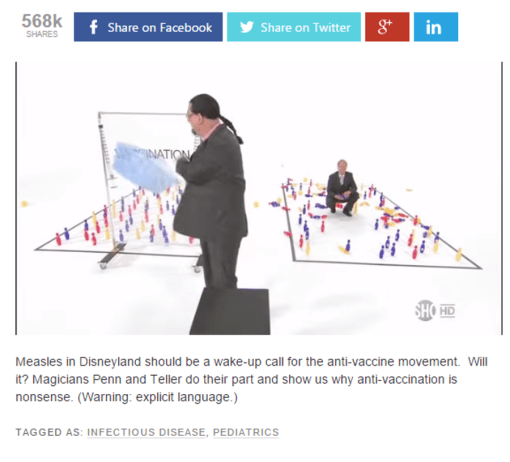
Measles in Disneyland should be a wake-up call for the anti-vaccine movement. Magicians Penn and Teller show us why anti-vaccination is nonsense.

Source: www.kevinmd.com

Hey. It’s magic. Better magic than prescribing to anti-vaccs.

See on Scoop.itGlobal∑os® (GlobalEOS)