selfportrait_electromagnetics

.

I recently had an article published in International Journal of Epidemiology ! ! ! 

Brian Altonen.  Commentary: John Lea’s Cholera with Reference to Geological Theory, April 1850 .  International Journal of Epidemiology 2013 42: 58-61. 

HTML linkPDF link.

(unfortunately, a subscription is required)

.

The Law of Pandemics

An unexpected development in the history of medicine came in the mid 1800s due to the discoveries of Alexander Humboldt, Karl Freidrich Gauss and Richard Faraday.  Robert Lawson invented the Law of Pandemics.

Robert Lawson (1815-1894) spent his life working in the military.  He began his career at the age of 20 when he was appointed Assistant Surgeon and served in the West Indies, the West Coast of Africa, Cape Colony, and the Scutari Hospital operating during the Crimean War.   During these years his position was advanced to Surgeon and then Surgeon Major, before being advanced to the highly respected position of Deputy Inspector-General in 1854.  Lawson continued to serve in this position until 1867 when he was appointed Inspector General of Hospitals in 1867, just five years before his retirement in 1872.

Lawson’s interest in epidemic disease patterns probably began with the cholera epidemic of 1829/1830.  He was then about 15 years of age, a year or two immediately prior to having his fate decided for him in terms of professions.    Lawson’s childhood upbringing would have involved traditional classes in the foreign languages, religion, politics and law, history, mathematics, and the various natural sciences, with math, engineering and the sciences merged into a single discipline called natural philosophy.  His schooling during his teen age years followed by medical training as a young adult would have exposed him to the nuances of he needed to know about anatomy, physiology, chemistry, climate and the earth’s natural settings, and how these all related to diseases and their treatment.

crimean-war-map-bw-quote

Quote from page 12, Scutari and Its Hospitals, by Lord Sidney Godolphin Osborne, 1855  

Lawson became a surgeon with his training, sometime in the early 1830s, probably due to a combined apprenticeship and lectures program common for the time.  His training commenced before, during or soon after the Asiatic cholera epidemic first made its way to western Europe in 1829.  His focus would ultimately be on the physical sciences since these were needed formed the heart of knowledge he relied upon as a surgeon.  The notion of animalcule disease (the precursor to bacterial theory) was just beginning to take form.  Also commonly cited at the time were theories about the relationship of “germs,” “viruses,” and “fungi” to diseases,  with the knowledge about the differences between them insufficient to matter much.  Lawson also learned that disease could be a product of your personal constitution, your family’s heritage, where you were born and raised, how nature impacted your during your lifespan and how well you adapted to these changes.  There was an early ecological form of disease philosophy that developed during this time, a result of Erasmus Darwin’s teachings just a decade or two prior.  Lawson would become quite familiar with this ideology and like others use it to explain those places where diseases tended to recur and how we become adapted to them or not and to the surrounding environment.  Many illnesses we suffered, therefore, would have been considered the result of failure to adapt as the means to recovery, making us a victim of natural events.

.

RobertLawson_NewArmyList_1857_Jamaica

Link to Source

.

Crimea Peninsula

When Lawson began his work as an Assistant Surgeon in 1835, all of this education went with him and followed him through his years of services up to the period of the Crimean War, which commenced in 1854.  It was at the Crimean War that Lawson and numerous other physicians would be tested for their knowledge, ability to adapt to major stresses, and ability to develop new treatment methods for engaging in better use of their skill sets.   In the end, Lawson and most other surgeons and physicians at the war lost out to nature and the limitations as surgeons when it came to dealing with infectious disease patterns.  Nature got the best of many soldiers, thousands of whom had to be buried due to common problems like excessive blood loss, deep lung penetrations due to the sword, post-traumatic gangrene, post-surgical infection, crushed appendages, penetrating head injuries, lengthy spells of diarrhea, dehydration, and long term malnutrition.  Most of these came as a result of unhealthy living quarters, vermin, and what many probably speculated to be some form of disease causing contagion passed on from one cot-bound patient to the next.

The Crimean War taught many of its medical staff the problems that poor planning and lack on adequate sanitation measures can have.    All of this was changed once Lawson removed to Jamaica around 1856/7 and began to serve as Inspectors-General, Lawson for the hospital established in Newcastle, a small hilltop retreat and military setting located just northeast of the  town of Kingston, Jamaica.  The study of diseases and disease patterns became more complex as physicians and surgeons added the role of the earth on disease and man to their study.  Up until this point, doctors had to contend with the issues of man versus nature (environmental cause) and man versus himself (sanitation and constitution).  Gravity was in control of everything that consisted of physical matter–a Newtonian concept.  With the introduction of “magneto-electric” forces based theory (versus electro-magnetism) to this paradigm, our natural history knowledge took on a new dimension as Faraday’s principle led people like Lawson to speculate about (latch onto) the theory that the very physical (Newtonian) man had to interact with this Oerstedian omnipresent electrophysical force that existed in the universe.  (Named for Hans Christian Ørsted, 1777-1851, Copenhagen, the discoverer of this terramagnetoelectrics effect; see wiki on this.)

HansCOrsted_1777-1851

One of the more unusual things about Jamaica around this time was its unique role in the study of the earth’s magnetic behavior.  It was where the earth’s magnetism remained constant, never fluctuating over time like it did elsewhere on the globe.  This geographical feature of Newcastle led Lawson to engage in some fairly controversial studies of disease patterns.  Whereas his work during the Crimean War in 1854 resulted in some “collision with the authorities” (as his obituary put it), his new findings in magneto-electrics while residing in Jamaica would cause even more controversy.  [According to history, Lawson engaged in "questionable procedures" following a cholera outbreak, possibly bad hygienic upkeep and poor patient care at all levels--see the details of this in Scutari and Its Hospitals by Lord Sidney Godolphin Osborne, 1855, pp. 12-14; Lawson and most others employed at the hospital were severely chastised for crowded conditions and poor sanitation, a topic for review on another page.]

BurialGroundatScutari

Following his removal to Jamaica, Lawson took on some new duties that were very different from those of Crimea due to the altitude of where he was at and the island community setting.  If we take a close look at Alexander Keith Johnston’s map, published 2 years later, we find that the natural history and medical geography of Jamaica to be completely different from Crimea.   According to the disease philosophy for the time, Jamaica is torrid in nature, whereas Crimea is in a temperate region, just north of the boundary of the  tropical or torrid zone but well south of the arctic zone.

Crimea_AlexanderKJohnstonsMap_LgArea

Article related to above map by Johnston

The major disease history of Crimea included Plica Polonica to the west over a fairly large area, plague to the south of the Black Sea, Goiter ridden regions east of Crimea (the peninsula along the northern edge of the Black Sea), and Fevers and Leprosy well to the south.  The topography tells us that this place is bordered by water on three sides, has a tendency to have to deal with wind patterns, especially those coming upward or laterally from the sea itself.   Inland routes of migration for disease have few routes to take, with that from the west bearing plica polonica and that from the east fairly disease free.  Given the right conditions, the Crimean Peninsula was perhaps considered a fairly health place to live, with opportunities for sanative effects on valetudinarians in need of  management of their chronic conditions.  Rheumatism, gout, and tuberculosis are more likely to develop into problems at this latitude due to its perilacustrian setting.  The reasons for illness during the war had to be related to the humidity, wind patterns, constitution of the people residing there.  For British soldiers, this could mean the local climate was too much for their temperament to withstand and their bodies to handle for much time.  Lawson’s observations of the soldiers in this setting, be they Turks or allies, showed these people became victims of the war first, the hospital second.  No matter what the injury, penetration wound, crushed joints and bones, or lost appendages, the conditions following their surgery in order to assist with their recovery were responsible for some of the worst deaths due to infections setting in than any war previously had to suffer.  This was due to population density, crowded in-hospital bedding settings, damp moist floors, mildew on the clothing and linens, and rotted wooden floor boards.  Add to this the unsanitary nature of the battlefield due to its decaying horse carcasses and we have the initial requirements for an area where patients would ultimately have to suffer from diarrhea, dysentery (opportunistic, not amoebic, i.e. see my thesis) and in the worst, cholera (not Asiatic cholera).

Crimea_AlexanderKJohnstonsMap

.

Jamaica

The setting and climate of Lawson’s new place in Jamaica was different from that of Crimea.  It was still conducive to diseases linked to high humidity, rapid decay or decomposition the various sources for effluvium and “miasm”, and the results of war were no longer a concern for him in this region for the time being.  Whereas his service in the Crimean War involved primarily the need for much surgery and chloroform due to the injured, and diarrhea stricken soldiers and prisoners, in Jamaica, the primary diseases he had to endure were the various fevers that struck this region.

AlexanderKJohnston_JamaicaSetting

Note on these maps the following: the fevers, diarrhea and dysentery are common, and consumption is “rare”.  This related to the belief that residency here was very health for severe chronic, degenerative diseases like consumption, a belief popular since the late 1790s.  Also notice cholera failed to reach some of the islands around this time (1856).  Some islands are termed “healthy”, others “very unhealthy”.

AlexanderKJohnston_JamaicaSetting_closer

The various small island settings east of Porto Rico note Dia[rrhea], Dys[entery] and Fev[er].  Two are “Healthy.”

.

According to Johnston’s 1856 map of this setting, Lawson was again tending to patients with diarrhea and dysentery along with yellow and intermittent fever patients.   The most deadly of these diseases was yellow fever, which the Jamaica region was the heart of due to its tropical climate.   Goitre was still present.  But there were also a significant number of unique diseases for this region, mostly due to its black community (today we know this disease was primarily of Slave trade origins).  Yaws was the primary example of a disease brought to Jamaica from Africa.  Elephantiasis was prevalent on the mainland close to the isthmus.

Cholera also struck Jamaica, but not in 1832; the first year it went pandemic on the island appears to be 1850.  According to the story of how it Asiatic cholera to Kingston, Jamaica (published in Lancet(?)), cholera demonstrated to physicians that it favored regions stricken by  poverty, poor nutrition, and unhealthy, crowded living spaces.  This population based interpretation reduced the blame being placed upon nature for many of the epidemics.  In 1840, when yellow fever came to Jamaica and struck the military setting in Newcastle, the General in Newcastle deduced that high elevations reduced the risk of this disease and so moved his troops there–thus the establishment of this facility.   By the time Lawson had arrived in this region, 15 to 16 years later, the new theories for disease behavior were both conflicting and supporting these observations made by the General, and supported by the then recently published findings of the same by William Farr for cholera deaths.  Farr claimed that high elevations reduced the risk of cholera deaths in heavily populated settings.   But physicians also observed that proximity to seaports or city centers was a requirement for yellow fever, but not cholera.

The only observations countering this ideology were those which linked disease to the ports where ships lie in ocean bay waters.  In Jamaica, on at least one occasion, the yellow fever extended too far inland to be obeyant of this rule then firmly established.  Yellow fever struck in high elevation regions (in fact people already afflicted with cholera by mosquitoes in the portside probably migrated into this high elevation setting and then died).  But Lawson’s pursuit for knowledge of the cause of these deaths naturally led him to make use of any new experiences he encountered in Jamaica.  One such experience, with its background related to the Crimean War still recent, ultimately led him to become a major supporter of the sanitation movement.  The other very important experience Lawson had once he removed to Jamaica was its unique magnetic history.

NewcastleJamaica

Jamaica–the theoretical zero point for the earths ever-changing magnetic field

Both became the motivating factors for Lawson’s development of the magnetic isocline theory for diseases like cholera and fever once he resided in Jamaica.  He worked and lived in Crimea from 1855-1856, the last of the peak years of the 1848 to 1856 world cholera epidemic.  His removal to Jamaica in late 1856 happened right after the epidemic ended.  His theme for the cause of the more fatal malignant cholera had yet to be fully developed.   The prime question for the time was what events transpired to convert a common. not so fatal disease like “cholera morbus” into the deadly “malignant cholera”.   Lawson next directed his attention for answering this question to the magnetic field behaviors in an around Jamaica.  Fluctuations in these fields occurred every few years.  After rigorous review of the dates and events that transpired during his first months there, in very short time he came to the conclusion that cholera in general had an underlying two-year cycle related to its malignancy.

Evidence for the events leading up to this supposition are summarized in a description of the discovery of compass variation for Jamaica as early as a century prior.  This was reported in an 1850 book entitled A descriptive atlas of astronomy and of physical and political geography (London, 1850, p 90) by Thomas Milner and August Heinrich Petermann:

[T]here are places [such] as Spitzbergen, Jamaica and the neighbouring islands where no change in the variation [of the compass over time] has been perceptible. The whole mass of West India property says Sir John Herschel has been saved from the bottomless pit of endless litigation by the invariability of the magnetic declination in Jamaica and the surrounding archipelago during the whole of the last century all surveys of property there having been conducted solely by the compass. 

Since 1660, it was known that the compass may vary its readings taken in the same place over time.  This behavior of the earth’s magnetism was well known due to how it influenced the surveying of land claims, and began to appear in the common press between 1800 to 1825 when it was added to the natural philosophy books being use to teach children.  For example, in The Critical Review: Or, Annals of Literature edited by Tobias George Smollett, (Volume 10 (1807) p. 259), there is an article stating “since 1660 the compass has not varied at Jamaica; it is now what it was then and in Halley’s time, 6 ½ degrees east.”  Twenty-five years later, the same knowledge is bequeathed to the readers of The Guide to Knowledge (Volume 1, 1833, p. 453), edited by William Pinnock.

Aguidetoknowledge_TheMagneticNeedleinJamaica


It is also made reference to an article penned by William Robertson and critiqued in The British Clinic, volume 30 entitled “Observations on the Permanency of Variations at Jamaica” (pp. 622-3, in turn this is from Phil. Trans. 1806).  But is best summarized by the following taken from a book review published about a textbook published for schooling, with a female author:

MrsSomervillonFaraday_1824

The American Quarterly Review, Volume 32, 1834, pp. 429-457, see p. 453.

Ultimately, Lawson would use Faraday’s findings to prove his theory for the epidemics.  But Faraday’s Law as it related to disease patterns also had an underlying philosophy already in place to help make this philosophy sensible, not just speculative and imaginative, as if Lawson were developing a new offshoot of a popular natural science.  A decade and a half prior, many claimed this is exactly what epidemic speculators like John Lea did (so claimed by a writer for the AMA in 1853), a reminder of the Abraham Gottlob Werner school, German physicians focused on the geology of nature, and who according to some doctors and scientists, could explain disease patterns using this philosophy.

Schnurrer'sAnnoucement_1830

Announcement of Friedrich Schnurrer‘s maps of world diseases, and Asiatic cholera, pages 648 and 855, from Johann Friedrich von Cotta‘s Allgemeine Zeitung München, 1830. Description of this new periodical with mention of the map.

Schnurrer

From about 1797/1800 on, the concept of disease was significantly changed from any leftover 18th century traditions.  Solidism (William Cullenism) was produced as an attempt to counter and then substitute for the fluids or age-old humoural theory.  The notion of alkalinity and disease took routes in two directions.  One led medical philosophers along the route to believing chemicals and poisons defined certain disease patterns, a philosophy very common to medical journals beginning around 1805.  Merging this philosophy with a more global one was attempted by a German scientist and writer Friedrich Schnurrer (1784-1833).  His compositions ultimately led to the rise in popularity for the landschaft theory of nature, the belief that the world as a whole is more than just the sum of its parts.

Schnurrer (some pages on whom are still under construction) developed this philosophy due to his dissertation on metals and the earth in 1805, his study of what he called “oxydatarum”.   It was a progressive word for the time, and was rarely used elsewhere, and was highly suggestive of links being drawn between our understanding of the earth and its atmosphere, climate, and weather, and the role of oxygen in life and vital energy.  In part of his title, there is an inference made to important health-linked events in the body that relate to the external environment (rerumque externarum indole=events concerning/affairs regarding external/foreign character).

Schnurrer’s next two publications were on geographic nosology, or the classification of regions and their relation to epidemic and endemic patterns that prevailed.  In each he detailed both the macrocosmic view of the earth and its natural phenomena, its macrocosmos according to earlier Christian metaphysician and natural philosopher Jakob Boehme), and microcosmic view or minutia of nature that scientists were now focused on trying to explain all of the complex natural events.  Ten years later, Schnurrer’s work went into the nature of specific diseases in the world and their behaviors.

The following is a chronology of the publications Schnurrer produced:

  • 1810.  Materialien zu einer allgemeinen Naturlehre bei Epidemieen und Contagien.  [Material on the general theory of nature in epidemics and contagions.]
  • 1813.  Geographische Nosologie, oder die lehre von den Veranderungen der Krankheiten in den verschiedenen Gehenden der Erde, in Verbindung mit  physischer geographie und naturgeschichte des Menschen.  [Geographic nosology, or the doctrine of the changes of the disease in the various foregoing the earth, in conjunction with physical geography and natural history of man.]
  • 1823-4. Chronik der Seuchen, in Verbindung mit den gleichzeitigen Vorgangen in der physischen Welt und der Geschichte der Menschen.  [Chronicle of the plague, in conjunction with the simultaneous events of physical world and human history.]
  • 1828.  Die geographische Verbreitung und Ursachen des Wechselfiebers.  [The geographical distribution and causes of intermittent fever.]
  • 1831.  Charte uber die geographische Ausbreitung des Krankheiten;  Charte der Verbreitung der Cholera morbus.  [Map on the geographical spread of the diseases; Map on the spread of cholera morbus.]
  • 1831.  Die cholera morbus, ihre Verbreitung, ihre Zufalle, die verschiedenen Heilmethoden, ihre Eigenthumlichkeit und die im Grossen dagegen anzuwendende Mittel.  [The cholera morbus, its distribution, its coincidences, the various methods of healing, its properties or sensitivity to different agents applied globally.]
  • 1831.  Allgemeine Krankheitslehre gregrundet auf die Erfahrung und auf die Fortschritte des neunzehnten Jahrhunderts, [General pathology, summarized by the experiences and progress of the nineteenth century.]

Other renderings of these metaphysical concepts were prevalent as well in what would become Germany (See also WorldCat for Schnurrer’s writings, and notes on Karl Friedrich Kielmeyer (1765-1844), WorldCat connection].  Some medical philosophers promoted the natural philosophy of landschaft,  interpreting diseases as events related to the reaction of our body to the surrounding environment, an offshoot of the early adaptation-evolution theory promoted by Justus von Leibig, Erasmus Darwin (the infamous Charles Darwin’s grandfather), Louis Agassiz, Jean Baptiste-Lamarck, and others.  Others were heading in a direction that focused on the notion that we make ourselves sick, the primary argument for which had mostly to do with sanitation practices, personal and social, and our constitution and temperament.

.

Gauss and Faraday

By the time Lawson began learning medicine and surgery, landschaft was a common part of most medical philosophies related places to health, but not yet a part of British medical geography philosophy.   When Lawson learned medicine and surgery, the philosophy of electricity and medicine was once again in a state of revival.  The ruling philosophy for terrestrial magnetism were the ideas published by Gauss, Goldschmidt and Weber, Michael Faraday, and in terms its purpose and meaning, Alexander von Humboldt.

..

Gauss-Faraday

Karl Friedrich Gauss (1777-1855) and Michael Faraday (1791-1867)

.

The works of Gauss and Faraday on the earth’s electricity and magnetism are what  led Lawson to draw his conclusions about the disease patterns on this planet.  In his Natural Philosophy booklet Faraday stated that a relationship between electricity and magnetism that he could produce in the laboratory also existed with the world, known as terrestrial magnetism.  He explained it to be a result of the  inner makings of the earth and its crust, and the impacts of metals in the earth on these magnetic fields, resulting from  changes over time induced by an internal movement of the same (a precursor to the first of several versions of our continental shift theory).  This the change in true north over time in our common compass readings.

.

HumboldtPortraits

Alexander von Humboldt 

Humboldt

Relating such a philosophy to medicine and life partook a different line of reasoning.  Such a behavior came as a direct result of Alexander von Humboldt’s writings around the turn of the century.  Fascinated with the ability of nature to produce electricity in various ways, in particular that of the Electric Eel,  he tried to relate this enegy of a living being to the formation of lightning by clouds, auroras in the sky, or the creation of St. Elmo’s Fire along a ship’s mast.  In the book he wrote on this topic, appropriately called Cosmos: A Survey of the General Physical History of the Universe (1845), Humboldt goes through the history of this philosophy extensively in his footnotes at the end of this book.  With these notes he attempts to assign meaning to these studies going back to about 1780, when the nature of earth’s magnetism was first recognized and documented in writing.  Humboldt also uses this reasoning to assign meaning to the same natural forces found in the biological world, linking the cosmos and earth to life in general and nature’s ability to give life or take it, a philosophy developed solely based on Schnurrer’s landschaft theory.  Followers of landschaft considered disease to be a result our harmony with the universe’ so to speak (the very notion proposed as well by Franz Anton Mesmer in the 1760s).  Any other attempts by science that failed to review the holism of nature, were in turn found to be compartmentalizing their knowledge of nature into specialties, a way of learning which was rapidly become very popular, and so harmonized with landschaft theory in Schurrer’s 1810 to 1815 works.

EarlyMagneticandElectricCure

Evidence for this merging of knowledge by physicians and scientists to form a new science of healing first appeared very early as a result of China’s exploration in the 1680s, when it was related to acupuncture and moxi (see following grey-notes).

SIDE NOTE

For an excellent series of original writings on this, use the following links:

Such uses for medical electricity were countered by similar philosophies and practices with a long history of use in Chinese medicine.  By 1810 it became well known that Egyptian, Chinese and Japanese physicians and others believed in acupuncture and moxi for revitalizing ailing parts of the body [see 1683 Philosophical Transactions, Joseph Acerbi's 1798-9 Travels Narrative or summary of this study of Laplanders published in The Scots Magazine 1802, also the 1797 London Medical and Physical Journal-W. Coleys review,  Oeuvres de Vicq-dAzyr 1805, Robert John Thornton's A New Family Herbal (1810), William Woodville's Medical Botany (1810), Clark Abel's critique on this in Narrative of a Journey to the Interior of China (1818), an anonymous letter published in The Asiatic Journal, 1820, and William Wallace's Lancet article on Moxa, 1827].  This philosophy became popular in London by 1820 due to Dr. James Morss Churchill, who wrote a treatise on this subject [search 1 on the same, search 2].  In France (one of Churchill’s first translators), a similar revival took place in the 1830s when electricity related versions of the moxi-acupuncture treatment were tested for the treatment of certain chronic diseases and pain, but especially gout and rheumatism. [see also Google Advanced book search on Acupuncture, 1820-1835).

.

Patterns

But the first important discovery or invention in this field in terms of Western European philosophy and discipline came with the invention of the Leyden Jar about the same time (the Dutch and others have laid claim to this; see my page on this).  This is followed in the late 18th century by the popular static electric generator, with which a glass globe or disk was spun and a piece of leather or fabric laid against it resulting in the storage of a charge, released upon contact with the human body and so used to "revitalize" a paralyzed appendage for example in infantile paralysis (bacterial meningitis) or apoplexy (stroke) induced paralysis.  The early 19th century also gave us the galvanic device, a liquid-based version of the battery which was used to produce and store enough of a charge to create the shock needed to bring a weak and ailing body, a limb, organ or part, back to life.  Each was used to revive the life force or vital spark in an ailing patient.  Some of their most successful uses involved bringing a drowning victim back to life, or eliminating the pain someone experienced due to with rheumatism or a need for dental care.

The other history relevant to Lawson's work was that of Jamaica, its natural history, culture and the relationship between each of these and Faraday's principal of terrestrial magnetism.

In an 1825/6 essay presented by French geologist Msr. H. T. de la Beche, "Remarks on the Geology of Jamaica (Trans. Geol. Soc. London, v. 2, pt. 2, 1827, pp. 143-194)," the earliest version of the continental drift theory are used to define Jamaica's geological differences in terms of lacking any iron rich substrata,  consisting in large part of just pieces in the form of sand and gravel alluvia formed by the diluvial and antediluvial structures.  (Also, an 1812 history of this magnetic theory was published in History of the Royal Society by Thomas Thomson; according to one writer this was proof  of the deluge or Noah's flood--Literary Gazette, vol. 5, Nov. 3, 1821, p. 697-8; according to another writer, this made Jamaica a theoretically perfect place to harbor Africans during their move to slave plantations--Marly; or a Planter's Life in Jamaica, 1828, p. 219; see also Sir Edward Sabine's Work on terrestrial magnetism in the Atlantic, and the decision to monitor this in relation to weather, etc. by the Royal Society Committee of Physics, 1840 Report).

These observations about Jamaica only strengthened some of the opinions individual had about Jamaica's unique compass history.  As investigators continued to study the earth's earth, air and water flows and magneto-electric flux, they came up with a number of very helpful conclusions about the behavior of things on the earth's surface.  In applicability, this pertained to the nature of the earth, water and air patterns (meteorology and climate), but it also pertained to the behaviors of people, animals, plants and other living things on the planet.  For some, it even related to such things associated with disease as germs, viruses, fungi, animalcules, worms, copepods, shellfish and crustacea.

In 1840, Carl Wolfgang Benjamin Goldschmidt, Wilhelm Eduard Weber, Carl Friedrich Gauss produced Atlas Des Erdmagnetismus: Nach Den Elementen Der Theorie Entworfen.  It included the following maps (which by the way are nearly identical to Lawson's map).

GoldschmidtWeberGauss_1840-2MapsofInclination

.

A number of natural phenomena were now being linked to this very different interpretation of the earth and surrounding environments or media.  The atmosphere had its own domain of energy to learn about as did the earth's solid masses, as well as the masses of other objects in space.  These unique discoveries were used to explain events previous inexplicable such as the influence of solar flares, the behavior of meteor events, the behavior of auroras.  Cyclicity often played a role in these descriptions, almost as much as the frequent changes observed in natural cycles and patterns.

.
Aurora-augustusAtlas

An 1850 illustration of the Aurora, from Milner and Petermann's Descriptive Atlas

.

Canstatt

By the time Lawson was a surgeon in the late 1830s, he was familiar with these teachings of natural science, medical topography and climatology, and the other philosophies dominating the professions of science, engineering and medicine by the time he began his practice.  Slowly but surely the miasma theory once prevalent to to the field was being considerably modified.  A philosophy had developed that incorporated numerous other observations of the natural sciences into how the causes for illness can be defined.  These explanation included such things as natural events related rain, heat, dew, seasonal cold, dampness, and "ice meteor" events (sleet and hail), along with the formation of mist, swamp gases, effervescing minerals from springs and anything that could be related to the alkaline chemistry of  the soil or substrata.  An especially new set of theories came about relating these natural meteorological phenomena to the earth itself,  its theoretical mass or form that he referred to as telluric material.  Such a model was already well defined and developed into a unique landschaft nosology, again developed by German scientist, this time Carl Friedrich Canstatt.

.

KarlFriedrichCanstatt_B04186_Portraits_NIH-Gov

Dr. Carl Friedrich Canstatt

One of the most influential German writings of the mid-19th century was Dr. Carl Friedrich Canstatt, and yet surprisingly we never learn about him and the important classification system he developed for diseases in relation to medical geography.  Most of his concepts were derived from the much earlier idio-miasm/koino-miasm theory published as part of a book at the turn of the century by a British writer, with the climate theory description added by a United States author [REFERENCE].  Canstatt subdivided this basic view of diseases into smaller categories by relating this philosophy to the new observations published for how diseases behaved with people in relation to specific classes of natural history features and events.

.

Canstatt’s Nosology of Diseases [link to full review]

Orders

  1. Exanthematous, specific disease processesVariola, Variolis, Varicella (measles, small pox)
  2. Malaria (disease processes by specific telluric atmospheric miasma generated): Intermittent fever, Yellow fever, Cholera, Pest, Dysentery.
  3. Typhus (disease processes from specific animal-generated miasma):  Spotted Fever, Typhus): Ileotyphus (Enteric Fever), Dysentery.
  4. Atmospheric (disease processes created by atmospheric agents that become miasma):

A.  Colds:

a. Rheumatoid,
b. Catarrh, Influenza, Whooping Cough.
B. Heat Illnesses:  Cholosen

5.  Poison animal diseases (disease processes, generated by specific disease poisons of animals): Glanders, Anthrax, Hydrophobia, Vaccinia, Mange (foot-and-mouth disease).

6.  Chronic Diseases . . .  (Chronic diseases, generated by specific contagions or distinct endemic causes): Syphilis, Lepra, Trichoma or plica polonica.

. . .

Remaining conditions with peculiar, unchangeable causes resulting in major conditions:

a) Toxicosis (from poisons from the inorganic and organic kingdoms produced diseases)
b) Trauma  (diseases generated by or from external injury)
c) Evolutionskrankheiten  (Evolution diseases)  (diseases that generated by certain developing states of the organism or modified growth, etc. by dentition, menstruation, childbirth)  (bone formation error)
.

.

Miasmas2

Local and Distant “Miasms”

According to 1800 miasma philosophy, miasmas are either naturally produced (koino-miasma) or human/animal-produced (idio-miasma).    Which two of the above are idio-miasma?

According to Canstatt, 1847, by considering the process of pathogenesis and the onset of a disease induced by the above, which of these theoretical causes are  ”telluric”?  ”malaria”?  ”typhus”?  ”atmospheric”?  ”poisonous”?

.

Canstatt successfully pulled most of the philosophies out there together into one nosology.  The disease groups explained here pertained mostly to nature’s influences, not those that were exclusively produced by man such as those due to filth or poor sanitation.  Still, the sanitation related misbehaviors of people could be closely related to those related to either Poisons, Chronic Disease or Toxicosis theories.    Man was not to blame for telluric, atmospheric and most animal-based miasmatic causes.  Constitution remained a causative factor on its own, but notice how neatly it does fit in as well with Evolutionskrankheiten, even nature makes us responsible at times for these very personal, internally somatic ailments we may be forced to live with.

.

RalphWalter_Electricity2.jpg

Lawson

Robert Lawson (1815-1894) was probably quite familiar with all the theories out there about disease just mentioned.  He was well read in the philosophy about how and why epidemic disease patterns developed and how and why they migrated to various new locations.  Like most others, he understood much of these teachings but could not use it to explain each and every epidemic pattern he would later lay witness to.

When he became Inspectors-General of the Hospital in Jamaica, his residency naturally exposed him to some new philosophies in the region (for a complete review of the writing on Electricity for the 18th C history see this bibliography).  In particular there were a number of researchers focused on the unique magnetic traits of this region, two of whom, John Churchman (Author of The Magnetic Atlas, Or Variation Charts of the Whole Terraqueous Globe: Comprising a System of the Variation and Dip of the Needle, by Which, the Observations Being Truly Made, the Longitude May be Ascertained.  1794, 1804, Link to ref.) and Ralph Walker (link), published their theories on this behavior of the earth’s magnetism between 1794 and 1804.  Their activities in the region and the subsequent publication of their work gave him further insights in the region, enough to develop his own theory on disease patterns with.

Lawson probably realized that by living in a place where the magnetism of the earth remained constant, he had the unique ability to study disease patterns temporally without need to compensate for changes in the earth’s magnetic fields over time.  He thus developed a way to study fevers in relation to the earth’s form and shape where he lived, noting how  these disease patterns behaved in relation to an unchanging surface with rising elevation over time, in relation to the local weather, winds and climate.  One of the first theories he attacked with these results was that of the most famous William Farr, the founder and major promoter of the elevation theory of cholera behavior and the by now widely recognized zymotic theory.

The following transect was produced by Lawson produced as a result of his studies to help delineate the different parts of his theory.

RobertLawson_Landscape_MagneticLines

Source of Above


Helping Lawson along with his theory was the added abberance in local epidemic behaviors that resulted in it striking regions above the 4000 feet above sea level elevation.  This was against the teachings William Farr posed 10 years earlier for cholera, and seemed remarkably different from the yellow fever patterns witnessed and documented in shipping communities.  As a result, Lawson’s work made some readers ponder even more any remaining questions they had about his theory.  (Historical epidemiologists might also recall the high elevation fever noted in Mexico, during the Spanish Exploration period, also suggested to be yellow fever.)

.JamaicanHighElevationNote

From p. 326 in Lawson’s article

At the time of Lawson’s research and service, this was the “center” of everything when it came to the accuracy of the compass.  So along the remaining isoclines on the maps above (Lawson’s or Felkin’s), there is deviation from the norm or expectation with regard to disease patterns.  At the global level, Lawson probably tried to imagine these areal differences with his theory in mind.  That section of this isocline from just west of India, through the known ecological nidus of cholera, across to China and finally Japan, are places where the cholera not only prevailed, but also initiated its global spread patterns to new places where people resided.

.

As noted on Lawson’s transect, it  is placed along an area with unchanging magnetic fields (“Newcastle, Jamaica, on Plane Parallel to Magnetic Meridian”).  In Farr’s theory of cholera, Farr noted high elevation to prevent this disease from becoming epidemic in nature.  Lawson’s map of the yellow fever behavior, a very different disease, failed to abide by Farr’s conclusion.  Lawson’s map in fact even mentioned the increased likelihood for this disease at higher elevations, in areas well above the water edge and shipping ports.  Each of these factors seemed to break the rules suggested by previous other disease patterns.  This obviously made Lawson’s theory at times seem very speculative in the least, problematic for the profession at most.

By 1860, Lawson was ready to share his results with the world, producing a world map defining the disease prone regions.  He thus published the following:

.

Lawson_PandemicIsoclineMap

.

Lawson developed a following for his theory, although by very few in number when it came to acknowledging this theory for disease by the other British writers for his time.  One of these followers was Robert Felkin, whose maps depicting migrating epidemic disease patterns included a rendering of Lawson’s as his final figure (this writing is reviewed extensively on two other pages at this site’ i.e. the map itself, and for book content).    Twenty years later, in 1888, Felkin was promoting Lawson’s 1861 theory.  This occured right at the dawn of the bacterial theory for disease (Robert Koch, 1884).

The following map of his depicts Lawson’s isoclines and the prevailing wind patterns.  The isoclines fail to follow the latitude lines, unlike the theoretical wind patterns, at least in theory.

Felkin’s map of the same.  

Notice the “troughs” [ U ] and “ridges”  [ formed by the isoclines; these relate to the degree of deviation, plus or minus, from the expected; they shift position laterally (longitudinally for the most part), cycling back and forth over time.

LawsonsMapofJamaica_MagneticMeridian

.

Competing with Lawson’s theory was the zymotic theory developing in medicine, which replaced the miasma theory and its allies rather slowly between 1850 and 1860.  When the zymotic theory became popular, the preceding miasma theory lost its ground in terms of producing an effective disease categorization schematic or nosology.  During the mid-1840s, between the two malignant cholera epidemics, a German physician had defined a unique nosology for disease that included the earth’s forces as a form of miasmatic cause–which he called telluric.  Lawson’s philosophy was pretty much a continuation of this logic, even if he never heard or read about Canstatt’s new nosology.

.

When we look at Lawson’s map adjacent to a more recent map of the magnetic isoclines for the earth, we cannot help but notice the similarities between the two.

.
Lawsons-vs-ContemporaryFaraday-MagneticIsoclines

The final part of Lawson’s theory that resulted in its loss of credibility was his theory that the epidemic disease patterns influenced by these magnetic waves demonstrate a two year cycle.  to some it seemed that the ancient philosophy of disease numerology so to speak had just become a part of the picture–one’s ability to predict natural events based on a basic math equation.   The following graph attempts to illustrate his argument made for this hypothesis, published a few years later as part of an article defending the claims of his 1861 publication.

Lawson_ThePeriodoftheWaves_Chart

In the Statistical, Sanitary and Medical Reports, of the Accounts and Papers for Army Medical Department published in 1864, Lawson gave a stronger argument for his claims.   In this review he drew the following conclusion:

Lawson_1864_p441_periodsofwaves

.

Results and Lessons

Once arithmancy or numerology became a part of Lawson’s logic, his obsession the discovery took over.  Predictability was now an important part of his argument.   In such cases, the Occam’s Razor effect becomes inevitable.

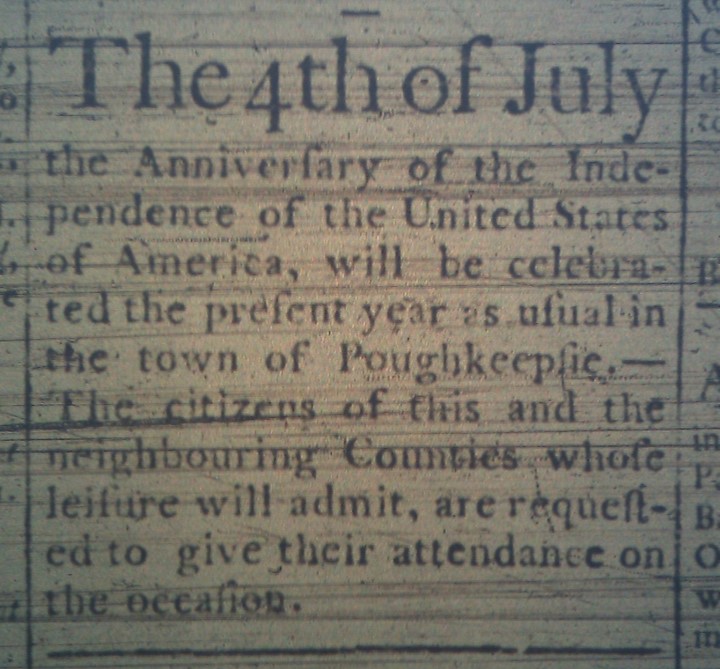
A similar error was made with numerics involving the yellow fever and numbers of years between cycles notice by practitioners in Philadelphia and New York’s Hudson Valley in 1793 and 1797.  These epidemics became common topics of discussion due to Benjamin Rush’s involvement and the initial mistake he made in attempting to define its cause (rotting coffee beans and other stench-causing decay was one of his theories), versus the theories proposed by New York’s Samuel Mitchell (congressman, editor of The Medical Repository, and physician at the NY Regents medical school).   During this same time, religious leaders were considering yellow fever to be a new “plague”, interpreting it as a sign of God’s vengeance (see my page on this).   Believers in such a claim cited its three year pattern (the trinity) as a sign of this unique  pattern.  As result of the return of this epidemic as predicted, people left by Philadelphia by the tens of thousands in just a few days after it struck their city,  noted in the following newspaper article from the Poughkeepsie Journal (photographed from the microfilm):

PokJlAnncmtofYellowFeverstrikingPhiladelphia

Poughkeepsie Journal article, Poughkeepsie, NY, following the eruption of yellow fever in Philadelphia

Religious leaders wondered if this vengeance was due to the rapid economic growth of the local economy, coupled with rapid urbanization and a subsequent increase in social inequality.  (As one Hudson Valley writer once noted: the massive Greek Revival Homes on large farming property owned by the rich contrasted greatly with the numerous smaller cottages, shacks and cabins standing out there in the wilderness owned by the poor.)  Still, one major benefit of all of this came several new inquiries into disease– leading to the establishment of quarantine procedures within shipping ports.  These quarantines persisted, even though a cause for the disease could never be determined.

Beginning in 1853, evidence for this arithmancy or what I call trinophilia re-emerged with the return of the Asiatic cholera in New Orleans, during the years of 1853, 1854, and 1855, a three year fever period.   This resulted in the “triennium” “or triune” theory for epidemics published in several medical journals [Louisiana State Med. Soc. Report on 1855 event; see also NEJM noteBarton's Report of the Epidemic Fever in New Orleans, and Orr's Statistical review of typhoid, EMSJ].

Both yellow fever and cholera now had the numbers theory to rely upon to predict their return.

Now it was Lawson’s turn to do the same for Jamaica just to the south.  This time, the cycle Lawson decided upon was a two year pattern of natural events which he linked to epidemics spatially (based on his observations of latitude and longitude features).  Lawson claimed that that terrestrial magnetism and its oscillations were to blame.  Lawson argued this theory from 1861 to his retirement in 1872 at the age of 57.  Following his retirement, he lived another 22 years, dying in 1894 at the age of 80.  Midway through his retirement years, the following note was published in Quain’s Dictionary of Medicine.

PeriodicityinDisease_LawsonsTheory

People have always fascinated with the idea of making successful predictions.  Even to this day we see these kinds of behaviors, with everything we do.

People also tend to behave a certain way whenever a new discovery is made and begins to develop a following.  The “Garner’s hype curve” effect is often referred to when such events take place.

A similar series of events took place with a spatial geological theory for cancer  posted elsewhere on this site–Alfred Haviland’s cartographic argument for cancer and its relation to relation to the chemistry of the substrata.  Haviland’s idea was partially or perhaps even more correct than we might suspect–a review of Haviland’s map shows the high risk area very close to coal-mining territory, and since coal does have anthracenic polycyclics, which environmental chemists argue are very much carcinogenic esp. for breast cancer due to their steroid-like structures, Haviland could in fact be correct in his spatial analyses, incorrect due to ecological fallacy–a fallacy incurred due to  the data of one set of results being related to another set or results as if the two are directly correlated or “ecologically” related.

As for Lawson’s work, Lawson received considerable but short-lasting support for his theory.  This is eluded to in the following commentary on his work by R. E. Haughton in his article “On the Changes of Types of Diseases” published in the American Journal of Medical Sciences in 1866.

REHaughton-OnLawson'sTheory_AMJlMedSci-vol52_pp389-96,see-p396

[Note: The above comments about Lawson resemble John Snow's comments about John Lea published at about the same time; see my article recently published by International Journal of Epidemiology for more.  To better understand Haughton's term "malarial-hygienic", see the above section -- Canstatt's Nosology of Disease, Order 2,  Malaria.]

Very few writings refer to Lawson’s theory in the medical journals for this time.

By the mid-1880s, were it not for Robert Felkin’s work and mapping of foreign disease patterns (described above), Lawson’s pandemic isocline theory would have been pretty much obliterated from the bibliographies and references for any newly published medical books or articles.  But so too was William Farr’s zymotic theory reduced in popularity by this time.  This was due to none other than Koch’s work on the development of proof for the bacterial theory of disease.

.

After Words

Alfred Haviland

The maps reviewed recently and posted are:

.

In addition, for additional background material I posted/am posting pages on:

One of the most important parts of Lawson’s history in medicine is related to some major mistakes he and his comrades in surgery made in 1855/6 at the Crimean War, on the north shore of the Black Sea.  Turkey and Russia fought a bitter battle for superiority in this part of the world, which resulted in many deaths.  These deaths were not due to the war so much as they were due to the poor treatment soldiers received following their injuries in battle.  Inadequate transportation to some of the grandest military hospitals ever established removed any fame these hospitals had for their size and glamour.    Once they arrived at the facilities, thousands of soldiers ultimately died there due to poor sanitation.  A lack of sufficient medicines, in particular opium became the most decisive aspect of this poor planning.  Soldiers taken ill by diarrhea and ultimately severe diarrhea or dysentery, often referred to then as cholera morbus, lacked the opium needed to stay their bowels, and so resided in small quarantine facilities immersed in their own sweat, stench, vomit, pus, and excreta.  This was the deciding factor for Lord Osborne following his expectation of the site leading him to write such a detailed narrative of his inspection of this site.  No mention of Lawson is ever made in this review, but the expectations are that Lawson like most other doctors was also unable to handle to lack of adequate supplies needed by his surgical patients.  He took some serious actions to stopping these problems in his cholera wards, but was heavily criticized for this according to some much later writers about his life, following his death.

FlorenceNightingalePortraitChart

However, the one major positive outcome of all of this came due to the appointment of Florence Nightingale to serve as a director of the nursing program for this military setting quite early on [to be covered on another page].  Some of the recounts of her facilities at this place avoid much description of its grossness and crowded settings, and many paintings depicting the same setting also failed to demonstrate the atrociousness of the cholera wards.  Nevertheless, she and her approximately 44 nurses worked effectively to deal with an institution they were responsible for that house 7000 patients, within a building that was built to manage 3000, and could only house 6000 once the additional supplies of cots and bedding were obtained.  Following this war, Florence Nightingale established the first school devoted to teaching the nursing profession to female students, which she opened in 1860.  She is also accredited with producing the first calender of diseases to help provide insights into the causes for these infections, be they seasonal or simply due to crowding of hospital facilities, and creating a number of administrative measures designed to maintain better records of supplies and make better use of space.  For the first time, under her watch, patients for the first time received 24 hours a day service in the wards, due to her nighttime personal inspections and pass-throughs of the wards, holding a candle in her hand (an image made famous).

Crimean War history is also related to another page at this site, namely the work of William Aitken.  Aitken served as an inspector and epidemiological investigator of the hospital sites once the war was over, in 1857.  He produced a report on the war epidemics (which I own a copy of and plan to cover on a later date).  His mapping of disease based on the earlier German maps, and Johnston’s map, was published in his massive two-tome set on world health.  Aitken’s philosophy on disease patterns was a continuation of the nosology of disease defined by William Farr, Western Europe’s counter to the great landschaft medical geographers like Schnurrer and the great miasma specialist Canstatt.

Aitken_Farr_portraits

William Aitken and William Farr

.

The WordPress.com stats helper monkeys prepared a 2012 annual report for this blog.

Here’s an excerpt:

19,000 people fit into the new Barclays Center to see Jay-Z perform. This blog was viewed about 62,000 times in 2012. If it were a concert at the Barclays Center, it would take about 3 sold-out performances for that many people to see it.

Click here to see the complete report.


The theme for these past few months has been cultural medicine and medical geography.

The history of the Russian impact on medical geography, in particular zoonotic and combined zoonotic-anthroponotic diseases is a topic that really doesn’t get much attention from contemporary animal epidemiologists.  I believe I reached a good stopping point for this topic for a while.

A very unique historical medical geography topic that came to my attention was an epidemic that took place on Nantucket Island in 1763.  For more than two centuries the cause for this epidemic has returned to the journals.  In a recent write up on this piece of New England medical history it was speculated that this disease could be fungal in origin, a proposal that fit in very well with the sequent occupancy way of modeling past diseases. But most people felt it was yellow fever, which due to the times of the year it happened I suspected had to be wrong, so I had to apply my predictive, or in this case retrospective modeling technique to this disease.

About the same time, another epidemic erupted in the James River area in Virginia.  It was of a skin disease known as ringworm and had infected people residing considerably inland along the river.  I first came upon mention of this disease in 1982 after purchasing a copy of Benjamin Smith Barton’s 1798 to 1804 treatise of the first herbal medicines documented in United States history.  A single line in passing mentioned the possible use of Eupatorium perfoliatum, commonly known as ague weed or boneset to treat the James River Ringworm epidemic.  

The one thing peculiar about this epidemic was where it took place and the fact that it was so isolated from much of the rest of the country, which is how it earned its name.  That geographic feature of this disease is what made me decide to explore its history in detail to determine exactly what its cause could be and why it took place in such a remote place.

After a fairly thorough review of the populations of this part of the country and in particular of African and African-American (including Caribbean and Sudanese) slave culture,  I found ample amounts of medical geography evidence, in particular that of my sequent occupancy method of reviewing diseases, indicating it was a primarily a case of tinea cruris (today we term this ‘jock itch’), which apparently was very severe back then.  The following are some of the details of this discovery, which is covered and illustrated in more detail in the African and Caribbean Slaves section of my historical public health studies posted at this site.

 
.

In medical history, James River is best known for its famous epidemic that struck the settlers when they ran out of food supplies.  Desperate for nutrition sources, many of the settlers ate a local plant, Datura stramonium, which made them very ill and gave a number of them hallucinations. For some it even resulted in death.  

From this point on, this plant had a common name–Jamestown Weed–a name later modified or adulterated into its common name Jimsonweed.

James River however has another important historical tale that to date doesn’t appear in too many books or historical writings about Virginia’s history.  Around 1766, there was this disease that ran rampant through certain parts of the state, in particular in communities situated well upstream along James River, quite a distance from most of civilization.  The lands located in mid-western Virginia, just east of the mountain ranges, were considered primary growing fields for the most important crop at this time–tobacco.  This disease had a very unique spatial distribution for the time and so was given the name “James River Ring Worm”, most likely by Thomas Jefferson [page link].

The majority of people residing in this part of the colony were local residents engaged in the traditional American pioneer lifestyle, some were merchants and farmers, and still others farmers with a large goal in mind, developing your own plantation.  But to run a farm like it was some sort of factory we need the right sorts of help, and that is where the history of slavery comes into this piece of Virginia’s history.  By the 1760s, several fairly large plantations were established, with some families owning large amounts of crop land on which to grown their tobacco.  The Jeffersons was one such family engaged in such an enterprise, with Peter Jefferson, the father of the famous president-to-be Thomas Jefferson, in possession of a large amount of this perfect tobacco growing country.  He died in 1764 leaving his plantations to Thomas, by which time the Jeffersons were legal owners of one of the largest number of slaves in this state.

Remember, this is a story of slaves, health and disease, not one about the many other stories that have surfaced about the Jeffersonian part of slavery history we often hear about, such as the fact that Thomas fathered a child with one of these slaves or that a number of slave families have now linked themselves to this famous piece of American history.  According to a story told by Thomas, probably to Philadelphia botanist Benjamin Smith Barton (but also likely to have been shared with the French writer and explorer of the United States, Louis Valentin), there were a number people living in the backwoods part of Virginia suffering from an unusual skin disease as early as 1766.

To some onlookers this disease probably reminded them of the common disease associated with people around the world–ringworm–an important disease to understand when you are a slave buyer.  But this ringworm was peculiar because it aggregated about the waist and stomach area on down to the thighs.  It was a fairly consistent reddish color, as if a dye were applied to the surface of the skin, and most importantly, it affected mostly males.

The philosophy for the time was that disease could be due to miasm wandering about in the air, some form of infectious material that once it entered the body began to create havoc with our physiology and make way for other problems to develop such as fevers, asthma, rheumatism, dropsy, or consumption (tuberculosis).  Also according to the philosophy for the time, since different regions had different climates, weather patterns, topography, etc., these different regions also manifested diseases in different ways.  Such was the philosophy for those who believed in medical geography during this time and is how and why James River Ringworm earned its name.

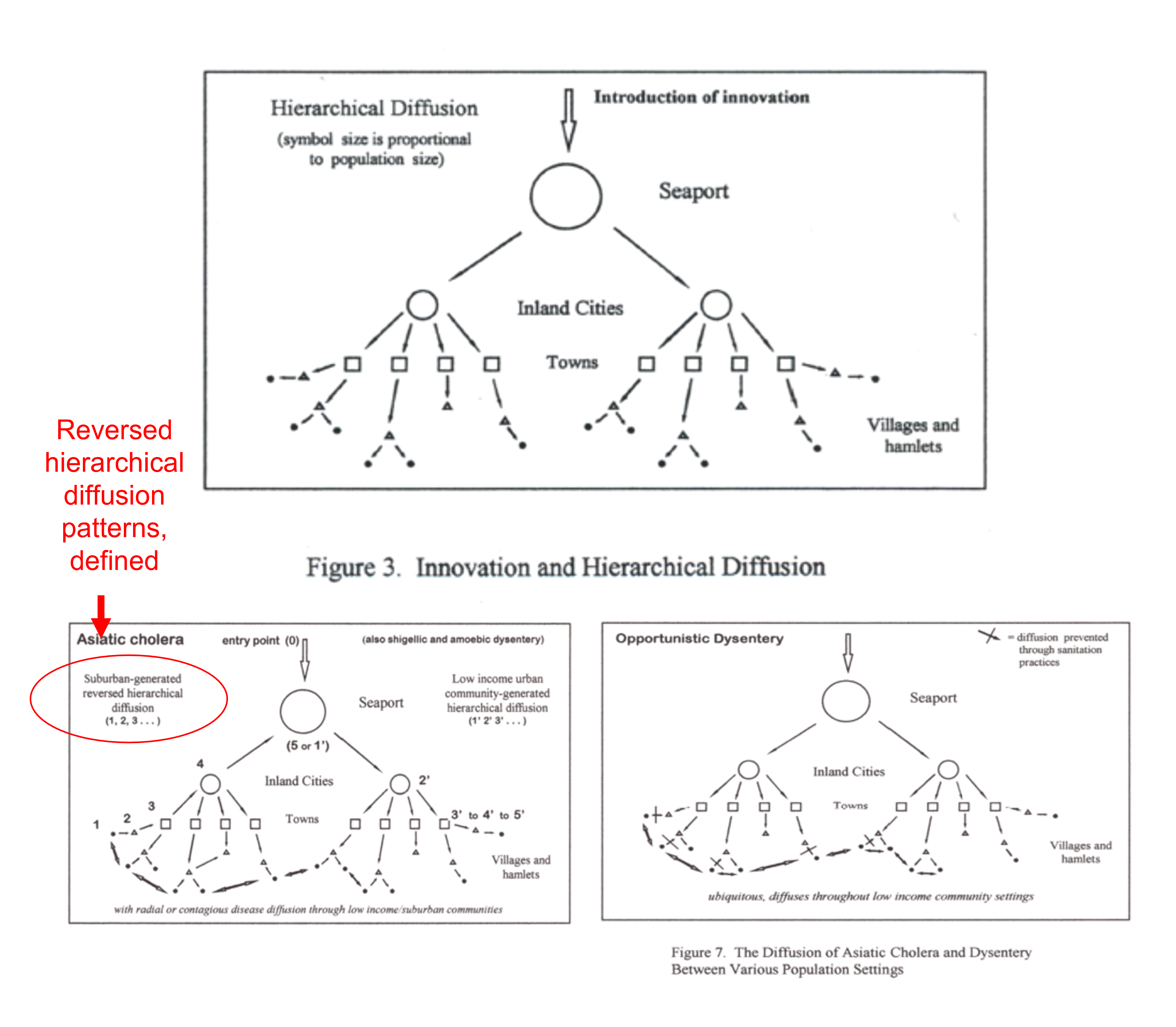
A possible migration route  trichophyton rubrum or mentagrophytes into the United States as the cause for tinea cruris or James River Ringworm.  A hierarchical diffusion route is presented on this map (non-hierarchical is more likely the case and is illustrated on the main page for this topic).  Yellow lines are borders of population density regions, grey lines with arrows represent the diffusion-migration route to the continent’s interior.  Red polygons define clusters regions for the various plantations. The numbers represent the case clusters identified, the method for which is also detailed on the main page for this disease. (#1 is Thomas Jefferson’s estate, Monticello.).

Unfortunately, Thomas Jefferson never provides us with the exact details as to where this epidemic existed or even whether or not it infected only or mostly his slaves.  What we do know is that he is apparently the first one to ever document this epidemic and its unique location(s), suggesting that more than likely its existence and his knowledge about its presence had much to do with the family’s plantations.  With this in mind, I developed a way to analyze and map this disease using a series of spatial epidemiological techniques I have been applying to other diseases of the past.  I first utilized this method to show how Asiatic cholera that struck the Great Plains along the Oregon trail was different from the western cholera or dysentery that struck the western half of this route in Oregon in 1852.  I have since used it to review other diseases of the past, adding another step to each of these analyses engaged in over the past two years.

Figure from my Thesis (Cholera on the Oregon Trail)  

With this analyses, I was able to conclude that the ringworm infection that impacted more than likely the slaves was tinea cruris.  This tinea was much worse back then due to the period it had to develop and the lack of any effective way of treating or knowledge of how to prevent it during the late 18th century.  In addition, this tinea in a modern sense has potentially four fungal causes capable of infecting humans in this fashion, two of which I removed from the list for geographic reasons.  This leaves us to only consider two potential causes for the James River Ringworm epidemic of 1766 to approximately 1806–the first is the most common form of fungus responsible for this disease Trichophyton rubrum, the second a species linked mostly to domestic animals like dogs, cats and horses, Trichophyton mentagrophytes.

My personal bet is on the former, although Jefferson like most others from this time did favor horseback riding, and due to their value, may have had horses present on each and every one of his plantations.

.

Left:  Tinea imbricata, common to Africa, perhaps not common or persistent in North America if brought in by slaves.  Center and Right:  The most common bacterium responsible for tinea cruris, Trichophyton rubrum is growing in the petri dish to the right. (By the way, doesn’t the ringworm mark resemble someone like a young George Washington or John Singleton Copley?)

.

The mapping of this disease is what enabled me to determine where it most likely took place amongst Jefferson’s and Jefferson’s friends’ plantations throughout middle Virginia, along the James River and its southern Fork.

James River Ringworm is one very basic example of the African Slavery history and how it relates to public health history during the late 1700s and early 1800s.   Other cultural medical geography topics I have started to add pages on pertain to African/African-American demographic medical and disease history, foreign born disease pattens and their behaviors in this country, the classic field of study for historical epidemiologists–Native American medical history, and travel and migration related disease patterns such as the flow of disease along the Pacific Rim routes.

Felkin’s map of Pandemic Isoclines (the lines) and wind patterns over the United States

The following historically important disease maps have been posted.

Both Aitken’s and Felkin’s work have another page providing additional information about their personal histories and/or books.  Charles Denison’s work is historically important to American medical history.  He was the first physician to develop an entire medical facility devoted mostly to tuberculosis treatment based upon the documented impacts of the high elevation,  mountain air environment setting upon the cause for this disease, which at the time was yet to be discovered.  (Denison has a second set of maps on the healthiness of the mountain environment for treating phthisis (tuberculosis), to be reviewed next time around.)

.

A section of Denison’s map

.

                      .

A section of William Aitken’s map

Since African/African-American health is the focus for many of the projects I engaged in during recent months, I am putting together my history of medicine resources pertaining to slavery and health, including coverage on culturally-bound syndromes [part1, part2], culturally-linked diseases and syndromes, and culturally-related disease states and medical conditions [link to the main African Diseases page].  Examples of culturally-bound syndromes include Clay Pica (see Malacia Africanorum page below) and certain psychological syndrome related to the practice of voodoo (to be referred to as “Opi” or “Opa” here, its 18th century name).  Culturally-linked African diseases include such conditions as African Cardiomyopathy and Sickle Cell.  Culturally-related but not culturally-caused medical conditions include the more basic problems we often hear about, such as the late diagnosis of breast cancer in older African women or the impact of diabetes on the African elder’s quality of life, and a number of microorganism related diseases such as yaws, bejel, nomi, and kuru.

There are a number of controversial topics I have reviewed so far regarding African culture (West African, Sudan-African, and Caribbean by the way), but none not as controversial as those related to slavery.  The following African-, Carribean- and African-American related health or medical practices or conditions are detailed in my section on this subject, and represent some of the first articles ever published by United States medical journals on these topics (more to come):

The most controversial of the above articles is on infibulation. a Sudanese-African (and typically Muslim-Middle East) tradition indicative of slave in-migration from places other than the Gold Coast of the African continent (for more, see http://www.accmuk.com or http://www.quora.com/What-is-infibulation).  This is possibly the first medical journal article published in the U.S. on this topic.  The article on Malacia Africanorum (‘calm of Africans’) is documentation of clay pica, a behavior still documented in contemporary medical journals and practiced a lot in the Caribbean.  The review of Jestis Weed is an example of that old controversy in ethnobotany and plant medicines–who owns the rights or claims to the rights involving the intellectual property attached to cultural medicines? the one who practices it, or the one to first publish this method of treatment? The owner of the slave who gave his “master” this knowledge no doubt favored the former, but of course fell victim to the latter.  The last article is an example of a unique occupational disease related to African and African-American “servants” living in the New York-New England region, manumission or not.

I have also started posting the theories of different doctors about the first disease to be mapped repeatedly in U.S. medical history–yellow fever.  These are usually kept close to each other on this blog.  For examples see:

.

Sequent Occupancy in Nantucket, ca. 1600 – 1850

Aside from topics related to African medical history, there was one malingering epidemic I had to work through these past several months involving a Native American group residing just south of Massachusetts on Nantucket Island.  In 1763, there was an unusual epidemic that took place in this setting which many have considered to be yellow fever.  For the most part this is right.  But there was that malingering problem with the late November re-eruption of this disease that gave it its name “Extraordinary Disease” by its reporter Reverend Thomas Oliver.  Mosquitoes are required for yellow fever and the likelihood of a mosquito still thriving at that latitude in mid to late November, in high enough quantities to cause so many deaths, is, for lack of a better word, extraordinary.  My hypothesis is that these deaths had to be due to something that was a fever epidemic, but not yellow fever, but one more likely to happen in late fall and early winter.   For this reason, I again applied my various spatio-temporal modeling techniques to this disease and determined the November and December cases were probably due to typhus, a result expected by epidemiologists trained in historical epidemiology mapping and research and familiar with this period in medical history.

The points here are several.  First, the ability to map and analyze a disease in order to explain or predict its behaviors is an important GIS skill.  Second, these diseases and the education we get by reviewing this past is always helpful to the field of epidemiology as a whole. This way of interpreting diseases is very applicable to work in other aspects of this field such as homeland security, bioterrorism, livestock epidemiology, and those concerned about epidemic disease resurgence patterns brought on by population growth, antibiotic resistance, changes in land use patterns, and global warming.

Two of Alfred Haviland’s several maps on Cancer and Geology/Soil Chemistry, 1875 – to be covered next time around

Geosophia is nothing else than the knowledge of the qualities of the earth, and the knowledge of these qualities by those living amongst them.

Such was the synopsis of Johannes Christophorus Homann’s Dissertation entitled Medicinae Cum Geosophia Nexu, quam auspice deo propotio.

Written in Latin around 1720-1724, the title of this work translates to “The medical-geosophia connection, as proposed under the auspices of God”.

Homann is the first to define in writing a popular belief held for the time, which states that theosophy, geography, anthropology, health and medicine are all embraced by a single field known as Geosophia or geosophy.  The roots of this term are ‘Geo’ for ‘earth’, and ‘sophia’ for ‘knowing’ and ‘wisdom’.

.

This belief was very different from the much older, more traditional teachings of geomancy.  Geomancy essentially was a practice that required the art of predicting specific attributes for a given place or region.  Whereas geosophy involved the practice of observing and then explaining natural features and events based on previous knowledge and experience, geomancy involved the production of lines, points, circles, squares and other forms on a piece of paper or writing surface which are then interpreted and developed into some sort of message with special meaning.  Geosophy was linked to the art of map making, in particular precision map making skills which made use of geometry and mathematics and at times looked at the various unique forms of nature as expressions of divine art.  Geomancy was the search for meaning of the shapes and forms evolved from various clues provided, using mathematics as well, but in a more metaphysical way and often with sacred geometry  underlying its philosophy and ideology.  Geosophy usually adhered to a belief in the classical Christian God.  Geomancy relied more upon the natural God, or G-d, or spirit, or Creator, or Universal Energy.

.

Definitions of Geosophia, a term primarily of German use and application, in two European Foreign Language Dictionaries.

During its earliest years of use, from about 1729 to 1785, the term geosophy was considered synonymous with theosophy, even though the latter makes a direct reference to theos or God, whereas the former only refers to Earth.  Such a use of the term ‘geosophy’ during this time appeased both religious and non-religious groups, and in New York, or more accurately stated, New Netherlands history, it satisfied the pantheistic nature of the religious and non-religious settlers who believed in this natural philosophy tradition.  The first settlers of this region tended to believe in natural philosophy much the same way–the belief that God was, is and shall always be a part of nature.

.

The most religiously minded settlers devoted to natural theology considered nature to be a form of Divine Art.  Early New York female botanist Jane Colden, for example, demonstrated her attachment to the natural signs for plants and their uses, features important to her due to her work in plant identification (see Jane’s Plant Numerology).  In a review of the plants discussed by the Jesuit missionaries trying to convert America Indians in Canada, we find writings that demonstrate a fascination with plants and plant parts that bore the signs of trinity–for example a leaf with three lobes, and a plant bearing three kinds of leaves, both considered defining features for the sassafras tree.

Augustine Hermann (1605-1686), Counselor and metaphysician for Elizabeth Philips

The late 17th and early 18th centuries also defined a period of time when mysticism was honored, and the most important mystic of all locally, Jakob Boehme, had developed a popular movement along the Hudson River, involving members of the Filipse family.    The most traditional Boehmites supported his teachings of alchemy as a spiritual philosophy, with the mercury, sulphur and earth of Paracelsus considered representative of the various physical, spiritual and soul related parts of the body.     Another set of followers for this New Paracelsian movement were the Helmontians, Dutch individuals who took to the metaphysical claims in medicine made by the famous Dutch chemist Van Helmont, the famous professor from a Dutch University.

.

John Dee (1527-1608/9, source: wikipedia)

But there was also the philosophy of the British playing important roles in these social belief changes.  Christian Alchemist John Dee was an English Alchemist who was spreading his version of New Paracelsian philosophy to religious leader John Winthrop, Jr. of Connecticut.  From here it probably spread into the New York region by making its way westward into lower New York, primarily influencing areas east of the Hudson River and well distanced from the more traditionally motivated City of New York located to the south.  This manner of spread for new philosophies would continue to be seen in the years ahead, for example the next new form of medical electricity faith which took the route from Connecticut to New York in 1797.

.

In addition to Boehme, Van Helmont and Dee, there was the philosophy of a Bermudian scholar who removed to Harvard around 1649 to study Christian Alchemy.  George Starkey’s philosophy came a result of his education in the traditional writings on alchemy accompanied by his own personal communications with God, as he attempted to create the perfect philosopher’s stone, or as he called it “ens veneris”.  He managed to succeed in this venture by 1651, and passed on his discoveries to the most important chemist for the time Robert Boyle, but never got the full support and recognition he had hoped for (perhaps because Starkey  claim to have received many of his ideas from God Himself, at least according to his personal notes that were reviewed and republished 10 years ago; this could have made Boyle feel a little uncertain about Starkey’s once he read these lines in Starkey’s diaries/lab books; nevertheless Boyle took this idea and produced a similar iron based version of ‘ens veneris‘ with it, the most popular outcome of this piece of history for which Starkey gets no credit for . . . c’est la vie/vitre).  So, like other New Paracelsian ways of thinking, his philosophy remained more a part of the local oral and handwritten history of the region, stored in manuscript form in various archives, not as part of any written and officially published history.

.

John Baptiste Van Helmont (1579-1644, source: wikipedia)

The Ens or Entia, power of being, was an important idea critical to how medicine was practiced during the 17th century.  It became very important to Homann’s philosophical interpretations of the world as a cartographer due to his belief that plants grew in regions where they were needed–a traditional, very pastoral way of interpreting man’s relationship with the wilderness.

.

Friedrich Hoffman (1660-1742, source: wikipedia)

By the end of the 18th century, several scientists interested in these philosophical principles were also developing their own philosophies about health and disease.  One such writer was Friedrich Hoffman, a religious leader, chemist, mechanist, and new form of alchemist.   His associate and counterpart for the time was once again Van Helmont.  Together their preachings helped promote ideas about another form of the entia of plants–their essence or smell, or essential oil.  Considered the fifth element of plants by neo-Paracelsians, its values were considered alongside those for earth, air, fir and water when it came to healing.    As noted in my research on Dr. Cornelius Osborn, ca. 1745-1783 medical practitioner, both Hoffman and Van Helmont were popular to early American medical practitioners who wrote, taught and practiced their beliefs along the Hudson River Valley of New York during the mid to late 1700s.

.

Herbalists Nicolas Culpeper (1616-1654), John Gerarde (1545-1611), and John Parkinson (1567-1650)

Some of the most important plant medicine philosophers for the New World and European medicine in general included Christian Astrologer and herbalist Nicolas Culpeper, along with John Gerard and John Parkinson.   An herbal by Matthioli also existed in one of the local Dutch settlers’ libraries of the Hudson Valley.  It was through the work of Culpeper however that many of these latin writings became readable by those only trained in English.  Likewise for author and famed chemist Robert James, an apothecarian favored by Royalty whose translations of the famous Latin books by Sydenham made it possible for early American physicians to make sense of the native plants blooming all around them.

Still, it was Johannes Christophor Homann’s study of the philosophy and materialistic presentation of geosophy that served as one of the most important primers to assisting in the evolution of a Hudson Valley medical philosophy, one that was not only based on the more physiographically based traditions of disease theory and healing practices,but also upon the metaphysical components of nature, and the religious qualities of natures symbols, God’s Signs.  These teachings of the earlier natural philosophers were supported worldwide by the influences the Homann family had on the world as cartographers of place and people.   But it was J.C. Homann’s writings that had the most important influences of all-with this dissertation he enabled nature and the natural forms of God to become an important part of both European and early American medicine.

Johann C. Homann was not a mystic like Jakob Boehme.  His philosophy of health and disease was more focused on the physical world, but he recognized the role of God in creating these natural gifts.   Homann’s philosophy therefore was not at all agnostic or atheistic, or completely Newtonian  and mechanical in nature.  Instead, it had a metaphysical aspect that taught us how God through Nature played a role in defining both our health, our diseases, and our potential for discovering much-needed medicines.  To many colonial physicians, it worked well alongside the writings and teachings of religious leader and physician Friedrich Hoffmann.

Like many believers in God, nature was God’s most important gift to us.  Due to the Homann family history, J.C. Homann was very familiar with the physical make up of the world, and so once he took control of the family business in cartography in 1703, he became very interested in exploring the relationship between place and medicine.  He accomplished this successfully with his dissertation, for which he received a medical degree from the university in Halles along with some much-needed support from the church.  This writing also makes reference to a number of individuals who greatly influenced him, their metaphysical philosophies most important to understanding the underlying wisdom of the book and how the field of medical geography came to be as a by-product of J.C. Homann’s Geosophia.

During his schooling, one of Homann’s mentors and teachers, Rudolph Wilhelm Crausius, who wrote the following in an oration to his students, a few years before Homann received his degree in the study of medicine from the university in Halles:

Hippocrates Medicinae parens optimus in eo, qui fe Aesculapii саstris devovit, requirit naturam, locum studis aptum, industriam, tempus, doctrinam, institutionem a puero.

Physician Hippocrates, the father of the best [physicians], who devoted himself to the camp of Aesculapius, requires that nature be a place of study of industry (work), time, doctrines (ways or laws), and the manner of living for the new and the young.

.

Homann had limited influence for years to come in early American history.  His influences during the last Colonial years were evident, although never mentioned or referred to as such.  The beliefs were their, but their source soon forgotten.

We also don’t see any direct or indirect clues to The Homann family’s influences on United States in general, minus its medical history, until 1815, when a mid-18th century Homann’s map of Mexico played an important role in defining our rights to own and possess the former New France territory of Louisiana.

From William Darby’s 1817 book A Geographical Description of the State of Louisiana

In the years and decades leading up to this moment in American history, Homann’s work was generally used to describe the various continents and countries of the world, producing several Atlases along the way.  The influences of Johanne Christopher’s dissertation on the study of medicine, geography, health and disease would not be seen or felt for another 75 years.  J.C. Homann’s geosophy teachings remained a topic of religious and spiritualism studies, rather than a study of science and nature.  [Note: a brief mention of the "Geosoph" appears on p. 237 of an 1780s writing published in 1790 as part of Neuer Atlas . . . .  1790 and is mentioned in Allgemeine deutsche Bibliothek, Volume 106, edited by Friedrich Nicolai, page 105.  No links as of yet are made for this use of the term, but probably existed as "fuel for the fire" in the United States medical geography writings just a few years later.]

Geosophie ~ Theosophie

The following entries in two ca. 1900 German lexicons provide us with insight into the cultural limitations that kept J.C. Homann’s term from becoming commonplace.

Geosophie od[er] Theosophie ᵻ: Molenaar, H., Flugschriften 6.

From Vollständiges Bücher-Lexicon by Christian Gottlob Kayser, Alexander Bliedener, Ernest Amandus Zuchold, Gustav Wilhelm Wuttig, Richardt Haupt, Albert Dressel, Oskar Wetzel, Heinrich Dullo, Heinrich Conrad, August Hilbert, Richard Schmidt, Alfred Dultz.  1908.  p. 141.

Geosophie s. Theosophie. 

From Karl Georgs Schlagwort-katalog: Verzeichnis der im deutschen Buchhandel  erschienenen Bucher und Landkarten in sachlicher Anordung. V. Band 1903-1907.  1. Abteilung.  A-K.  p. 635.

.

Throughout the remaining 18th century, Homann’s influences were seen with the writings on the healthiness of different parts of the world.  The health of New York and the Hudson Valley as detailed by Cadwallader Colden, the metaphysical take on mechanisms responsible for how medications worked on ailing bodies, the notion that air flow patterns and directions, weather, climate and topography could help define the health of a given region, were all based upon beliefs held by J.C. Homann as well as well as the traditional writings they referred to by Riverius.

Between 1730 and 1750, the writings of Riverius, Hoffman and Homann played very prominent roles in how medicine was being practiced and how the causes for disease were redefined.  With the onset of the Revolutionary War, the exchange of similar knowledge occurred internationally as foreign physicians came to support the side of the Patriots.  This solidified the many teachings that related disease to the endemic and epidemic forms of disease taught by Riverius, and the roles of nature and natural philosophy in disease taught by Hoffman.  By 1796, this allowed the practice and study of medical geography to be developed by New York state physicians, a description of which appears in the very first medical journal published in New York City–Medical Repository.

Along with the works of Hoffman, Riverius and Hippocrates, Homann’s work turned medicine into an extension of the natural sciences (or natural history as they called it then).   With his Dissertation, Medicinae Cum Geosophia Nexu, Homann provides us with the term and  definition for the Geosophen, or Geosophers, and Medicinae Geographica, or Geographic Medicine.  The subsequent spread of this philosophy took several distinct routes during the late 19th century.  As a result, Homann helped to develop or greatly influence several major fields of study, namely:

  • phytomedical geography, and research focused on the importance of local herbal medicines for treating local diseases,
  • anthropology, and its subspecialty medical anthropology–a study of disease and culture
  • medical geography, medical climatology, disease ecology, and the value of disease mapping, and
  • modern geosophy, or the study of sacred places.

Today we can state these influences to be mostly related to the knowledge of the following, promoted as a part of Homann’s dissertation writings:

  • the absence or presence of medicinal plants befitting a region
  • the absence or presence of specific cultural and anthropological ways of being and behaving
  • the absence or presence of specific diseases characteristic of the region and therefore defined as being epidemic or endemic to it
  • the existence and cultural definition of special places, human values placed upon these objects which are defined by their location, form and the occurrence of specific, related human and/or natural events

In a more modern sense, Homann’s term Geosophy was rediscovered or perhaps even reinvented from scratch during the 194os (see wikipedia entry on this term.)  His dissertation on geographical medicine however did have an impact on common knowledge, and therefore over the years has led to the development of three of the most important specialities today in medical geography–geoepidemiology, disease ecology, and spatial epidemiology.  Each of these fields of study benefitted from the knowledge base that Homann’s maps produced for geographers and physicians and the geosophical essay Johannes Christopher produced as a result of his own enlightenment process during the 18th century.

.

.

Additions to this site over the last months include two new maps on medical or disease geography

My review of the history of disease mapping and epidemiology is focusing much more on the yellow fever.  This is because yellow fever set the stage for the large-scale production of disease maps seen by the mid-18o0s for global epidemic disease patterns like Asiatic cholera.  Aside from Valentine Seaman’s map of this disease–the first of its kind and already reviewed at this site–are two new examples of how the early yellow fever epidemics were first interpreted by medical geographers (but with no maps produced).  These include:

  • 1799 – Samuel Anderson and the Mystery of Yellow Fever in Curaçao and On Board.
  • 1806 – The Next War – Yellow Fever in Upstate New York and Matthew Brown.  This page in particular addresses the geographic definition of disease issue developing in the United States.  This philosophy of assigned place names for particular diseases was less than 10 years old, and was disputed abroad and even by other physicians located in other parts of the U.S.  The politics underlying to identity of a disease was that place-name also indicated place of cause–either locally or by means of import by way of land and water travel.  Each had its repercussions economically, and in the case of New York, certain families had their reputations at stake due to these arguments.  [See also the long four part tale about John W. Watkins and the tale of "Lake Fever", not Yellow Fever, a disease common to the region in Western New York he just purchased, with plans for settlement--Watkins Glen or "Salubria".]

Between 1800 and 1850, the medicine of livestock or what later became veterinary science was developed.  Some of the earliest examples of this (with much more to follow) are provided as:

Synopses on the two sets of disease mapping projects I have been engaged in are provided as distinct pages.  These are for comparing maps that demonstrate similar spatial features or represent similar goals and techniques used for disease mapping,  They are:

.

Also, for those “addicted” to the use of GIS for mapping population health, more of my research on population health analysis has been posted as well.  These appear as icons posted on various pages summarizing my work or discussing the applications of GIS to modern epidemiological research.  Approximately 200 examples of population health analysis locally and regionally have been provided (approximately one fifth of the results of this project), but are not being promoted at this time.   You can see examples of these at

Ï   Α   Τ   Ρ   Ω

Based on 20 years of experience living in the Pacific Northwest as a student, university lecturer, and population health analyst, I am also pulling these “video maps” together to present a single public health topic or theme, for example a Regional Population Health Analysis of the Pacific Northwest.  This project (a work in process related to my National Population Health Grid project) can be reviewed at

REGIONS & HEALTH – the Pacific Northwest as an Example

This represents cutting edge use of GIS and some of my analytic techniques.


ó ô ö ò.

Medical Geography and the History and Anthropology of Medicine and Public Health

This site is focused on information, information sources and discoveries made over the years about the history of medical geography. The goal is to improve our understanding of this field, its philosophy and its traditions, and then use this information to develop new applications of GIS applicable to the fields of public health, epidemiology and medicine.

My most recent additions to this site (during the past 6 months) include a number of new discoveries about Hudson Valley medical history. I view the Hudson Valley as the heart of the new medical philosophy and thinking that surfaced between the 1700s and the initiation of the Civil War. Most people envision Philadelphia and Boston as the most important cities related to American medical history and any American related discoveries prior to 1810. Whereas Philadelphia has Benjamin Rush’s accomplishments to brag about, and Boston Dr. John Warren of Harvard to boast, New York had its senator and physician Dr. Samuel Mitchell to pat on the back.

Samuel Latham Mitchell (1764-1831)

Dr. Samuel Mitchell was the “Renaissance Man” of his time due to his training in medicine, the law, politics, philosophy, and all of the natural sciences as a student of the University of Edinburgh. His accomplishments, theories and writings resulted in the transformation of medicine into a study of natural science, beginning with his first year as a professor in 1792 at Columbia College in New York. His numerous intellectual moves and scientific speculations typically earned him a lot of support from the locals, thereby drawing much of the professional and political attention away from other ivy league schools and competitors such as Yale, Harvard, the medical school in Philadelphia.

Mitchell made New York the focus of his work, serving as editor for the journal of its time–Medical Repository. For decades to come, he was considered an expert in numerous fields, including evolutionism, paleontology, geology, chemistry, psychology, meteorology, medical geography, medical topography, astronomy, engineering, and natural philosophy. Whereas Benjamin Rush and others focused mostly on just people and health, Mitchell and his strong New York following focused on the environment and it relationship to people and health.

Due to Mitchell’s work, regional interpretations of disease and health came to be were popular. He and his closest supporters began strongly promoting a new science which he called medical geography. This geographical focus on disease and people was lost once the bacterial theory was born and microbiology, physiology, chemistry, and epidemiology became the focus of much of medicine during the later parts of the 19th century. Until the late 1880s however, geography was as much a part of medicine as the studies of anatomy, physiology or pathology.

All of this changed when the world globe and its various maps were replaced by the microscope and the focus in the bacterium–the microcosm instead of the macrocosm. This paradigm shift did what it could for the best of medicine. But in the end, we alaways need to go back to the origins of many of the philosophies out there about health and disease. For this reason, some portions of this site are devoted to medical geography as a physical science and population health study, others focus on sociocultural aspects of medicine and disease in the Hudson valley, using these findings to help explain how and why new healing faiths are born.

Regarding the important role the Hudson Valley played in United States medical history, until now I have reviewed mostly those physicians noted in the past previously reviewed by other important medical historians and biographers such as Helen Wilkinson Reynolds and Guy Carleton Bailey. My more recent additions focus on individuals not really discovered by previous medical historians, or at least well reviewed by them. These individual made very important contributions to rapidly growing field of medicine from 1785 on. Their impacts on the profession became both regional and national, as this nation itself expanded and its new settlers carried with them this unique knowledge born in the Valley. As a result, a lot of my biographical reviews from this point on are about individuals whom to date have never fully researched or studied.

The first such individual to note is Prince Quack Mannessah. His parents were a converted Mahican father and Algonkin mother who resided near the old Moravian missions site just south of Pine Plains, NY. His grandparents were part of the first Native American clan to ever be completely converted to Christianity, a result of the missionary settlement established around 1740, a decade before they were forced to remove to the Midwest (soon after which, all were killed).

By living according to Christian Indian beliefs, Mannessah resided on land just north of Pine Plains, along with a number of African American servants working for a local farmer who owned a large piece of land. Mannessah took on his family’s heritage and became one of the first “Indian doctors” in this country beginning around 1780 or 1790. Along with others of his heritage residing elsewhere in the United States, his Indian medical philosophy and practice increased in popularity over the years and by 1800 led to the initiation of a major national movement what was called “Indian root doctoring”, a movement which which he continued for the next 60 years and a movement revived and still popular following the Civil War.

Whereas many of the Indian doctors written about practiced a Europeanized form of pop culture medicine referred to as Indian root doctoring, it is only the first practitioners like Mannessah who truly lived and practiced according to their traditions. This opportunity for me to capture his life story is a rarity in United States and New York medical history. It provides us with information that fills an important gap that exists in American medical history and the influences of Native American culture and philosophy on United States medicine.

A map of Salubria or Watkins Glen from about 1778. The building structures are Iroquois Long Houses.

Next there is valetudinarian John Watkins, Esq. He was not a physician at all, but rather a lawyer (“Esquire” who married into the Livingston family–another family of “Esquires”) and as a result came to promote the value of land and the ability to adapt to your living environment as the way to assure good health and longevity. Like his in-law relative Chancellor Robert Livingston, John Watkins was a speculator of sorts who developed a partnership with Royal Flint, and then obtained the rights to establish settlements or “colonies” on a large tract of land in western New York. His company of investors, all from Kingston, NY, promoted this region as part of the great westward expansion for the US during the late 1790s. The most impressive piece of this land and its history is Watkin’s Glen.

A part of Watkins Glen

John Watkins used his knowledge and his family name to promote his own philosophy about a fever unique to his new born hamlet of Salubrai. He termed this disease Lake Fever. Lake Fever was possibly an early arrival of the yellow fever into the most inner parts of the North American continent. The ways in which Watkins interpreted life in the wilderness, the means to stay healthy by residing in such regions, and the way to live as a farmer and stewart in this part of the Western States, all helped him form his view of the most proper way to survive in this new environment. Therefore, his writing provides us with important insights in the new medical topography movement being established in American medical history.

Other important pages to point out at this site are the various disease maps I have added as a part of my ongoing review of the history of disease mapping. I have now reviewed most of the most important disease maps ever produced in the history of the medical field called medical geography. This time I focused on the history of the first ever map published in this country on Yellow Fever and the many maps that followed decades later which focused on Asiatic cholera.

The second of Valentine Seaman’s Yellow Fever map, overlooking the east river at the end of Wall Street

My coverage of these maps used to identify the causes for disease begins with what is possibly the first such map ever published, that of New York/New Jersey physician Valentine Seaman’s map on Yellow Fever. Doctor Seaman mapped the progress of this disease at the wharfs in lower Manhattan. This map is presented and then analyzed to provide us with insight into the logic of his interpretation of disease. Unlike other articles about this map, it ends up Dr. Seaman’s logic was not at all in error. Neither Seaman nor others like the famous Benjamin Rush were at all correct with their deductions about the cause for yellow fever. The notion that it was either locally induced or brought from afar as a form of contagion were both very much popular. The correct cause for yellow fever and lake fever wouldn’t be understood for almost a century. Meanwhile, one of the most common arguments in writing appearing in the popular and medical press focused on this important public health issue. Philadelphia epidemiologist Benjamin Rush’s explanation for this disease was that it was due to putrid coffee beans being imported into this county. Seaman claimed the same but felt it had much to do with the smell of the decaying debris covering the mudy ground exposed around the docks during low tides. Only a ship surgeon would come close to discovering the true cause for this disease (also covered in this blog site), a claim which unfortunately no one else in the medical field ever paid much attention to.

I also reviewed the extensive work on malignant or Asiatic cholera performed by John C. Peters. Once a strong homeopathy advocate and editor for this country’s primary journal for this field, American Journal of Homoeopathy, Peters began his career as a physician as an MD also practicing homeopathy around 1837/1845. After 15 years of practice, Peters suddenly changed his mind about the homeopathic profession,and in 1859/1860 he became a strong promoter of sanitarian or hygienic medicine. He was also a strong advocate of research in medical topography, medical climatology, and disease mapping. Later, along with several colleagues, a research team was formed by the US government that produced the most comprehensive and most successful series of maps ever made on the behavior of Asiatic cholera around the country as well as globally. Peters’ work was promoted and sponsored by his employer from 1860 onward, but the most influential reports were produced just before strong support for the bacterial theory for disease developed in the late 1880s. Their most famous writings with disease maps came about in 1883, the maps of which are presented here.

Accompanying this section on Peter’s work is another series cholera maps detailing the various ways the medical cartographers tried to illustrate their interpretation of this global epidemic, presented on various pages. Amongst these maps are examples of the some of first temporal series of disease maps ever produced.

Other maps in this section include:

  • Judson’s map of the Mississippi River and Valley, with dates of infection for each town depicting the temporal pattern used by this disease to infect the interior valley of the US
  • Alfred Stille’s summary of his findings, meant to parallel Peter’s work and produce a map of the same, but with some interesting differences noted
  • Contemporary medical geographer Gerald F. Pyle’s review of the history of Cholera and what it tells us about modeling disease patterns and predicting future disease spatial behaviors.

.

Benjamin Rush’s 1786 Three “Species of Settlers” – an early Sequent Occupancy Theory

Also, a series of very important articles related to the study of the history of medical geography are provided. . .

  • I begin this section with a page devoted to Benjamin Rush’s 1786 rendering of a philosophy that would soon be forgotten. This philosophy re-emerged a century later by another series of Midwestern medical geography writers, beginning with Derwent Whittlesey. These late 19th century geographers refered to this concept as sequent occupancy theory.
  • The second page entails an article that possibly has the first formal use of the term “medical geography” by an American author; it demonstrates how this philosophy came to be in the United States between 1795 and 1800. It was produced by congressman and physician extraordinaire, Dr. Samuel Mitchell, and dominated the medical profession for the next 50 years. Mitchell was the primary inventor, initiator and long time promoter of the many philosophies and future sciences linked to environmental medicine, health and disease. He created the septon (same root as sepsis)–referring to the smell and gas emitted from a rotting wound or biological mass. This invisible substance or particle he considered to be the cause for many otherwise inexplicable disease patterns–it was the “phlogiston” for this time in American medical history.

Another series of pages were produced that are devoted to regionalism and disease mapping. Each is written by an important person in the history of American medical geography. These include the following:

  • The very first renderings of medical geography articles reflecting regionalism for specific parts of this country as a whole (regions covered: Ohio-Virginia border, Marietta, Ohio, (with an early application of statistical epidemiology) and May’s Lick, Kentucky, by the famous Daniel Drake)
  • The very first renderings of New York medical geography demonstrating the various aspects of this philosophy shared by the writers, regardless of place (the regions covered this time through are mostly western New York ). These reports were requested by Governor Dewitt Clinton, in accordance with the related public health laws recently passed by the state.
  • Medical naturalist Jean Baptist Leblond’s Climate Zones and related disease patterns based on the ongoing yellow fever observations, published in 1806
  • An early description of the latitude theory for disease patterns
  • An example of the development of the alternative medical philosophies developing around this time, focusing on Dr. Charles Caldwell’s strong pro-medical topography/miasma-theory. His arguments represent a mixture of regular and “irregular” medical beliefs. Contagionists were at odds with the anti-contagionists during this time. Caldwell’s beliefs and work would later lead to the development of a number of other controversial alternative practices, such hydropathy and phrenology as parts of regular and irregular medicine, as well as the demise of the Transylvania Medical School opened down in the Bible State of Kentucky.

.

.

Finally, I have also initiated a section devoted to one of the stumbling blocks I encountered researching these projects–journals and books with articles that exclude or have poorly scanned maps or illustrations. This was due to actions taken by the documents imaging staff producing the electronic copies. To many librarians, the word is more important than the figure or illustration unfortunately. For medical cartography researchers like myself, this is very disappointing since the opposite is usually the case for our work.

The frustrations of map reading – incomplete maps at Google Books

It is important to note here that these scans would not have been possible were it not for the support of Google Books and the engagement of five major university libraries in this country. So this is not a major criticism; it is better to have something to read and study than nothing at all.

Due to Google Books, the equipment needed to scan these documents exists at several of the most important educational institutions in the U.S. However, the habit of producing unscanned, incompletely scanned, or poorly scanned maps because the inserts and fold-outs are of a different format perhaps needs to be re-evaluated, and a compromise needs to be made. It is frustrating to look up a book with the answer to your questions on a specific page or picture found in the book, only to learn that including that in the scan would be too troublesome. It’s like finding Vesalius’s book on anatomy, Richard Smellie’s book on child delivery, or a 16th century guide to chirurgical instruments, only to learn that all you can do is read the text page accompanying the figures, and not be able to review those figures because they are fold-outs. We know these images can be scanned due to their inclusion in many of the original historical references I have reviewed at Archives.org.

Phthisis=”consumption”, which usually referred to tuberculosis

Finally, I have to note that my concern is that the chances for obtaining copies of these maps in the future might forever be lost. Since medical geography maps are scarce, especially before 1880, and in danger of being removed from references illegally (a too common practice during the last few decades) due to the money they can bring on a black market, these historically important maps need to be digitized and their original sources identified and placed under better security (even historical societies and university rare book rooms have a habit of losing these valuable documents).

In terms of my other subjects, I have added significantly to my section on researching and charting population health, with numerous examples of how to perform more informative reviews of age-gender and disease, and a little on a new series of statistical formulas I developed for researching exceptionally large medical populations (>1 million, but for this review >100M). These methodologies are meant to be applied to a new form of research that can be performed regarding population health studies.

Recently I produced another way, another series of formulas for illustrating disease (using the traditional SAS formulas for DEM-like modeling). It is incredibly simple, at times too simple to seem real and true. It will probably take me about 2 more months to perfect, after which, I’ll re-write it for ArcGIS applications.

(Interested in this nationwide look at disease and place? see also another bit of new population health technology I created but not in use: http://youtu.be/HOburQ1ZiZA , http://youtu.be/ApyGwAJSsPc and http://youtu.be/IRPc-czaVWc)

To date, little to no time has been spent developing methods to review exceptionally large populations by any of the industries, universities or corporations that I have been involved with. The standard has been to sample a population and run your basic statistical techniques. These methodologies I consider to be less informative than I believe the statistical profiling of a population should be. Thus during the past decade or two, whenever possible, my methods have focused on small area analysis, on-the-fly GIS work in the field (see my west nile case studies for more on this), and large-scale studies of demography using 1-year age groups. I make use mostly of my own formulas and methodologies, which were developed by way of some GIS-RS work I was once engaged in. These define statistically significant differences at the 1-year age level for population stats (much like using edge detection formulas for b/w SLAR imagery work, or testing for aspect in a topographic map). The displays of my findings speak for themselves.

As an example of how this method is applied, imagine for a moment you have a population with a higher rates of something such as diabetes. The only problem is, all you know is the diabetes in high. You don’t know exactly which population it is higher in–the young, the old, the middle aged, the pre-retirement years workers, those from a specific ethnic group, so we look this up by reviewing distributions in more detail, and learn that it is women in their 30s that are making the population’s risk higher.

But the best example I believe related to this one unique ICD I reviewed in the past. My 1-year age-specific method of mapping counts and prevalence for ICD9 729.2* (the African culture practice of modifying the body in a specific way) revealed something never really published before. I discovered there were 4 age groups with exceptionally high prevalence rates for the Traditional African and now African American practice of infibulation and the other related “cosmetic” culturally defined surgical practices under this ICD (see my sociocultural syndromes page). This practice is considered necessary only due to cultural morées. It is not necessity to living in the United States. Yet two groups undergo this practice every year in this country–children under 6 years of age and adults 16-32 years of age (with 32 yo peak). The other two age peaks for this ICD are 47 yo and 80 yo. This is a very stable age relationship that has continued in this country for more than 10 years.

Thanks to WordPress, I can report that after just 18-20 months in the making, this site has surpassed the 50K mark for number of visitors, and is now averaging 175 hits per day, with the following distribution globally during the past 3o days.

By the way–so I don’t mislead anyone–the following is considered the first medical or disease map in the world press. (My work on this page is usually focused on the American press.)

See: Social Science & Medicine, vol. 50, issues 7 & 8, 1 April 2000, pp. 915-921.

Finke’s 1792 map of human diseases: the first World Disease Map?

Frank A. Barrett.


The large multiple legged area defined by the cartographer appears to demarcate safe routes of travel for troops, keeping them away from shorelines and large river edges–due to the miasma. . . high elevation areas–due to fatigue and apoplexy . . . and regions far into the continental interior, where diseases like scurvy, beri beri and goiter prevail. These paths travelled may also depict routes followed by specific diseases like measles, small pox, and many others caused by contagion.

The New Era of Physiognomotracing = Cellphone Cam + Email + *.ppt + Dexterity

Medical Geography and the History and Anthropology of Medicine and Public Health  

This site is focused on information, information sources and discoveries made over the years trying to promote the study of medical geography.  Medical history is my strength (other than a few science- and public health-related specialities readers will pick up on), so most of what I write are essays on discoveries made during the past 30 years researching the history of medicine, in particular New York and Hudson Valley medicine, but also Pacific Northwest medicine.  This information I developed as a part of my work as a specialist in plant chemistry, chemotaxonomy and natural products at Portland State University for nearly 20 years.  The chemical evolution chart I review on some of my pages was developed between 1987 and 1990.

This next series of biographies of local doctors reviewed includes a number of “doctors”, “physicians” or “healers” who have not been not covered by past writers of Hudson River Valley history.  One of these topics actually began the last time I posted on this page, soon after I initiated the biographies of Elisha Perkins of Connecticut, his followers along the Harlem River Valley and later those who promoted his healing faith along the Hudson River Valley in western Dutchess County. 

Until now, this view of Hudson Valley American Medical history has pretty much been tainted by past writers.  Stories like these have been interpreted as examples of how unlicensed, poorly trained practitioners out there are laying claims to their unique philosophies and ways of treating.  The fairly generic and culturally biased term attached to these kinds of practices is “quackery.”  But these practices are no more incorrect than the regular practice of medicine was during this period in Hudson valley history.   

Hudson and Harlem Valleys and Railroad Lines into Dutchess County, 1858.  Perkins’ philosophy came to be prior to the development of any railroad or steamboat lines, back when all of the local roads led to New York City, Newburgh, Poughkeepsie, Troy and Albany.  The 1795-1810 Medical Electricity pop culture movement travelled from Connecticut to New York in a westerly direction, making its way to Troy and Poughkeepsie, but never developing much support in and around New York City.  This was due to the number of licensed and formally educated physicians practicing in this regional commercial center.  Between 1800 and 1850, medical philosophies were first spread by  sailing ships and stage coaches, and later by streamboats and finally trains.  Most of the professions during this time were spread by way of these two earlier commercial routes.  This meant that the two mountain ranges–Taconics and Berkshires–formed important cultural barriers.

The tale of Elisha Perkins and why he became so popular are reflections of the highly multicultural setting the Valley developed due to its Dutch heritage.  The philosophy helped set the stage for alternative philosophies like those practiced by Dr. Osborn (Bordenism, a 1760s vital force theory, covered elsewhere), Jewish Physician Isaac Marks, early Dutch promoters of Christian alchemical thinking (1649, Harvard student George Starkey, not yet covered), and the various Huguenot healers in the Valley who were natural philosophers and faith healers, and the unique believers in Christian Astrology and mysticism (one of whom in 1720 was called a “witch” according to Court records, partially covered).  These faiths were followed by the practices of local Quaker physician Shadrach Ricketson, his associate in the Friends Meeting House Jedediah Tallman, and Medical Electrician Caleb Child.  These events produce the history that set the stage for what would happen to the newest healers to come to the Valley for the remaining first half of the 19th century.  

The general impressions we are given for the past 3 or 4 decades is that there is this schism related to “medicine” versus “quackery”–the true or licensed, regular doctors, versus those who were more interested in nature, the body, mind and soul of medicine, and the healing processes accompanying these belief systems.  For this reason, we traditionally called regular doctors “licensed” and the other healers “quacks” in the worst of cases, be they licensed or not.  This is a social and culturally defined prejudice or biasness that even today many medical history writers express too freely and without any concerns for validity or personal opinions and subjectivity.  It is better to review past doctors for who and what they are–regular MDs who were just as right and correct as their professional adversaries.  At times their adversaries were even better “healers” than regular MDs, due to the human contact incorporated into their profession (much the same being true today as well).

The unusual doctors I reviewed and wrote about this time, important “healers” missed by past writers, are as follows:

  • Mrs. Smith“, ca. 1805-1820, a female practitioner for women, as well as men, apparently someone who is very religious and used this claim in her advertisements in the Poughkeepsie Journal to promote her healing skills; she was perhaps devoted to prayer and the laying on of hands, but also possibly highly skills herbology, like many older women, midwifery, and the most obvious, the skill of listening to your patient and employing common sense when it came to judging another individual’s lifestyle.
  • Dr. Arkalus Hooper, ca. 1815-20, a Puritan physician from Connecticut and the eastern part of Dutchess County, a descendent of the famous families that settled in Massachusetts during the early 1600s; his special skill was the use of medicines discovered and promoted by Cotton Mather and his unique take on the treatment of the insane and manics, by treating them psychologically instead of as prisoners
  • Part 1 of the story of Thomas Lapham, active 1820-1850, the initiator of Thomsonianism for the Hudson Valley and the major promoted of this healing faith for years to come
  • James Trivett, New Ballstown, and the healthy healing waters of Poughkeepsie, ca. 1800-1815
  • The role the Livingstons played in the establishment of a Merino sheep industry (“Wool Laws and the Merino Sheep . . . “), which became highly popular due to the medical climatology beliefs for 1790 to 1850, but even later perhaps, with several rebirths of this faith following the Civil War and even up into modern day.  [More on this complex topic to follow.]
  • Physiognomotracers, 1800-1825–Hudson Valley individuals who considered themselves artists, philosophers and perhaps even the first psychologists, individuals who could read your mind, define your psyche, and determine your health physiognomonically by tracing your form on a piece of paper.
  • Oregon Trail physician John Kennedy Bristow (1814-1887).   More of the 1993 work that I based my classes upon was also made accessible.  Bristow is  one of the first non-allopathic doctors to take the overland journey, about whom much can be learned and told about alternative medicine as it was practiced along the trail.  Like many early non-allopathic, post-early Thomsonianism physicians, Bristow criticized, botanized and philosophized.  His practice in Illinois, along the Oregon Trail and in Oregon represents how much development, migration and change occured in medicine of all forms, throughout the entire 19th century.  His life story provides us with important insights into the history and application of numerous alternative healing faiths then popular. such as that of the Thomsonianism sanative philosophy practiced by his mentor Dr. and later Rev. Edmund G. Browning (also a trailblazer) in Illinois, Indian Medicine doctor William Dain (covered elsewhere) from Fort Vancouver, Washington, Dr. Wooster Beach of New York and later Ohio, the highly popular domestic medicine book author Dr. Samuel Chase of the Great Plains states, Rev. Dr. Wm. Churchill of Brooklyn, and various local followers of the popular cultural movements related to anti-opium user, trapper medicine, local Pacific Northwest herbalism, gymnastics therapy, physiomedicine–the sequel to botanic medicine started by Alva Curtis, and the practice of this healing faith as it was detailed in the first Oregon medical journal Physiomedical Recorder.  John practiced nearly all of the alternative faiths during his lifetime, excluding homeopathy.  He believed in these philosophies due to his religious and cultural upbringing, and as a result of his own medical experiences (Rheumatic fever and related diseases), the deaths of two of his wives (Emmeline nee Hatch, Illinois, Ship Fever, 1847; Josephine nee Massie, Oregon Trail, Cholera, early April 1852) and his youngest daughter less than two years of age (Suzannah, along the Oregon Trail, due to either milk sickness or infant diarrhea/cholera, late April 1852, western Nebraska). 

In addition, I added several unique takes on the earliest popularity of the physiognomotracers (aka physiognosotracers), reviewing why they were so popular locally, how the military made use of this school of thought, and why it allowed Dr. Gall’s interpretation of the same to lead to the development of phrenology, a belief promoted most by the Fowlers of New York City and Wappingers Falls and which became one of the most important alternative medical philosophies in Hudson Valley history prior to the Civil War. 

A little more confirmation of the links that I propose exist between Cadwallader Colden’s metaphysical philosophy and the development of homeopathy are provided.  Hahnemann’s work is a variation of some of the explanations Colden provided for how and why inoculation worked.   The general philosophy for  the time during the post-Colden era is reviewed as a connector for the philosophies preached by French Luminate and believed in by such European physicians outside the French communities like Hufeland and Hahnemann, between 1796 and 1810.  This page is mostly a biography of Christoph Wilhelm Hufeland and his popularization of once fairly common natural healing traditions still practiced today –”Heilkraft der Natur” or vis medicatrix naturae.   Both Hufeland and Hahnemann played very important roles in the recreation of the popular vital force theory believed in since antiquity, but made popular in America as a medical philosophy by physicians like Dr. Osborn sometime around 1760 by Theophilis Borden (1722-1776).  The influence of the military on these healing trends are demonstrated by the development of early gymnastics (exercise) therapy and specific eating practices (the early diet therapies) (see Anton de Haan, Dutch medical philosopher, popular from 1740 on, but also see more details on the same by the inventor of “Sports Medicine” in the United States according to many–Shadrach Ricketson).

. . . from the page “Divine Psychiatric Truth”

I have also reviewed the unique story of a gifted girl, Rachel Baker, who came to Poughkeepsie ca. 1815.  She had a disease that we would today consider “culturally bound”, but only during her lifetime.  To have a culturally bound syndrome means that those of your culture believe this is the condition you have and so you manifest it.  Even the physicians believed in Rachel Baker’s problems, and were an important part of the culture defining the possible  existence of such a medical condition. The philosophy and interpretation of  psychological, psychiatric and psychosomatic states today might classify this disease differently, perhaps as some form of epilepsy and/or hyperreligiosity.   The contemporary interpretation of the scientific findings for the time (1812-1820 medical philosophy) defined this type of disease she had based on the contemporary professional interpretation of such events as  suspended animation, somnambulism, and “mania”.  

Rachel’s case of “divine somnambulism“ is an example of how so often we based our supposed scientific diagnosis on contemporary scientific philosophy, not necessarily scientific proof.  More importantly this diagnosis is based on a review of one of the most important New York and Hudson Valley physicians for this time, Dr. Samuel Mitchell, a natural philosopher and a believer in evolution and phlogiston–that undiscovered element of nature that may be responsible for disease, an editor of Medical Repository.   Mitchell was so highly favored and respected as a physician due to his position as a New York State representative, and his influences internationally as one of the key political forces for his time, someone we rarely ever hear about.  

Regarding the old history of the valley that I grew up with, and now appears to be nearly lost or forgotten  I reviewed an important historical site I came upon while searching for some old Indian graves.  This house offers us a unique look into the past, but unfortunately it was riddled with antiques left to decay.  Some of these pieces from the past are more than 100 years in age.   This site (noted at the very top of the list along the right margin), represents four periods of local Hudson Valley history followed by a period of what appears to be its final ownership:

  • 1790/1800-1840–original settlement by the true “last of the Mahicans” ,
  • 1840 to about 1890–development into a local hotel and boarding house continuously owned and operated
  • 1890-1930–development into a motel for tourists to stay in after a carriage or stage coach trip, and decades later, the first long drive by overlander and Model T Fords from New York City,
  • 1930 to about 1960/1970–a period of development into a unique motel with coal-heated water and a traditional horse and plow farm,  as a part of FDR’s “New Deal” and “Farm Act” of 1933; FDR accompanied these changes with plans (first developed 1917-1925) to reconstruct the old roads in the vicinity into a more direct tourist route (see http://en.wikipedia.org/wiki/Taconic_State_Parkway).   [This tale to be continued - - I have  a diary of a local resident one or two hamlets over from this place for this time frame as well for further insights.]
  • 1960-1980–final ownership(s), ending ca. 1980, including by a private land and home owner (d. ca. 1980-2) from the New Jersey area.  (I have not yet reviewed the current plans for development or use of this land.)

Quite recently, writer Judith Curry posted an article citing my coverage on “Global Warming – Part 1“, posted in winter 2010/2011 along with a more detailed essay on ”Deforestation and Global Cooling . . . ” and how this resulted in Noah Webster’s claims for local cooling which in turn led to the development of the local merino sheep industry in the Hudson Valley.  Ms. Curry provides us with a very nice synopsis on this important piece of American history, which she posted in turn as a response to a Smithsonian brief on this topic published separately in just a couple of weeks ago in mid July 2011.   Since the most recent author failed to mention the sources for this work, just to set the record straight, it should be noted that this notion of climate change and global warming defined as early as 1790/1800 was previously published in 2009.  

As usual, my hexagonal grid analysis methodology and related excel worksheet download, and my various historical maps, are my most frequented sets of pages.  The most common topics perused by visitors of this site remain those which were previously noted, with the addition of GIS related Risk Management pages, which have doubled in attendence in recent days and weeks. 

As an aside, for those into GIS, as part of my population health risk management work, there is this method I created (and posted, except for the formulas) for performing exceptionally large population analyses by applying a raster GIS/RS moving windows formula.  One can analyze two very different population sizes, previously considered unmatchable due to variance and standard deviations, to determine where statistically significant differences exist.   Once I integrate this into other GIS applications, the overall GIS risk management and population age-gender health analysis processes  will be improved.

.

Relative Prevalence, StatSig and LogSig rates for various ICDs based on a 2004/5 Population Study

Medical Geography and the History and Anthropology of Medicine and Public Health

This site is focused on information, information sources and discoveries that I have made over the years trying to promote the study of medical geography. Since medical history is my strength (other than a few science- and public health-related specialities some readers will pick up on), much of what I am writing are essays on my findings during the past 30 years researching the history of medicine, in particular New York and Hudson Valley medicine, and especially irregular, alternative or complementary medicine. (I save the term integrative medicine to refer to something else, not yet fully existing.) I researched and taught this information at Portland State University for nearly 20 years.

And so what have I recently covered and/or published at this blogsite?

The following are some of the new topics just posted or about to be posted:

  • Open Letter to New York State Commissioner of Parks [the need for a Fishkill Revolutionary War Visitor's Site]
  • A few more historical disease maps.
  • The brilliant ceramic artwork of Huguenot Naturalist and Natural Philosopher Bernard Pallisy (late 1500s)
  • Dr. Robert Todd, Fishkill, and his “Metalic Points”, 1797
  • New York’s Dr. Samuel Mitchell, naturalist and phlogistian (ca. 1800)
  • The James Way“–the public health and sequent occupance for a local 1940s-1950s Turkey Farm recently revisited (many pictures)
  • From “New Eclectics” (1878) to the modern day practice of Naturopathy (Portland, Oregon)

Speaking of complementary or “non-allopathic” medicine, the following is the basis for a traditional citation often referred to by writers discussing this pop culture topic–the various forms of medicine out there today . . .

And Moses stretched forth his rod over the land of Egypt, and the east wind brought the locust. And the locust went up over all the land of Egypt; before it there was no such locust, and it did eat every herb of the field, and afterwards Moses stretched forth his rod, and the locust was cast into the Red Sea (Exod. 10:12).

I am trying to make sense of a commonly cited reference posed by recent writers about regular and alternative medicine. They probably do not realize that they are referring to the above quote from the Bible whenever they quote an attractive line penned by the famous writer of American Colonial history William Smith in THE HISTORY Of the PROVINCE of N E W-Y O R K, FROM THE First Discovery to the Year MDCCXXXII. To which is annexed, A Description of the Country, with a short Account of the Inhabitants, their Trade, Religious and Political State, and the Constitution of the Courts of Justice in that Colony (Printed for Thomas Wilcox, Bookseller at Virgil’s Head, opposite the New Church in the Strand, in London. M.DCC.LVII (1757)). I am referring to the following phrase that appears in Smith’s writings about the physicians practicing in the colony of New York around 1750.

“Quacks abound like Locusts in Egypt”

This commonly cited phrase comes from the following paragraph in Smith’s text:

There are some phrases or lines we are can be drawn to as writers, like a fly to flypaper one might say, or in the case of writers, a lonely sheep returning to its flock. After several days of constantly finding references to this particular phrase about two months ago, I decided it was time to research the various applications, and misapplications, of this phrase over the years. I was wondering, ‘are these writers citing each other, with little knowledge of what it is that they are citing?’

Samuel Bard

This phrase was originally used by Smith to refer to “doctors” who were for the most part trained or apprenticed in the Colonies, versus what he considered to be “better doctors”–those who were trained either as an apprentice in some office, by a school, and/or by a teaching hospital setting in England. At the time Smith wrote this claim, he failed to mention any of the activities engaged in by one of the most famous physicians for this time in New York–Dr. Samuel Bard of the City of New York. Loyalism had not yet come to bear as an important part of American culture and history, but the Stamp Tax act that resulted in the separation of loyalists from patriots was just a couple of years away once Smith’s book got published. Smith’s comments referred to the superiority of English-trained doctors (and perhap Scottish-trained or even other Western European trained physicians) over American-trained physicians. Apparently, most of the writers citing Smith’s famous line were unaware of this important piece of American medical history, generalizing it to refer to non-allopathic practices in the early US in general, not necessarily “quackery” since allopathy was often at fault just as much as its competitors.

[see http://civilwarmed.blogspot.com/2009/05/medical-department-25-civil-war-snake.html]

By far the most popular time for Smith to be quoted in the medical journals was the early 1900s, and came in reference to the problems of “quackery” stirring around the turn of the 20th century due to Patent Medicines. The most common year that this statement was cited was 1905/1906, the year the Pure Food and Drug act was discussed and passed. The Food and Drug Act was succeeded by the Food, Drug and Cosmetics act in 1915. The purpose for each of these laws was to manage the mislabeling going on since the early 1800s. These acts outlawed the sales of medicines that had certain drugs in them like the various forms of opium (with one or two exceptions, for example “heroin” was still available OTC and not excluded by this bill). It required the labelling of a remedy’s mysterious ingredients, and was an attempt to control the types of claims made on these labels regarding the many diseases a product was claimed to treat. This is like the problem we see today with certain medications claiming they help reduce the risk of heart disease when there is absolutely no statistically proof that taking these medications accomplishes that (i.e. the recent FDA statement about this regarding certain lipid and blood pressure lowering drugs)–it is just something some doctors want to beleive in and pass on down to their patient.

These applications of Smith’s statement had nothing to do with non-allopathic medicine. They had everything to do with regulating over-the-counter pharmacy. Although a controversy concerning non-allopathic training was once again taking main stage around this time, this was never the main attempt of the 1906 law and so William Smith’s 1757 claims had nothing to do with it, even though the writers wanted to think that it did.

In addition to the above finding, my study of the misapplication of Smith’s line also revealed that a number of times that Smith’s phrase was used as a result of a writer “borrowing” or plagiarizing this statement from another writer. They did not necessarily plagiarize Smith’s words. They pulled the statement from the writings of another author, citing neither Smith nor the later authors. To the novice reader, this can make it appear as though these writers were the creators of such a phrase along with its attached meaning and discovery, suggesting as well to these readers that this author deserved some sort of pat on the back for his or her discovery, and for daring to make such an opinionated and political statement about this controversial issue. This serious misuse of another writer’s discoveries begs the questions ‘Can we believe any of the other findings made by the writer?’ and ‘Is everything else this author writes about based on unreviewed resources?’

.

Of course, the writing profession does have certain cases where citations are not appropriate or necessary for the particular article they were asked to produce. Setting this matter of “borrowing” and potential plagiarism aside, the reference to “Quacks” still made today in terms of non-allopathic medicine is really old hat. This kind of authorship is a sign of outdated intelligence. Unknowingly, the writer who uses this citation is telling us that he/she is probably not familiar with the non-allopathic profession, but more definitely that he is not read in the classics as much as he should be. This only results in more mis-citations as time passes, which the author is now a new example of. For example, in one such case we can find a citation originally made in 1757 for the first reason (British vs. American), becoming information that is applied by another person in 1906 for a second reason (reference to the over-the-counter drug patents), which several citations later, has lost its original meaning and is misconstrued or misappropriated (herbal medicine is bad). This new application does not at all match the original author’s intent, nor can it even be related truly to the current situations at hand. Today, Smith’s phrase is now being cited in reference to the development of complementary or integrative medicine, a far cry from the original quacksalvers, mountebanks and, oh yeah, American physicians whom Smith was referring to in 1757. True, it is closer to the original intent of 1757 than the popular 1905/6 use was, but do these writers really want their judgments made on non-allopathic medicine to be linked to some Bible quote about Moses? Do they want us readers to think of them as the next Moses, Smith, Young or Fishbein strongly rebelling against “irregular” medicine? (The next P.T. Barnum?)

This continued use of the word “Quacks”, with reference to Smith’s famous line, is something that modern society has outgrown. The words “quack” and “quackery” valid 50 or 75 years ago are very much outdated today. Society has become more mature one might say about this issue. The original cultural constructs for which this this word and cultural statement were intended are long gone. So today, when this historical statement is used, it is most often wrongfully applied to refer anything that is non-allopathic medicine, be it truthful or not. This is particularly the case when the critics don’t have an inkling of an idea about the contents of the philosophy they are talking about. I have to question the intellect of someone who denounces something like the theory that EMF could be a cause for fibromyalgia and acupuncture a possible treatment but cannot tell me whether the energy being produced by his scanner is discrete or sampled, or based on ‘nup’ or ‘sup’ (north up coils or south up coils).

It was different back in 1906 because then the critics were referring to the misuse and mishandling of chemicals, and only in some cases fraudulent claims regarding a physiological or pathological change that could not be made to happen, such as the instant curing of a cancer. When writers today use the terms “quack” or “quackery”, they are also telling us that practicing some form of medicine based on philosophical beliefs such as Vitalism, the balance of the four humors, Chi, Yin and Yang, Vata, Pitta and Kapha, Homeopathy, herb- or crystal-related energies, garden angels, dowsing and channeling with nature for the benefits of our innermost being are wrong. They forget that this also pertains to all non-American, non-allopathic traditions as well, like those practiced by Jewish, African, Carribean, Hoodoo, Hispanic, Hindu, Ayurvedic, Unanic, Chinese, Buddhist, Kampo, Celtic, Aesculapian, Phillipine, Hawaiian, Inuit, Metis, Navajo, Mayan, Scandinavian, or even Viking cultures. Does this mean that since these people are also practicing some sort of medicine which the writers don’t believe in, that it is quackery and shouldn’t be allowed?

James Harvey Young (1915-2006).

In my first days in medical school, I happened to meet the second historian to make the term “quackery” what it still is today for many people–James Harvey Young (for a biography see http://www.historians.org/perspectives/issues/2007/0702/0702mem3.cfm). One of the first readings for the special interest group I was in at medical school was his book on quackery–The Toadstool Millionaires. A Social History of Patent Medicines in America before Federal Regulation.

James Harvey Young’s writings about quackery and their effects on Americans and medicine were preceded and surpassed only by the works of an even more prolific speaker and writer of this field of the early 1900s, someone who represented the AMA and was the original editor of the pop culture trade magazine Hygeia. He was the infamous Morris Fishbein (similarly, see http://educate-yourself.org/cn/morrisfishbein05feb02.shtml). When I first began my work in the field as a student of medicine during the early 1980s, Fishbein’s books were the rage I was told and his books could still be found in nearly every used book store. Of course their presence in the used book world probably meant thay they had outgrown their original owners’ needs and interests of 30 or 40 years ago. But due to Fishbein’s writing style they were still pleasurable waiting room readings during the 1980s, much like they were to the “millions of readers” who decades before me perused Fishbein’s popular magazine Hygeia in much the same way, and in much the same type of physician’s office setting as well as at home.

Morris Fishbein (1889-1976)

The regularly distributed magazine Hygeia was kind of like the Weekly Readers or Highlights magazine one always found hanging around the waiting rooms at doctors’ and dentists’ offices. It was sent to as many people as possible, for free on many occasions. It focused on the importance of preventive medicine, hygienic practices, the value of immunizing, how to engage in the most appropriate exercise programs, developing good dietary behaviors, and all the other skills or lessons a doctor was said to be professed in, the knowledge base for those skills he or she was suppoed to provide to unsuspecting patients. But it is also important to keep in mind that an equal number of articles in Hygeia pertained to the numerous “fallacies” out there about health and hygiene. There was a special topic of this sort covered in each and every number produced, along with a matching editorial section Fishbein was in charge of. In this part of the magazine, the writer provided his reader with a unique and highly opinionated reports on some form of malpractice or “quackery” out there, reviewing such controversial topics as electrotherapy, herbal medicine, astrology and health, hypnotism, religion and medicine, and one of the worst “evils” known to man–homeopathy.

[Published from 1924 on, the current version of this journal can be accessed at http://www.hygeiajournal.com/. For origins and culturally-defined meaning in relationship to this journal title, see http://www.sciencemuseum.org.uk/broughttolife/people/hygeia.aspx.]

At the time Hygeia was first published, the popular practices like homeopathy and eclectics were in their final years, at least for their generation of medical schools branded as “alternative”. The new schools of naturopathy had just been born and were about to blossom (this is reviewed extensively and posted near the end of my lengthy list of topics). Were it not for the hygienic movement taking place in the 1920s and 1930s, naturopathy could have been well on its way to becoming its own self-sustaining practice by the 1950s. Instead, unfortunately, due to lack of financial input and political support, this profession was forced to take the stage alongside chiropractics for a while, terming itself “drugless medicine” while it taught its philosophy at the same schools that taught chiropractic medicine. This “mixed” schooling, as politicians called it, persisted for just a decade or two, and was forced to cease its operations once the problem of defining immunizations as a form of drug delivery came to court. [See Utah studies posted for more on this]. This led various government agencies in charge of overseeing accreditation processes to threaten the chiropractic profession with shutting its doors if this mixed form of schooling and licensure process continued.

Photographer Doug Beghtel/The Oregonian. Article’s author: Andy Dworkin. “New Clinic Opens at Portland College of Natural Medicine.” Published: Wednesday, September 30, 2009. Subtext for photo: “Students Tim Rudowsky (left) and Matt Elliott weigh and mix kun bu, or medicinal kelp, and other Chinese healing herbs in the medicinary of the new clinic at Portland’s National College of Natural Medicine.” Accessed on 3-25-2011 at http://www.oregonlive.com/health/index.ssf/2009/09/new_clinic_opens_at.html.

Time has of course allowed for a total reversal of this age old controversy. Today’s naturopaths have several licensed and accredited schools out there, with federal student loans available for those engaged in this particular form of medical education. This is all due to just the one school that persisted its operations throughout the 1960s and 1970s. Due to the passage of time, and changes in public perception and attitude, naturopathic doctors who earned an official ND status from an accredited school could once again engage in certain clinical practices that they were previously excluded from more than 50 to 60 years ago. (I underscore this because there are many learn at home NDs also out there who learned via mail from a non-accredited institution. For more on this accredited school and its licensed profession see http://www.ncnm.edu/.)

Suffice it to say, the “drugless medicine” of NDs is once again very popular, be it in the form of Chinese medicine, Ayurvedics, some 19th century form of herbal medicine, movement therapy, or even at times practices akin to the most modern products of allopathic pharmacology. Were it not for the invention of bioengineered drugs by allopaths, medicines designed to target specific parts of the body, today’s practice of allopathic care might appear at times to be something more and more like the “pharmacy” of its complementary medical field at times–naturopathic medicine. A number of MDs practice according to their own philosophies on the nature of health, which they either rediscovered or discovered for the first time, a knowledge of the past brought back into the modern era of “reformed” medicine. At times it seems the only differences between some of the more esoteric preachers of allopathy (those “certified” as homeopaths, nutraceuticalists, acupuncturists, environmental medicine specialists, nutrition doctors, sports medicine physicians, physical fitness doctors, some new age psychologists or psychiatrists), and the most traditional forms of naturopathy, are the “religions” or philosophies each of these classes of new physicians base their practices upon. When it comes to health maintenance and helping a patient find his/her best treatment plan, the knowledge of one practitioner can sometimes complement the preachings of the other. It’s funny how they never seem to effectively teach this in regular medical school.

To me this means that relating “quackery” to most of America’s modern alternative medicine is a vision of the past. Of course there is still true “quackery” out there . . . the poorly supported, misaligned claims made by “doctors” of any shape or form. For example, there are still people out there trying to claim they have found the magical cure to remove your skin’s blemishes as well as treat cancer, or claim they can change your appearances into someone who is 20 years younger, and of course there are the healers out there who claim they can manage to tell you all about your medical fate based on some test of the crystallization of your saliva, an analysis of your sweat to determine what substance your body is lacking, a review of your allergy-antigen history by means of a simple muscle test, or use a scan of your entire body’s physical and energy state or “forces” using nuclear magnetic resonance to interpret the “vibrations” produced by its water content (not Kirlian photography, but MRI, the nobel prize winning discovery of one of my chemical teachers at Stony Brook, Paul Lauterbur-see http://en.wikipedia.org/wiki/Paul_Lauterbur). Note: none of these claims are really promoted by any of my writings at this blogsite. So ‘rest in peace’ those of you who are trying to figure out whether or not I am someone who is willing to throw away the baton in the race to medical, political supremacy, or engage in my own form of unique form of the popular health culture. My work is focused on the philosophy of medicine in general, not just alternative, complementary or integrative medicine, but medicine in general.

Perception and prejudice are everything when it comes to formulating and acting upon one’s own opinion about “facts.” I once had this survey I always handed out at the end of the chemotaxonomy/ethnobotany classes I taught at Stony Brook and Portland State Universities. One of these questions asks students to define what side of the field I appear to be on regarding non-allopathic medicine. In other words, ‘Am I for or against these different forms of medicine I am teaching?’ The response options for this question ranged from strongly pro-alternative to strongly pro-allopathic, with the choice of a neutral score placed in the middle of the Likert response scale I provided them with. It always felt good to see that no one really knew where I stood in this matter. All of the possible perspectives of my work were out there.

Follow

Get every new post delivered to your Inbox.